
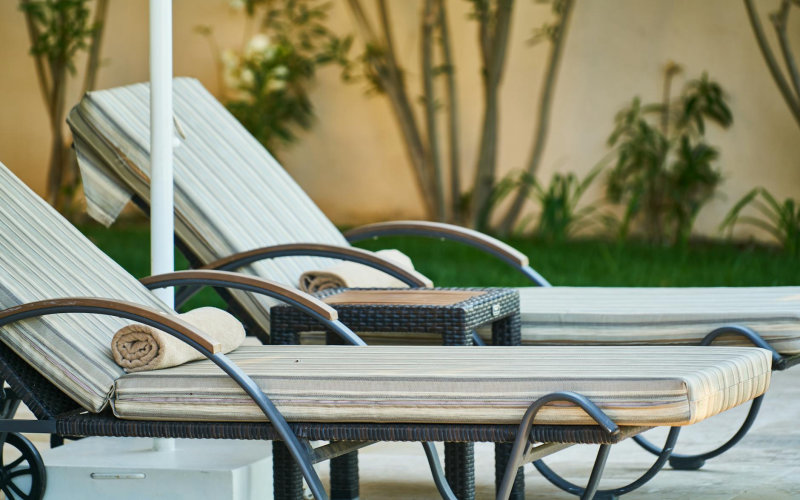

Spring arrives and most homeowners do the same thing: yank the covers off, drag the furniture out, and call it good. I’ve watched neighbors do this for years. And then, two or three seasons later, they’re back at the patio store wondering why their set looks a decade older than it should.
Here’s the uncomfortable truth about outdoor furniture mistakes that shorten lifespan: most of the damage doesn’t happen in winter. Spring is actually when the compounding starts — pollen, moisture, temperature swings, and a few bad habits stack up fast. Fix these eleven mistakes now and you’ll add years to what you’ve already paid for.
Covering Dirty, Damp Furniture (And Calling It Protected)
Covering furniture is good. Covering dirty, wet furniture is worse than leaving it uncovered. When you seal moisture and debris under a non-breathable cover, you’ve just built a mold incubator. Gardenista’s March 2025 outdoor maintenance guide specifically flags this: furniture must be fully clean AND bone dry before any cover goes on.
The sequence matters. Clean first, let it dry completely — we’re talking 24 hours in sun, not an hour — then cover with a breathable option that has vented panels and an elastic hem. A loose $15 tarp that pools standing water does more damage than fresh air.
Using the Wrong Cover Material
Not all covers protect equally. A non-breathable polyester shell traps condensation against your metal frames overnight, every night. That’s repeated moisture exposure across an entire season. Classic Accessories makes covers starting around $36 that include venting panels; F&J Outdoors publishes data showing solution-dyed polyester covers can last up to 10 years when properly fitted. Fit and material matter far more than simply owning a cover.
Skipping the Spring Hardware Inspection
This one gets ignored almost universally. Over winter, temperature swings of 30–40°F in a single day cause metal to expand and contract repeatedly, and bolted joints loosen with every cycle. By spring, the structural integrity of your furniture has quietly degraded. Loose bolts are also water entry points. once water gets into a joint, rust accelerates fast.
Walk every piece of furniture with a screwdriver and wrench in hand. Tighten everything. Check for micro-cracks in plastic frames. Look for paint chips on metal. This 20-minute ritual each spring prevents the joint-failure cascade that eventually forces a full frame replacement.
Ignoring Wet Pollen as a Corrosion Threat
Most people know pollen is annoying. Few know it’s chemically aggressive. POLYWOOD published guidance in February 2026 specifically warning that wet pollen causes a chemical reaction that stains and corrodes wrought iron and aluminum surfaces, a spring-specific hazard that standard annual maintenance guides completely miss.
Dry pollen brushes off. Wet pollen bonds. After any significant pollen event combined with rain, rinse your aluminum and iron furniture immediately. Don’t let it sit for a week. Coastal and humid-climate owners especially. this should be a recurring spring habit, not a one-time thing.
Pressure Washing Everything in Sight
Spring feels like the right time to power wash the whole patio. And for concrete or pavers, sure. But pressure washing outdoor furniture is one of the fastest ways to destroy it. High pressure ruins wicker weave connections, mars HDPE texture, and tears sling fabrics. Many premium brands, Hanamint, Woodard, O.W. Lee. explicitly prohibit pressure washer use in their care guides.
Mild soap and warm water. That’s the answer for almost everything. For mildew on Sunbrella cushions, Glen Raven (the manufacturer) recommends a 1:4 bleach-to-water solution applied with a soft brush, then thoroughly rinsed. Anything more aggressive and you’re shortening the fabric’s life, not cleaning it.
Treating Teak Like It Takes Care of Itself
Teak has a reputation for being maintenance-free. It’s not. Barlow Tyrie and Kingsley Bate build teak sets that genuinely survive 20+ years, but those brands select heartwood from trees aged 40+ years for maximum natural oil density. Even premium teak fades, splinters, and degrades significantly faster without UV-protective sealant and annual oiling applied each spring.
Here’s the contrarian part: over-oiling teak is also a mistake. Applying too much teak oil creates a sticky surface that traps dirt and accelerates mildew. One thin application, let it absorb fully, and stop there.
Replacing Cushions With the Wrong Fabric
Outdoor cushions typically need replacement every 2–5 years according to Sonkuki’s May 2026 furniture care guide. far sooner than the frames they sit on. So when you’re replacing them this spring, the fabric choice matters enormously.
Solution-dyed acrylic fabrics like Sunbrella dramatically outperform polyester blends for UV and mildew resistance, as confirmed by GoodLife Construction’s March 2026 outdoor guide. The dye goes all the way through the fiber, so fading is minimal even after years of direct sun. Polyester cushions look fine in April and noticeably degraded by August.
Storing Cushions the Wrong Way Over Winter
Even if you bring cushions indoors for winter, bad storage creates its own mildew problem. Cushions crammed into non-ventilated bins or plastic bags in a damp garage can develop deeper mildew colonies than if they’d been left outside under a breathable cover. The foam core stays wet. The outside fabric looks clean. You don’t realize the damage until you’re sitting on something that smells like a basement.
Ventilation matters more than whether storage is indoors or outdoors. Always stand cushions on edge so air circulates through, and check foam cores, not just fabric surfaces. when pulling them out each spring.
Buying Bolted-Joint Furniture and Expecting It to Last
Palm Casual’s February 2026 buying guide makes this clear: the price difference between factory-direct welded aluminum sets and big-box bolted sets is often minimal, but the lifespan difference can be 5–10 years. Bolted joints loosen with thermal cycling, collect water, and corrode. Welded frames have none of those entry points.
So if you’re shopping this spring, check the joints before you buy. And if you already own bolted furniture, that hardware inspection I mentioned earlier is even more critical for you.
Placing Furniture Under Trees for Shade
It seems smart. Free shade, right? But trees concentrate pollen, sap, and debris directly onto your furniture below. Sap stains are permanent on most materials if left even a few days. You’ll clean three times more often and still end up with staining that no amount of scrubbing fixes.
If shade is the goal, invest in a quality umbrella or a pergola structure. Your furniture frames will thank you.
Skipping UV Protectant on Metal and Composite Furniture
Edward Martin’s April 2026 material durability guide confirms that UV radiation gradually breaks down surface finishes, causing fading, reduced structural strength, and brittleness over time. Applying a UV protectant, car wax works surprisingly well on powder-coated aluminum. once or twice per year dramatically slows this process.
Aluminum doesn’t rust, but it oxidizes. Its powder-coat degrades under consistent UV exposure without periodic wax or protectant. One coat each spring takes about 15 minutes and extends finish life by years.
What Most Guides Get Wrong
The real mistake isn’t any single item on this list. It’s treating outdoor furniture like it’s self-sufficient. It isn’t. The average patio set loses up to 30% of its potential lifespan from sun and rain damage alone according to Palm Casual’s 2025 research, and that’s before you add pollen, improper covers, wrong cleaning methods, and neglected hardware.
Spend two hours each spring doing this properly. inspect joints, clean correctly, apply protectants, swap out wrong-fabric cushions, and a good set that should last 15 years actually will.
FAQ
Does aluminum outdoor furniture really need maintenance if it doesn’t rust?
Yes. Aluminum oxidizes and its powder-coat finish degrades under UV exposure without periodic cleaning and waxing. Car wax applied once or twice yearly is an effective and inexpensive protectant that most aluminum furniture owners skip entirely.
How do I know if my cushion foam has mildew even when the fabric looks clean?
Unzip the cover and inspect the foam directly. Mildew colonies in foam cores appear as gray or black spots and carry a distinct musty smell. If you find it, the foam needs replacement. cleaning the cover alone won’t solve the problem.
Is HDPE poly lumber furniture actually worth the higher upfront price?
Based on the numbers, yes. HDPE poly lumber like POLYWOOD lasts 15+ years outdoors with minimal maintenance, while basic PVC plastic furniture lasts 2–5 years. The cost-per-year math almost always favors HDPE by a significant margin.
Photo by Engin Akyurt on Pexels