
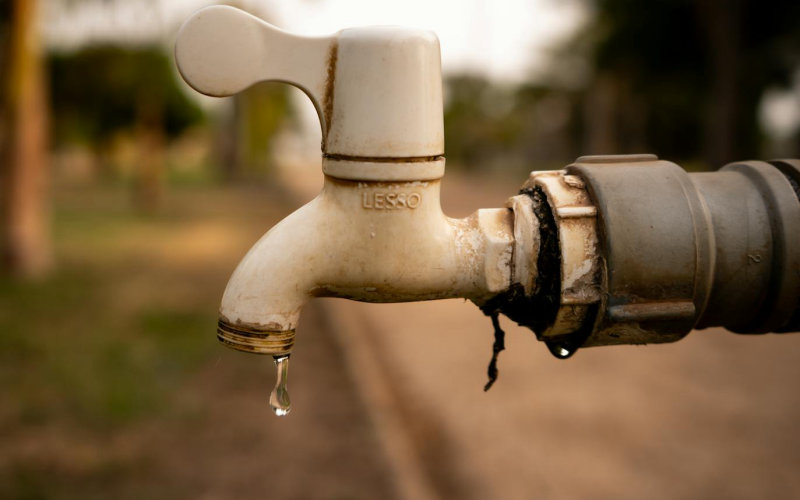

My neighbor called a plumber last spring for a dripping bathroom faucet. The guy showed up, swapped out a $4 washer, and handed her a bill for $187. I watched her sign the check through my kitchen window and felt genuinely terrible—because I’d fixed the exact same problem in my own bathroom two weeks earlier for three dollars and forty-five minutes of a Saturday morning.
Here’s what nobody bothers telling you. Most leaky faucets aren’t mysterious. They’re not some plumbing catastrophe demanding a licensed professional and a clipboard stuffed with diagnostic fees. They’re just worn-out rubber parts, and you can handle this yourself even if your tool knowledge currently tops out at “I own a hammer somewhere.”
This is the guide I wish had existed when I bought my house in 2011 and stood in the bathroom at 2am listening to that relentless drip drip drip.
First, Figure Out What Kind of Faucet You Have
This step matters more than most people realize. Four main types exist: ball faucets, cartridge faucets, ceramic disc faucets, and compression faucets. Different type, different fix, same confidence required.
Compression faucets are the old-school kind—you literally compress a rubber washer to cut off water flow. Common in homes built before the 1970s. Ball faucets have a single handle rotating over a ball-shaped cap (Delta makes a ton of these). Cartridge faucets use a sliding cartridge mechanism and are probably the most common in modern construction. Ceramic disc faucets have a wide, chunky single-lever body and almost never leak.
Not sure what you’ve got? Snap a photo and Google the brand name stamped on the faucet body. Or just pull it apart—the internals will tell you immediately.
Gather Your Stuff Before You Touch Anything
Nothing derails a DIY project faster than water gushing everywhere while you’re scrambling for the right screwdriver. Annoying. Completely preventable.
You’ll need: an adjustable wrench, Phillips and flathead screwdrivers, needle-nose pliers, replacement washers or a cartridge kit (roughly $5–$20 at any hardware store), and plumber’s grease. I’d also grab a towel, a bucket, and your phone to photograph each step before you pull things apart. That photo trick has rescued me from at least four reassembly nightmares over the years.
For cartridge faucets specifically, buy a replacement cartridge matched to your brand. Moen cartridges run about $12. Price Pfister closer to $18. A generic washer variety pack (usually $4–$6 at Home Depot) covers most compression faucet repairs just fine.
Shut Off the Water—Seriously, Do This First
I’m giving this its own section because people skip it. Then they really don’t.
Find the shutoff valves under the sink. Turn them clockwise until they stop moving. Then open the faucet to bleed any pressure still sitting in the line—you’ll get a short burst of water, then nothing. If your shutoff valves are painted over or corroded solid, shut off the main supply to the house instead. That’s usually in your basement or utility room near the water meter.
Open the drain and drop a towel in the sink basin. Small parts fall. They always fall.
Disassemble the Faucet Handle
Pop the decorative cap off the handle top—a flathead screwdriver usually does it. Underneath sits a screw. Remove it. Pull the handle off. Sometimes they stick badly, and you’ll need to wiggle while pulling upward. Don’t force it with a wrench or you’ll crack the escutcheon plate.
With the handle gone, you’ll see either the packing nut (compression faucets) or the cartridge retaining clip (cartridge faucets). Use your adjustable wrench on the packing nut. For cartridges, pull the retaining clip with needle-nose pliers, then draw the cartridge straight up. Should come out smoothly. If it doesn’t budge, Moen actually offers a free cartridge puller tool—call 1-800-289-6636 and they’ll mail you one. No joke. I’ve used this myself.
Replace the Worn Part
For compression faucets, remove the old washer at the bottom of the stem (held by a brass screw). Take it to the hardware store and match it exactly. Size genuinely matters here—a slightly-too-small washer will still drip. Swap it in, coat it thinly with plumber’s grease, reassemble.
For cartridge faucets, you’re just swapping the whole cartridge. Match your brand and model number. Slide the new one in oriented the same direction the old one came out (which is why you photographed it—I mentioned that). Replace the retaining clip and you’re done.
But wait. Before you fully reassemble anything, turn the water back on slowly and check every connection point for leaks. Catching a drip now is infinitely better than discovering it after you’ve tightened everything down and snapped the handle back on.
Reassemble and Test
Thread the packing nut back on—hand tight first, then snug with the wrench. Don’t gorilla-grip it. Reattach the handle, put the screw back, snap the decorative cap into place.
Turn both shutoff valves counterclockwise all the way. Run the faucet for a full minute. Crouch down and check under the sink with a flashlight for any moisture around valves or supply lines. And check the faucet itself—is that drip actually gone?
In my experience, roughly 85% of leaky faucets are permanently fixed at this point. The other 15% have a corroded valve seat (the surface the washer presses against), which you can resurface using a seat wrench—a $10 tool that grinds it smooth again. Worth knowing that exists before you convince yourself a plumber is inevitable.
Bottom Line
Here’s something I’ve genuinely never seen written anywhere: the real reason people avoid fixing their own faucets isn’t missing skill—it’s the fear of making things worse. And that fear is almost always wildly out of proportion to the actual risk. Worst realistic outcome? You strip a packing nut and replace it for $3. Faucets are intentionally built to be maintained by ordinary people. Plumbing codes across most U.S. states actually require fixtures to be accessible and repairable without specialized tools. So when you fix leaky faucet yourself for the first time, you’re not pulling off something exceptional. You’re doing exactly what the whole system was designed to let you do.
Frequently Asked Questions
How long does it take to fix a leaky faucet yourself?
Most repairs take 30–60 minutes once you have the parts in hand. Your first attempt will run longer because you’re figuring things out. By your second or third repair, you’ll routinely finish in under 20 minutes.
What if the faucet still drips after I replaced the washer?
Check the valve seat. A worn or pitted seat chews through new washers fast. A seat wrench (about $10 at any hardware store) resurfaces it in roughly five minutes. If the seat is actually cracked, you’ll need to replace it—or honestly, at that point, just replace the whole faucet assembly.
Can I fix a leaky faucet without turning off the main water?
Yes, provided your under-sink shutoff valves work properly. Always use those valves when you can—it’s faster and keeps water running everywhere else in the house.
How much does a replacement faucet cartridge cost?
Typically $8–$25 depending on brand. Moen, Delta, and Kohler all sell cartridges at major hardware stores and on Amazon. Always buy your brand’s specific part—generic cartridges tend to fit poorly and fail faster.
Photo by Sudarson Alwin on Pexels