

Here’s something most shade garden articles won’t tell you: no single perennial blooms all summer on its own. Not one. Astilbe blooms for about three weeks. Hellebore for maybe six. Bleeding Heart? It goes completely dormant by July. The “blooms all summer” promise is real — but only if you build it deliberately, using a combination of plants with staggered bloom windows. Once you understand that, everything clicks.
The good news is that the right mix of shade-loving perennials can absolutely deliver continuous color from June through September. I’ve spent years chasing that goal in a north-facing backyard with a 40-year-old oak hogging most of the sky. These 13 plants either earned a permanent spot or came highly recommended by sources I actually trust — including Garden Gate Magazine’s January 2026 new plant roundup and UF/IFAS Extension’s September 2025 pollinator guide.
The Dry Shade Problem Nobody Warns You About
Before the plant list, this matters. Most articles recommend Astilbe and Cardinal Flower without mentioning that both need consistently moist soil. Put them under a mature tree canopy or a house overhang and they’ll struggle badly — those spots intercept rainfall entirely, leaving the soil bone dry even after heavy rain. Iowa State University Extension specifically flags tree-root competition as one of the most underestimated challenges in shade gardening.
So I’ve split this list intentionally: some picks for moist shade, some for dry. Pay attention to which is which.
7 Perennials for Moist Shade That Earn Their Space
1. Astilbe (staggered varieties) — Here’s the key: don’t just plant “astilbe.” Plant early cultivars like ‘America’ or ‘Bumalda,’ add mid-season ‘Rheinland,’ and finish with late-season ‘Sprite.’ Do that and you’ve got feathery plumes from June to September. Zones 4–9. Needs reliable moisture. non-negotiable.
2. Geranium ‘Rozanne’, This one genuinely earns its reputation. It produces violet-blue blooms throughout the entire summer with as little as three hours of sun per day. Hardy in Zones 5–7, grows in compact mounds, works beautifully as a border plant or ground cover. Deadhead lightly and it just keeps going.
3. Heucherella ‘Pink Stardust’. Garden Gate Magazine spotlighted this one in their 2026 introduction roundup, and for good reason. It’s disease-resistant, blooms from late spring through fall with deadheading, and handles everything from full sun to full shade. That range is genuinely unusual.
4. Tiarella (Foamflower), A native woodland plant that most listicles ignore because it’s not flashy. But Tiarella produces delicate white-to-pink spikes in spring and reblooms sporadically through summer, and it’s genuinely useful for local pollinator populations. If the University of Maryland Extension’s recommendation to use 80% native plants by cover means anything to you, Tiarella is a good place to start.
5. Lobelia cardinalis (Cardinal Flower). Brilliant red spikes, hummingbirds going absolutely wild over it, blooms mid-to-late summer. Zones 3–9. The catch: it wants wet feet. Don’t plant it anywhere near a tree canopy.
6. Brunnera ‘Frostline’, Darwin Perennials® introduced this one for 2025. Chartreuse-edged silver leaves, true-blue spring flowers, deer and rabbit resistant. Zones 4–9. It’s one of those plants that looks expensive without being difficult.
7. Aquilegia canadensis (Wild Columbine). Another native worth championing. Blooms spring into early summer, self-seeds freely, and feeds native bees that non-native ornamentals simply can’t support. Pair it with later-blooming plants to cover the gap it leaves by July.
4 Perennials That Actually Handle Dry Shade
8. Epimedium ‘Dream Catcher’, Walters Gardens introduced this for 2025. Rosy-red sepals with large yellow wings, Zones 5–8, 18–24 inches tall. Epimedium is one of the few genuinely tough plants for dry shade under trees. It spreads slowly but steadily and largely ignores drought once established.
9. Yellow Fumitory (Corydalis lutea). Starts blooming in spring and just doesn’t quit, it runs through summer and well into fall. Tolerates full shade. Hardy in Zones 4–8, reaching 12–15 inches. It self-seeds generously, which is either a feature or a problem depending on your tidiness standards.
10. Lamium (Dead Nettle). Specifically look for ‘Chequers’ or ‘White Nancy.’ Thrives in dry shade conditions where almost nothing else will cooperate. Silver-variegated foliage, pink or white flowers, spreads as ground cover. Rare Roots nursery actually carries ‘Chequers’ specifically for dry-shade situations.
11. Pachysandra terminalis, Evergreen, nearly indestructible, blooms small white flowers in spring. Not glamorous, but if you need something to cover dry ground under a dense canopy and look respectable year-round, it earns its place.
2 New 2026 Introductions Worth Watching
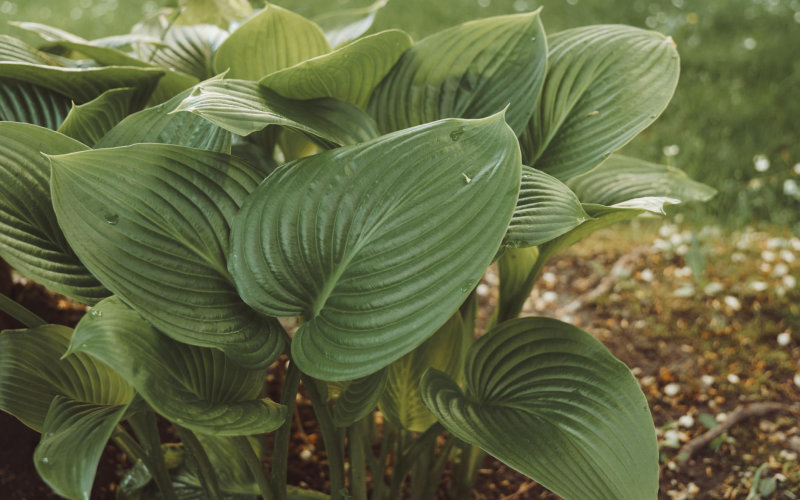
12. Hosta ‘Chance Encounter’. Proven Winners® released this for 2026. USDA Zones 3–9, 12–16 inches tall, 36–42 inches wide. Hostas are often dismissed as purely foliage plants, but they do produce lavender flower spikes that attract hummingbirds. ‘Chance Encounter’ has notably better slug resistance than older cultivars, and slugs are a genuine menace in shaded, moist gardens that most articles completely skip mentioning.
13. Phlox divaricata (Wild Blue Phlox). A native woodland phlox that blooms sky-blue in spring and re-blooms lightly through summer. Zones 3–8. Fragrant. Works beautifully as a ground cover under deciduous trees where it benefits from that “full sun in April before the canopy closes” window. One heads-up: rabbits browse it readily, so if you have pressure from wildlife, pair it with deer-and-rabbit-resistant companions like Brunnera ‘Frostline.’
One Safety Warning Most Articles Skip
Aconitum (Monkshood) gets recommended constantly for shaded spots, and it is genuinely deer-resistant and beautiful. But it’s also one of the most toxic plants in the Northern Hemisphere. Every part of it is poisonous to humans, children, and pets. I’m not saying don’t plant it; I’m saying know what it is before you do.
What I’d Actually Do
Build your shade garden in three layers: a dry-shade ground cover like Epimedium or Lamium for the tough spots under trees, moisture-tolerant mid-height bloomers like staggered Astilbe cultivars and Geranium ‘Rozanne’ for the open shaded beds, and one or two statement plants like Cardinal Flower or Brunnera ‘Frostline’ for visual anchors. Lean toward natives where you can. Tiarella, Columbine, and Wild Blue Phlox support local bee species that standard Hostas and non-native Astilbe hybrids simply don’t feed.
And remember: shade gardening is genuinely easier in a changing climate. Shaded beds stay cooler, use less water, and hold soil moisture longer than full-sun borders. That’s not a consolation prize. That’s a real advantage.
FAQ
Can shade perennials bloom all summer without deadheading?
Some can, but most bloom longer with occasional deadheading. Geranium ‘Rozanne’ and Heucherella ‘Pink Stardust’ both extend significantly with light deadheading. Corydalis lutea is one of the few that genuinely keeps going with minimal intervention.
What’s the difference between part shade and full shade?
UF/IFAS Extension defines full shade as fewer than 2–3 hours of direct morning sun. Part shade is typically 3–6 hours. And afternoon sun stresses shade perennials far more than the equivalent morning hours, a point GardenTabs flagged in their April 2026 guide on sun-exposure mistakes.
Why are my Astilbes not blooming in deep shade?
They need at least 3–4 hours of indirect light to bloom well. Deep dry shade under a dense canopy is genuinely brutal for Astilbe. Switch to Epimedium or Corydalis in those spots. they’re built for it.
Photo by Tibor Szabo on Pexels