

You finished the painting. Hours of work, careful glazes, exactly the colors you wanted. And now it looks like a potato chip. The paper is buckled, the ridges are catching shadow, and framing it is completely out of the question. Sound familiar?
Here’s what most watercolor tutorials won’t tell you: you don’t need a stretching frame to fix this. Several working professional watercolorists — including Janine Helton and Annie B., both of whom publish regularly on technique — say they never pre-stretch at all. They just flatten after. And honestly? That approach makes a lot of sense once you understand why the warping happens in the first place.
Why Your Paper Warped (And Why It’s Not Your Fault)
Watercolor paper warps because the painted surface absorbs water and expands while the dry underside stays rigid. That uneven expansion pulls the sheet into a buckled arch. According to a peer-reviewed study by Lin et al. published in Springer Nature (arXiv:2012.08597), paper cellulose fibers are hydrophilic, meaning humidity directly changes their elasticity and the behavior of the bonds between fibers. Internal stress builds unevenly across the surface. The sheet buckles. Physics wins.
And here’s the uncomfortable truth: even premium 100% cotton Arches 140 lb paper warps with heavy wet techniques. I’ve seen this frustrate intermediate artists who spent real money upgrading their supplies, assuming brand loyalty would solve the problem. It won’t. The actual fix is either heavier paper weight (300 gsm and above essentially eliminates the issue, according to testing by Golden Artist Colors at justpaint.org) or a solid post-painting salvage routine. Which is what we’re covering here.
Wait Before You Do Anything
Before you mist anything or reach for an iron, wait. Chris Wilson Studio published a detailed guide in June 2025 specifically recommending artists wait 24 to 48 hours after finishing a painting before attempting to flatten it. The reason matters: pigment needs time to fully set, and the paper fibers are still shifting slightly as they dry. Rushing this step can cause watercolor pigment on the front to migrate and stain whatever surface you press it against. That’s a real risk. Artists on WetCanvas have documented it happening. Be patient.
Method 1 — Back-Misting and Weighted Press (Light to Moderate Warp)
This is the right starting point for paintings with a mild to moderate bow. You need a spray bottle, clean newsprint or plain paper, a flat drawing board, and heavy books. That’s it.
Lay the painting face-down on a clean sheet of newsprint. Lightly mist the back of the paper. Not soaked. just barely damp. Place another clean sheet on top, then the drawing board, then stack your heaviest books on top. For large paintings, distribute the weight across the full surface; one heavy dictionary in the center won’t cut it.
Swap the newsprint every few hours as it absorbs moisture. Leave the whole setup for at least 24 hours. The combination of even moisture and sustained pressure relaxes the cellulose fibers back toward flat. Simple. Effective. And genuinely no specialty tools required.
Method 2, Steam Iron on the Back (Severe Warp)
This method gets an unfair reputation. Yes, pressing a hot iron directly onto a finished watercolor will destroy it. But that’s not what this technique involves.
Flip your painting face-down on a clean, smooth surface. Lay a thin cotton barrier over the back. a clean bedsheet works perfectly. Set your iron to a medium steam setting. Work slowly across the back in gentle passes, not pressing hard, not lingering. The steam relaxes the fibers; the heat speeds drying. Professional watercolorist Kathy Weiss documents this exact approach on her blog and has used it on finished commissions.
Immediately after ironing, transfer the painting, still face-down. under weighted boards and heavy books. Leave it for at least an hour while it cools completely. The cooling-under-pressure step is what locks the flat shape in. Skipping it wastes the whole effort.
Method 3, The Plexiglass Sandwich (Best for Delicate or High-Value Work)
Janine Helton of janheltonartworks.com describes a method using two sheets of plexiglass or acrylic, butcher paper, and a squirt bottle. The painting goes face-down between layers of butcher paper, sandwiched between the two acrylic sheets, with heavy catalogs or books stacked on top.
The advantage here is even pressure distribution across the entire surface. no warping caused by uneven book edges. This method also works mid-painting: if you’re working in layers and the paper has buckled after your first washes, you can flatten the piece fully dry using this setup before adding more layers. That mid-session correction is something almost no tutorial mentions, and it’s genuinely useful.
Method Comparison at a Glance
| Method | Best For | Time Required | Pigment Risk |
|—|—|—|—|
| Mist + weighted press | Light to moderate warp | 24–48 hours | Low (if paper is cured) |
| Steam iron + press | Severe buckling | 2–4 hours total | Low with barrier |
| Plexiglass sandwich | Delicate/high-value work | 24–48 hours | Very low |
| Books alone (no misting) | Very light bow | 48–72 hours | None |
Common Mistakes That Make It Worse
Saturating the back with too much water is the biggest one. You want the fibers slightly relaxed, not soaked. Heavy wetting risks pulling pigment through the paper and staining your pressing surface, potentially ruining the painting you’re trying to save.
Don’t frame a warped painting hoping the glass will press it flat. It won’t. The paper stays buckled under glass, and you’ll see every ridge. And don’t store a freshly flattened painting in a plastic sleeve, a humid basement, or stood vertically against a wall. Paper is hygroscopic. it re-absorbs ambient moisture and re-warps, undoing everything. Store flat paintings horizontally, in low-humidity environments, interleaved with acid-free tissue.
What I’d Do With a Really Bad One
Honestly? For a painting I cared about, a commission, a piece I was proud of. I’d go straight to the steam iron method after waiting a full 48 hours. It’s faster than the mist-and-press approach and more reliable for severe cockling. The fear around ironing watercolors is almost entirely based on misuse: wrong heat, no barrier, too much pressure. Done carefully, it’s one of the most effective tools you have.
Going forward, if you want to avoid this entirely, bump your paper weight. Saunders Waterford 300 lb Cold Press was ranked the top heavy paper pick by Art Side of Life in January 2026 for exactly this reason, it handles heavy washes without drama. Or try the Fabriano Artistico Enhanced Blocks, glued on all four sides, which hold the paper flat while you work. The stretching frame, the gummed tape, the water trough. you probably don’t need any of it.
FAQ
Can I flatten a watercolor painting that’s already been matted?
Remove it from the mat first if you can do so without tearing. Attempting to flatten through a mat just transfers uneven pressure to the paper, making the problem worse.
What if the warping is so severe the paper has creased, not just bowed?
A crease is a fiber break, that’s permanent damage. You can flatten the surrounding area, but the crease line itself won’t disappear. Scan the piece and print reproductions from the digital file instead.
Will this work on watercolor paper that’s been sitting warped for months?
Yes, though it may take longer. Older, set warps need more steam or moisture to relax the fibers. Run the iron method twice if the first pass doesn’t fully flatten it, pressing under weight between each session.
Is there a point where I should just accept the warp?
If it’s a practice piece going in a portfolio drawer, yes. skip it and move on. If it’s anything you’re planning to frame, give away, or scan for prints, do the work. A 48-hour press costs you almost nothing and makes a real difference.
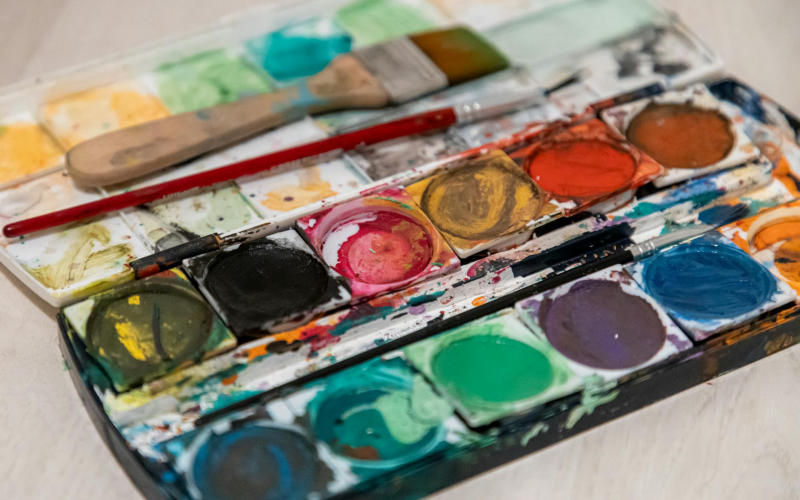
Photo by Boris Hamer on Pexels