
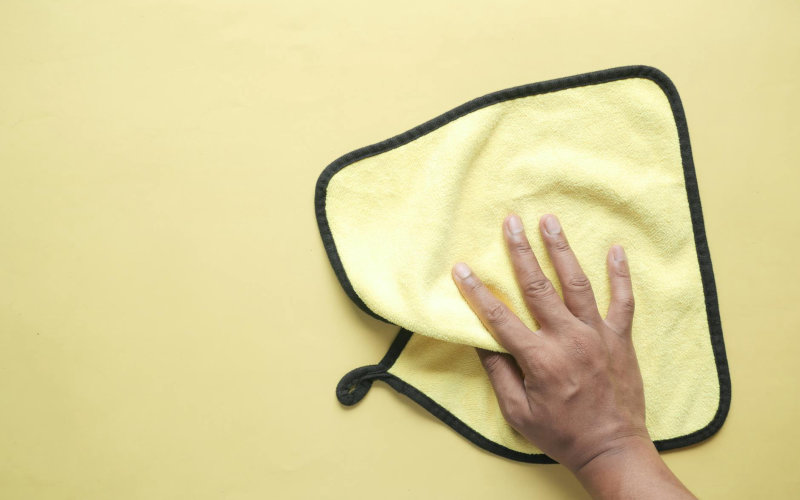

I bought my first pack of microfiber cloths around 2011, completely convinced I’d stumbled onto the holy grail of cleaning. Twelve bucks for eight cloths at Costco. The packaging promised 99% bacteria removal. I was sold.
What nobody bothered to mention was that a dirty microfiber cloth doesn’t just fail to clean—it actively redistributes whatever it’s already collected onto every surface you touch next. I spent roughly three years puzzling over why my kitchen counters always looked vaguely smudged, why my bathroom mirror had that weird film, why my stainless steel appliances somehow looked worse after I’d “cleaned” them. The cloths were the culprit the entire time.
Here’s what most cleaning guides never get around to explaining: microfiber only works when the fibers are open and unloaded. The moment those tiny wedge-shaped fibers fill up with grease, dust, and bacteria, you’ve basically got yourself a very pricey dirt mop.
You’re Probably Using the Same Cloth for Everything
This is the big one. And honestly, it’s the mistake I hear about most when people describe their cleaning routines.
Wiping your toilet, then your sink, then your mirror with the same cloth isn’t cleaning. It’s just escorting contamination on a tour of your bathroom. Microfiber is genuinely great at trapping particles—but it holds onto them. Once a cloth picks up toilet bacteria, those bacteria are coming along for the ride on every surface you wipe next.
Color-coding fixes this. Sounds fussy, but stay with me. Red cloths for toilets only. Blue for sinks and general surfaces. Yellow for glass and mirrors. Green for kitchen counters. This isn’t just a tidy organizational trick, either—it’s the actual system recommended by the CDC for healthcare settings. And your home kitchen probably hosts more microbial variety than you’d care to know about.
Washing Them in Fabric Softener Is a Silent Killer
Fabric softener is microfiber’s mortal enemy. This one trips people up constantly because the logic seems sound—softer cloth, better clean, right?
Wrong. Completely wrong.
Microfiber works through a combination of electrostatic charge and those microscopic split fibers. Fabric softener coats everything in a thin waxy residue that clogs the splits and kills the static charge entirely. A 2018 Consumer Reports analysis found that microfiber cloths washed even once with fabric softener lost up to 75% of their cleaning effectiveness. That’s not a minor dip. That’s essentially converting your cloth into an ordinary scrap of polyester.
Same deal with dryer sheets—just skip them entirely for microfiber loads. Wash in warm water (not hot, which degrades the fibers), zero softener, then air dry or tumble on low with nothing else in the drum.
You’re Waiting Too Long Between Washes
So how often do you wash yours? If the answer is “when they look dirty,” we need to have a conversation.
Microfiber doesn’t reveal dirt the way cotton does. That’s part of what makes it effective—particles get trapped inside the fiber structure, which means the cloth can look perfectly fine while harboring a real bacterial load. A 2012 study in the American Journal of Infection Control found detectable bacterial contamination in microfiber cloths after just three uses on non-sterile surfaces, even when the cloths appeared visually clean.
I wash mine after every two uses, max. Kitchen cloths sometimes after one use if I’ve been near raw meat or anything particularly greasy. It feels excessive right up until you think about what “clean” actually means.
Wringing Them Out in Dirty Water and Re-Using Them
This one comes up most with floor cleaning, but it applies anywhere you’re dunking cloth back into a bucket.
Once your rinse water goes dirty—and it goes dirty fast, often within the first two minutes of mopping—you’re no longer cleaning anything. You’re just spreading a thin slurry of floor debris across every subsequent pass. Professional cleaners figured this out decades ago and shifted to flat mop systems with multiple pre-loaded pads. One fresh pad per section, no re-dunking. For home use, the practical version is keeping a stack of damp cloths ready and swapping to a fresh one roughly every 150–200 square feet.
Using Them Dry When You Should Be Using Them Damp (And Vice Versa)
Getting the moisture question backwards makes your job measurably harder, and more people get this wrong than you’d think.
For dusting, dry is almost always better. The electrostatic charge on a dry microfiber cloth grabs dust and holds it rather than shoving it around. But for kitchen grease, fingerprints on glass, or anything sticky, you want the cloth slightly damp. Not soaking—damp. A dripping wet cloth on a greasy surface just relocates the grease in bigger circles.
And for actual disinfecting? You need a cleaning product on that cloth. Microfiber removes bacteria through physical trapping, but it doesn’t kill anything. So if disinfection is the goal, apply your disinfectant first, then follow with the microfiber. The cloth handles mechanical removal. It’s not a chemical solution.
Buying the Cheapest Cloths You Can Find
Not all microfiber is the same thing. The gap between a 300 GSM cloth and a 400 GSM cloth is real and noticeable—GSM means grams per square meter, the weight measurement that roughly corresponds to fiber density and overall quality.
Those 12-for-$8 packs at dollar stores often aren’t true split microfiber. They’re microfiber in name only, with fiber diameters too large to create the wedge effect that makes the material actually work. E-Cloth and Norwex produce legitimately high-quality cloths in the $8–$15 per cloth range. Costco’s Kirkland brand holds up surprisingly well for the price. But the off-brand packs that feel scratchy and stiff? Mostly decorative.
Storing Them While Still Damp
A damp cloth sealed in a dark cabinet is basically a petri dish with storage ambitions. That sharp ammonia-like smell drifting out of your cleaning caddy? That’s microbial off-gassing from cloths that never fully dried before you put them away.
Let them dry completely before folding and storing. If you need to set a damp cloth aside mid-clean, leave it in an open container rather than anything sealed. And never—I mean never—wad damp cloths into a plastic bag and forget about them. I discovered that lesson the hard way in 2016 after a road trip, when I returned to find what I can only describe as genuine mold colonies.
Bottom Line
The insight that actually shifted how I think about all this: microfiber cloths are more like sponges than paper towels. You wouldn’t scrub your toilet with the same sponge you use on your dishes, and you wouldn’t keep reusing a sponge that smells wrong. The real premium with microfiber isn’t the cloth itself—it’s the maintenance habit behind it. A $2 cloth used correctly every single time beats a $15 cloth used carelessly. The cloth isn’t the system. Your habits are.
Frequently Asked Questions
How often should I actually wash my microfiber cloths?
After every two uses for general cleaning, after every single use for anything involving raw food, bodily fluids, or heavily soiled surfaces. Don’t trust visual inspection—the cloth can look completely fine and still be loaded with bacteria.
Can I wash microfiber cloths with regular laundry?
You can, but only if the load has no cotton towels or anything that sheds lint. Lint sticks to microfiber and clogs the fibers just as badly as fabric softener does. Washing microfiber separately (or with other synthetics only) is genuinely worth the extra load.
Does hot water clean microfiber cloths better?
No, and it actually breaks them down faster. Warm water around 105°F is the sweet spot. Consistent hot water washing starts degrading the fiber structure after roughly 50 washes, noticeably shortening the cloth’s useful life.
Why does my microfiber cloth leave streaks on glass?
Almost always one of three things: fabric softener residue on the cloth, the cloth is too wet, or it’s picking up residue left behind by a previous cleaner you used on the glass. Strip-wash the cloth once in hot water with a small amount of dish soap (just once, not as a regular practice), then test it again on a clean section of glass.
Photo by Towfiqu barbhuiya on Pexels