
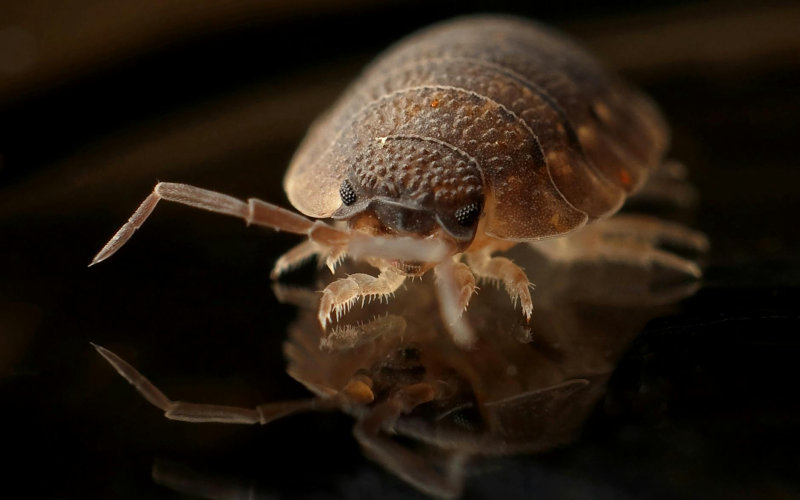

I’ve talked to hundreds of people who swear they checked their entire bedroom and found nothing. Then two weeks later, they’re waking up covered in bites again. Maddening doesn’t even cover it. And almost every single time, the answer is identical — they checked the obvious places and completely skipped the weird ones.
Most people pull back the sheets, maybe flip the mattress, and call it done. But bed bugs didn’t survive millions of years of evolution by being easy to spot. These things are flat enough to squeeze into a gap the thickness of a credit card. Sit with that for a second.
So if you’ve been losing a war against an infestation — or you just want to know what you’re actually up against — this list is going to change how you see your bedroom.
1. The Screw Holes and Joints of Your Bed Frame
Not the mattress. The frame itself.
Wooden bed frames especially — the joints, the cracks, and those little recessed screw holes — are prime real estate. A 2019 Rutgers University study found that in confirmed infestations, over 85% of bed bugs were located within 8 feet of the sleeping area. Your bed frame is basically a penthouse for these insects.
Run a credit card (or an old library card you don’t care about) along every groove and joint. Tiny rust-colored stains are fecal matter — sorry, but you needed to know that. Small white eggs roughly the size of a pinhead mean you’ve found your problem. Take the frame apart if you can manage it. Yes, it’s annoying. Do it anyway.
2. Inside the Box Spring — Not Just the Surface
People inspect the top of the box spring. Almost nobody looks inside it.
Flip it over. There’s usually a thin dustcover fabric stapled to the bottom, and underneath sits a hollow space that functions as a genuine bed bug hotel — dark, warm, close to you all night. Pull that fabric back. Use a flashlight. You might be genuinely horrified by what turns up.
This is one of the most consistently overlooked hiding spots pest control professionals encounter, and any exterminator worth their invoice checks here first. If yours didn’t? Ask for your money back.
3. The Tags and Seams of Your Mattress
Yes, everyone knows to check the mattress. But are you checking the right parts of it?
Bed bugs don’t spread themselves evenly across a mattress like frosting on a cake. They cluster. And they specifically love the piping — that thick rolled seam running around the edges — plus the tags. Run your finger along every inch of that seam, both top and bottom. You’re looking for dark spotting, shed skins (translucent and papery, almost ghostly), or actual live bugs.
The seam inspection takes maybe four minutes. Most people spend four seconds. That gap right there is the whole problem.
4. Your Nightstand Drawers and the Back Panel
Nightstands are criminally underinspected. They sit six inches from your head every single night.
Pull every drawer completely out. Check the bottom of each drawer, the inside back wall of the cabinet, and especially any rough unfinished wood — bed bugs love rough grain because it’s easier to grip and burrow into. I once helped a friend track down a months-long infestation that turned out to be entirely centered in her IKEA MALM nightstand, specifically in the gap where the drawer slides meet the frame. Weeks of misery, one small gap.
5. Electrical Outlets and Wall Plates Near the Bed
This one genuinely freaks people out. Understandably so.
Bed bugs can and do travel inside walls through electrical conduits. The outlet plate right next to your bed is essentially a door between your wall void and your bedroom. Pest control companies have documented cases — including a notable 2021 outbreak in a Chicago apartment building that spread across 14 units — where infestations traveled floor-to-floor through electrical wiring paths.
Remove the outlet cover plate (power off, obviously). Shine a flashlight in there. It’s uncomfortable and strange, but so is being bitten every night for six months.
6. Your Curtains and Curtain Rod Hardware
Fabric near the bed is always a risk. Most people never think about curtains.
The folds in heavy drapes are genuinely perfect hiding spots — dark, rarely disturbed, often close to the sleeping area if your bed sits near a window. But honestly, more than the curtain fabric itself, check the rod brackets screwed into the wall, and the little rings or clips holding everything up. Those small metal or plastic crevices are exactly the kind of gap bed bugs exploit without apology.
Wash curtains on high heat if you suspect anything. 120°F kills bed bugs at every life stage within 20 minutes. That’s your magic number. Write it down somewhere.
7. Picture Frames and Wall Hangings Above or Near the Bed
Because of course they’d go there.
The gap between a picture frame and the wall is essentially a cave as far as a bed bug is concerned. Especially if the frame has cardboard or paper backing — they’ll chew right through it and nest inside. Take down any wall art within arm’s reach of where you sleep. Check the back. Check the hanging hardware. Check the wall itself for fecal spotting, which looks like someone dragged a tiny ink pen across the surface.
And while you’re treating the room? Store it somewhere else entirely.
8. Stuffed Animals, Throw Pillows, and Decorative Items on the Bed
These should honestly be the first things you bag up and deal with.
Soft items on and around the bed are mobile. They carry bed bugs from room to room, which is precisely how infestations spread in the first place. Anything sitting on your bed or within easy grabbing distance goes into a sealed plastic bag, then straight into a hot dryer — 30 minutes on high heat, minimum.
Stuffed animals are particularly bad because kids drag them everywhere. So your bedroom problem quietly becomes a living room problem, a car problem, a grandma’s house problem.
9. Your Own Clothes — Especially What You Wore Yesterday
That pile draped over the chair. The heap on the floor.
Worn clothes are warm and smell like you. That’s the whole attraction for them. Bed bugs that crawl off you during the night can end up in that pile and hitch a ride to wherever those clothes travel next. During an active infestation, treat laundry as potentially contaminated — and never, ever put worn clothes back on the bed or floor.
Bottom Line
Here’s something I’ve rarely seen written anywhere else: most bed bug infestations survive treatments not because the product failed, but because the infestation was never fully located in the first place. The bugs inside your outlet plate or tucked into your nightstand just waited it out, then repopulated.
So the real skill here isn’t the spray or the heat treatment. It’s the inspection. That’s where you actually win or lose this thing. Spend 90% of your effort finding them and 10% on killing them, and your outcomes will be dramatically better than if you approach it the other way around.
Frequently Asked Questions
How fast can bed bugs spread to other rooms if I don’t catch them early?
Faster than you’d expect. Under favorable conditions — warmth, a host nearby, no treatment — a single mated female can produce up to 500 eggs over her lifetime. A small infestation can double in size every 16 days. Catching it early genuinely matters.
Do bed bugs hide inside pillows?
They can get inside through a zipper or seam, but they tend to prefer harder surfaces with tight crevices. That said, pillow covers should absolutely be inspected and washed during any treatment process — don’t skip them.
Can I check for bed bugs myself or do I need a professional?
You can run a solid DIY inspection — everything on this list is doable without special tools. But if you’re finding evidence in multiple spots, or you’ve already treated and they keep coming back, call a licensed exterminator. Some infestations need professional heat treatment that reaches the entire room simultaneously.
What’s the smallest gap a bed bug can hide in?
About 1mm — roughly the thickness of a credit card. If a gap can hold a card, it can hold a bed bug. That’s your inspection rule of thumb going forward.
Photo by Pixabay on Pexels