

I paid a handyman $85 to fix a running toilet once. Eighty-five dollars. The whole thing took him nine minutes, and the flapper he swapped out cost $4.97 at Home Depot. I stood there watching and felt genuinely embarrassed — not at him, but at myself for not realizing how simple it was.
That was my turning point. I started learning basic home repairs out of pure spite, and twelve years later I’ve saved somewhere north of $6,000 by handling the stuff most homeowners reflexively outsource. Not because I’m some naturally handy person. I’m really not. But because these fixes are stupidly easy once someone actually walks you through them.
So here are the 10 home repairs you should never hand off to someone else. Keep these in your back pocket.
1. Fix a Running Toilet
This one drives me crazy because it’s so common and so fixable. A running toilet wastes up to 200 gallons of water per day according to the EPA — silently bloating your water bill every month while you tune out the sound.
Nine times out of ten, the culprit is the flapper. That rubber seal at the bottom of the tank. It warps, it wears down, it stops holding a proper seal. A replacement costs $3 to $8. You shut off the supply valve behind the toilet, flush to drain the tank, unhook the old flapper, snap on the new one. Done. Fifteen minutes, tops.
If that’s not it, check the fill valve and float. Equally cheap to fix. Search “running toilet repair” on YouTube and you’ll find a dozen clear walkthroughs covering every scenario — they’re genuinely excellent.
2. Silence a Squeaky Door Hinge
Nobody should ever pay for this. Not once.
Pull the hinge pin out with pliers (just tap the bottom of it upward with a screwdriver), coat it lightly in petroleum jelly or a little WD-40, tap it back in. Squeak gone. Total cost: maybe $2 for a jar of petroleum jelly that’ll honestly last you the next 15 years.
3. Patch Small Drywall Holes
That doorknob-sized hole your kid left in the wall? The gap from a TV mount you relocated? You can fix both yourself. Small holes — anything under roughly 6 inches — just need a putty knife, some spackling paste (about $7 at any hardware store), and sandpaper.
Apply the spackling, let it dry fully, sand smooth, prime, paint. It disappears completely. Bigger holes call for a patch kit, which runs around $15, and the actual work is maybe 30 minutes spread across a few drying sessions. Contractors charge $75 to $350 for this. That’s just unnecessary.
4. Unclog a Drain Without Chemicals
Before you call a plumber — which can cost $100 to $250 for a basic clog — grab a $3 plastic drain snake first. These flexible little tools pull out hair and gunk with almost zero effort.
And please stop reaching for Drano automatically. Chemical drain cleaners work sometimes, sure, but they’re genuinely rough on older pipes over repeated use. The physical snake is faster, cleaner, and doesn’t slowly degrade your plumbing. I keep one under every sink in my house now.
5. Replace Electrical Outlets
I know what you’re thinking. Electricity is terrifying. But swapping a standard outlet is one of the most beginner-friendly electrical jobs there is — and it matters, because a cracked or malfunctioning outlet is a real fire hazard.
Flip the breaker for that circuit. Grab a voltage tester (around $15 at Home Depot) and confirm the power is actually off — don’t skip this part. Unscrew the old outlet, snap a photo of how the wires connect, hook them to the new outlet the same way, screw it back in. A new outlet costs about $3. An electrician’s service call for the exact same job runs $75 to $150.
6. Clean a Clogged Faucet Aerator
Weak water pressure at a faucet doesn’t necessarily mean a pipe problem. Check the aerator first — the little screw-on tip at the end of the spout. Mineral deposits clog the thing over time and choke the flow down to a trickle.
Unscrew it by hand (or with a tape-wrapped wrench so you don’t scratch the finish), rinse it under running water, soak it in white vinegar for 20 to 30 minutes if it’s really gunked up, screw it back on. That’s the whole job. Water pressure restored.
7. Stop Sticky Windows
Old windows stick because wood swells and contracts with humidity and temperature swings. This isn’t a replacement situation. It’s a wax situation.
Rub a plain white candle along the window tracks. Bar soap works too. The wax creates a slick surface and the window slides freely again. If it’s really stuck, carefully wedge a block of wood between the sash and frame and tap it gently with a hammer to break it loose — then apply your wax. Window replacement quotes run $300 to $800 per window. A candle from your kitchen drawer costs nothing.
8. Replace a Window Screen
A torn screen is basically an open invitation for mosquitoes, spiders, and whatever else you don’t want inside. And replacing one is shockingly simple.
Hardware stores sell screen mesh by the roll, plus the rubber spline that holds it in the frame. Pull the old spline out with a flathead screwdriver, remove the damaged screen, lay new mesh over the frame, and use a spline roller (about $5) to press the new spline in around all four edges. Trim the excess with scissors. The whole repair costs under $10 and takes maybe 20 minutes your first time through.
9. Lubricate a Squeaky Floor
Less obvious than the others, but just as easy. Squeaky hardwood floors usually make noise because boards are rubbing against each other or against the subfloor. You can often fix it without any tools at all — just sprinkle talcum powder or powdered graphite between the boards, walk over the area to work it in, and wipe up whatever’s left.
It doesn’t always hold permanently. But it works more often than people expect, and it costs almost nothing to try before you start calling anyone.
10. Fix a Garbage Disposal That’s Jammed
Most people hear a humming disposal and assume it’s dead. It usually isn’t. There’s a reset button on the bottom of nearly every unit — press it, and the motor resets. If the blades are jammed, there’s a small hex port in the center of the bottom where you insert an Allen wrench and manually rotate the impeller to free whatever’s blocking it.
Most disposals ship with that wrench. If yours disappeared long ago, a standard 1/4-inch or 5/16-inch Allen wrench usually fits. The fix takes under five minutes. A plumber’s visit for “disposal repair” typically runs $150 to $200.
Bottom Line
Here’s something that doesn’t get said enough: the trades are genuinely swamped right now. In 2023, the National Association of Home Builders reported that finding skilled labor was one of the top challenges builders faced — which means wait times are longer and prices are higher than they’ve probably ever been. When you call someone out for a $4 flapper, you’re not just overpaying. You’re taking up a slot someone else needs for a job that actually can’t wait.
But beyond the money — and you will absolutely save money — there’s something else that happens when you start fixing your own house. You stop seeing it as this mysterious thing that randomly breaks on you. You start understanding it as a system. Every repair teaches you something, and that knowledge stacks up fast. After a while, problems feel less like emergencies and more like puzzles you already know how to solve.
That shift is worth more than whatever you’d save on any individual repair.
Frequently Asked Questions
How much money can you realistically save by doing your own home repairs?
Honestly, it depends on your house and how often things go sideways. But the average homeowner could reasonably save $800 to $2,500 per year just by handling the basics on this list. Handyman rates in most U.S. cities run $60 to $125 per hour, and most of these jobs get billed as a minimum one-hour call.
Do I need a lot of tools to start doing DIY home repairs?
Not really. A solid starter set — hammer, screwdrivers, pliers, utility knife, voltage tester, Allen wrench set — covers roughly 80% of basic home repairs. You can put that together for $40 to $60 at any hardware store.
When should you actually call a professional instead of DIYing?
Any time you’re dealing with your main electrical panel, gas lines, structural repairs, or anything requiring a permit in your area. Those aren’t places to experiment. But everything on this list? You’ve genuinely got this.
What’s the best resource for learning DIY home repairs as a total beginner?
YouTube is unbeatable, honestly. Search your specific problem and you’ll almost always find a clear walkthrough filmed by someone who’s done it a hundred times. The Family Handyman and This Old House both have excellent written and video guides that assume zero prior experience.
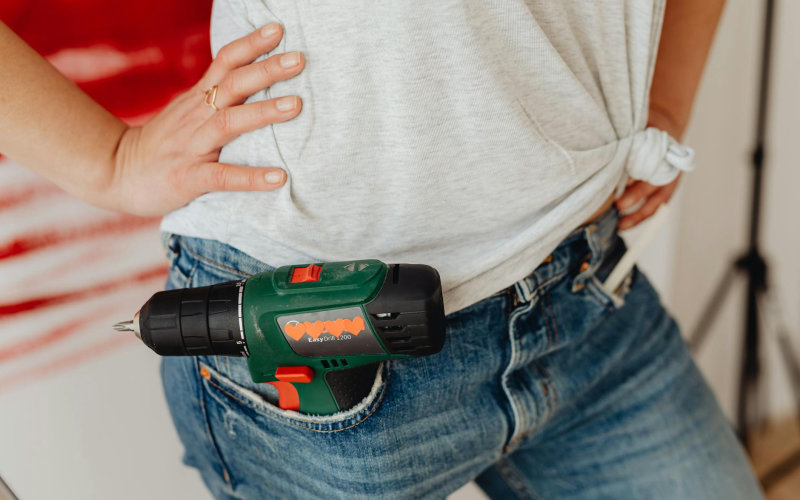
Photo by www.kaboompics.com on Pexels