
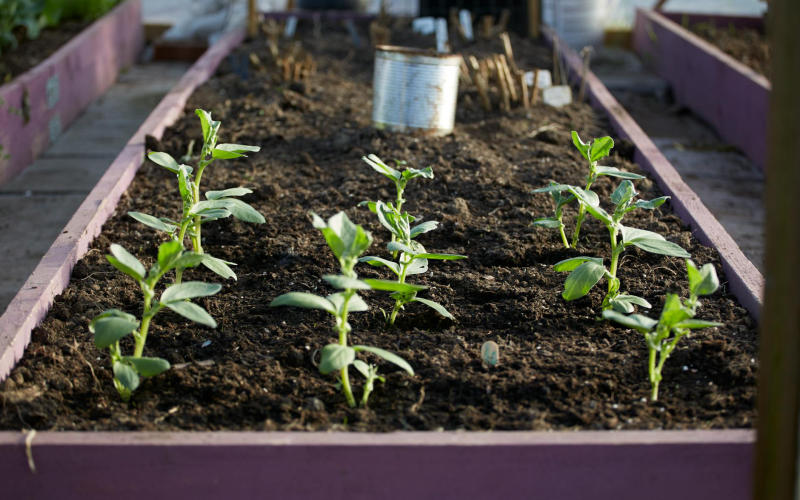

Here’s something nobody tells you when you’re standing in the gardening aisle at Home Depot, paralyzed by 47 different soil bags: you don’t need a big yard. You don’t need a tractor, a rototiller, or a grandfather who grew up on a farm. What you need is about 4 square feet, a little patience, and someone to just tell you the actual steps without making it complicated.
I started my first raised bed in 2019 on a rented apartment patio in Columbus, Ohio. Two feet by two feet. I grew enough cherry tomatoes that summer to embarrass myself at dinner parties. The point is, small works. And I want to walk you through exactly how.
Step 1: Pick the Right Spot (This Matters More Than Anything Else)
Six hours of direct sunlight. That’s your minimum. Not “mostly sunny.” Not “pretty bright in the afternoon.” Six actual hours of sun hitting that spot every day.
Before you buy a single thing, spend one Saturday watching where the sun lands on your patio, balcony, or yard and for how long. I know that sounds tedious. But I’ve watched so many beginners skip this step, plant in a shady corner, and wonder in August why their tomatoes look defeated. The spot is everything.
Step 2: Build or Buy Your Bed
A 2×2 foot raised bed is genuinely enough to start. You can build one yourself with two 8-foot cedar boards cut to size — cedar resists rot naturally, and a set of four 2×6 boards from Lowe’s will run you around $28 total. Stack them, screw the corners, and you’re done in about 40 minutes.
But honestly? If you’re the kind of person who reads assembly instructions and immediately feels your soul leave your body, just buy a kit. The Greenes Fence cedar raised bed kit (the 2×4 version) costs about $45 on Amazon and snaps together without tools. Your call. Neither option is wrong.
Step 3: Fill It With the Right Soil (Not Just Anything)
And here’s where most beginner guides quietly fail you: they say “use good soil” and move on. That’s not advice. That’s a shrug.
For a 4-square-foot bed, you want a mix of roughly 60% high-quality compost, 30% coarse perlite or vermiculite for drainage, and 10% aged garden soil. Mel Bartholomew’s famous “Mel’s Mix” from his book Square Foot Gardening has been around since 1981 for a reason — it drains well, doesn’t compact, and gives roots room to breathe. A single 1-cubic-foot bag of compost from your local nursery usually costs $6 to $9, and you’ll need about two bags for this size bed.
Don’t grab a bag of cheap topsoil and call it a day. I did that my second year, trying to save $12. I ended up with a brick by July.
Step 4: Choose What to Actually Grow
Okay, so here’s my genuinely contrarian take: don’t start with tomatoes.
I know. I know. Everyone wants tomatoes. But in only 4 square feet, a single tomato plant can crowd out everything else and demand constant attention. For your very first bed, try lettuce, radishes, and one compact herb like basil or chives. Lettuce grows in as little as 30 days. Radishes in 25. You’ll get a harvest so fast it feels like cheating, and that early win matters more than you think for staying motivated.
If you absolutely must grow tomatoes, go with a dwarf or patio variety. Tumbling Tom or Tiny Tim both stay under 18 inches and produce real fruit. One plant, one corner of the bed.
Step 5: Plant Using the Square Foot Method
This is where small-space gardening gets genuinely clever. Instead of thinking in rows, divide your 4-square-foot bed into a grid of 1-foot squares. Each square holds a different crop, planted at a different density based on how big the plant gets.
One square for tomatoes (just one plant). Four squares of lettuce (4 plants per square). Sixteen radishes fit in a single square foot. One square of basil. You’ve now got a functional, diverse garden in a 2×2 space, and nothing is crowding anything else. The grid keeps you honest about spacing in a way that eyeballing never does.
Step 6: Water Consistently — and Understand What “Consistently” Actually Means
Most raised beds need watering every one to two days in warm weather, more if you’re in a hot climate like Phoenix or Dallas. Stick your finger about an inch into the soil; if it feels dry, water. If it still feels damp, wait. That’s genuinely the whole test.
A simple soaker hose looped through your bed connected to a $15 timer from Walmart is worth every penny if your memory for watering is anything like mine. I forgot to water for four days in July 2023 and lost an entire row of basil I’d been nursing for six weeks. The timer has paid for itself about 40 times over since then.
Step 7: Feed the Soil Every 3 Weeks
Raised beds drain well, which is great for your plants and bad for nutrients, because watering pushes them downward over time. So you need to top things back up.
A liquid organic fertilizer like fish emulsion (yes, it smells like a fishing boat, sorry) or a granular slow-release option like Espoma Garden-Tone works well. Every three weeks during the growing season, mix a cap of liquid fertilizer into your watering can or scatter a tablespoon of granules around the base of each plant. Your plants will visibly thank you within about a week. the leaves get darker green, growth picks up, and everything just looks more alive.
What I’d Actually Do If I Were Starting Over
Start impossibly small. Smaller than feels embarrassing. One 2×2 bed, three crops, no pressure.
The mistake I see most often, especially from people who’ve been Googling “raised bed vegetable garden for beginners” for six months. is waiting until conditions are perfect. The perfect bed kit, the perfect soil mix, the perfect spring weekend. Meanwhile, the growing season quietly rolls past. A $28 cedar frame and a $9 bag of compost, assembled on a random Tuesday evening, will teach you more than any YouTube rabbit hole ever will. You’ll figure out what you’re doing wrong by doing it. That’s just how this goes.
Your 4 square feet is enough. Start there.
FAQ
How deep does a raised bed need to be for vegetables?
At least 6 inches for most vegetables, though 10 to 12 inches is better for root crops like carrots or radishes. For a beginner bed focused on lettuce and herbs, 6 inches works perfectly well and keeps the build simple and cheap.
Can I put a raised bed on a concrete patio or balcony?
Yes, absolutely. Just make sure your bed has drainage holes or gaps at the bottom, and if weight is a concern on a balcony, use lightweight perlite-heavy soil mixes rather than dense topsoil. Most balconies can handle a small 2×2 bed without any structural issues.
When should I start a raised bed garden?
For most of the US, late April through mid-May is the sweet spot for warm-season crops. Cool-season crops like lettuce and radishes can go in as early as mid-March in many regions. Check your last frost date at the Old Farmer’s Almanac website, it’s free and takes 30 seconds.
Photo by Ian Probets on Pexels