
Okay, so you’ve seen it EVERYWHERE. TikTok, Instagram Reels, your cousin’s WhatsApp group. Someone places a glass of water under their bed before sleep, wakes up to bubbles or cloudiness in the glass, and calls it PROOF that the water absorbed their negative energy overnight. The hashtags #glassofwaterunderbed and #witchtok are still going absolutely wild in 2026, and honestly? I get the appeal. I really do.
But here’s the thing nobody in those comment sections is saying — and it’s kind of important.
Those bubbles? That’s basic chemistry. As water warms to room temperature overnight, dissolved oxygen and carbon dioxide escape. It happens to every glass of water left out, whether it’s under your bed or sitting on your kitchen counter. There’s zero scientific evidence that water absorbs “energy” of any kind. Zero. And yet millions of people are convinced this ritual is working magic on their sleep and their vibes.
So let’s actually talk about what’s going on here — spiritually, scientifically, and hygienically — because this topic deserves WAY more nuance than a 15-second TikTok clip can give it.
Where This Ritual Actually Comes From (And Why It Matters)
This isn’t some random internet trend that popped up out of nowhere. The glass-of-water ritual has deep roots in Hispanic and Latinx brujeria, Afro-Caribbean Hoodoo, and Santería traditions. communities that have used water as a spiritual tool for protection and energetic cleansing for generations.
And here’s what frustrates me about the current #witchtok wave: it’s largely stripped away that cultural context and repackaged it as aesthetic content. Celebrity psychic Inbaal Honigman, quoted by Homes & Gardens, describes water as “a very sensitive and reactive element” that will “absorb any negative energy around it”, framing rooted in folk magic tradition. That’s a legitimate spiritual worldview held by real communities. But when it gets flattened into trend content, something important gets lost.
Apollo Tarot’s December 2025 guide notes the ritual is popular among witches, tarot readers, empaths, and energy-sensitive communities as “a gentle way to keep the bedroom energetically clear without complicated tools.” SoulfulCreature.com went even deeper in January 2026, publishing a full breakdown of 11 spiritual interpretations of the practice, noting that the container type and bed positioning can shift its meaning depending on your tradition. This stuff has layers. Respect that.
What Feng Shui Actually Says (Spoiler: Still Water Doesn’t Cut It)
A LOT of people cite Feng Shui as their justification for the under-bed water glass. And I hate to break it to you, but Feng Shui expert Suzanne Roynon. quoted directly by Homes & Gardens, says that for proper Feng Shui support, water needs to be CONSTANTLY MOVING. Still water doesn’t fulfill traditional Feng Shui requirements for supporting chi flow.
So the most commonly cited spiritual justification for this ritual is actually contradicted by the very tradition it claims to belong to. That’s not me being dismissive of Feng Shui. that’s Feng Shui’s own practitioners saying it.
Now, separately, the saltwater cure trend that blew up on TikTok in late 2025 is a different thing entirely. Creators were advising salt-water jar placement in the center and northeast zones of homes (the “sickness” and “misfortune” energy areas for 2025) and keeping them until February 4, 2026. That practice does have a more specific basis in traditional Feng Shui. But a plain glass of still water under your bed? Not the same thing.
The Science of Sleep, Humidity, and Your Bedroom Environment
Here’s where it genuinely gets interesting, and where I think there’s something REAL worth paying attention to.
A February 2026 study in Scientific Reports (published through Nature) found that bedroom relative humidity has an inverted U-shaped relationship with sleep quality and next-day physical performance. Too low or too high both hurt you. The sweet spot sits around 60% RH. A separate peer-reviewed study from the Journal of Building Engineering in January 2025 confirmed that sleep quality in older adults dropped measurably at both 40% and 80% humidity compared to 60%.
Does a single open glass of water meaningfully affect your room’s humidity? Honestly, no. the impact would be negligible. But the broader point stands: your bedroom environment DOES affect your sleep. This is real, peer-reviewed science.
And with the global sleep aids market sitting at $85.5 billion in 2024 and projected to hit $127.8 billion by 2030, it’s clear that sleep optimization is a massive priority right now in 2026. Dr. Tolentino, quoted by The Everygirl in January 2026, advises that real sleep improvement is about protecting your circadian rhythm and nervous system regulation, not chasing every viral ritual.
The Part Nobody Is Talking About: Hygiene Risk
This is the angle I have NOT seen a single mainstream wellness article address, and it genuinely bothers me.
An open glass of water sitting uncovered at floor level, in the notoriously low-airflow space UNDER YOUR BED, is a hygiene issue. Dust accumulates under beds faster than almost anywhere in your home. Add pet dander, mold spores, and whatever else lives in that floor-level dead zone, and you’ve got an open container collecting all of it overnight. As that water evaporates even slightly, those particles can become airborne right where you’re breathing.
Please, for the love of your lungs. do not drink that water in the morning. Some creators actually suggest drinking it for “benefits.” Don’t.
The Real Magical Result?
Your Bedtime Ritual
Okay, here’s my genuine take, and I think this is the most honest thing I can tell you.
The people who try this ritual and report better sleep, calmer nights, and reduced anxiety? They’re probably experiencing something real. Just not what they think.
Creating any intentional, consistent pre-sleep routine. placing water, lighting a candle, meditating, making tea, can measurably reduce cortisol and signal safety to your nervous system. That psychological shift is legitimate. The ritual ITSELF creates the result, through attention and intention, not through water absorbing spirits.
That’s not dismissing the practice. That’s actually explaining why it works for so many people, and it’s WAY more empowering than the alternative.
What I’d Actually Do
If this ritual resonates with you spiritually or culturally. do it. Fully and intentionally. Just keep the glass covered if possible, swap it out every morning without drinking it, and understand what you’re honoring when you do it.
If you’re approaching this purely from a sleep-improvement angle, I’d point you toward the actual science. Your bedroom humidity, your light exposure, and your pre-sleep cortisol levels matter enormously. The glass of water won’t move the needle on its own, but building a calming, intentional bedtime routine around something meaningful to YOU genuinely might.
The real magical result was the nervous-system regulation we found along the way. And that, my friend, is 100% real.
FAQ
Why does the water have bubbles in the morning?
Dissolved gases. mainly oxygen and carbon dioxide, escape as the water warms to room temperature overnight. This is a completely normal physical process and happens to any glass of water left out, regardless of placement. It’s not evidence of absorbed energy.
Is it safe to put water under your bed every night?
It’s not dangerous in a dramatic sense, but an open glass at floor level does collect dust, allergens, and mold spores in a low-airflow environment. Cover it if you’re doing it regularly, and don’t drink the water in the morning.
Does this ritual have real cultural origins?
Yes. and important ones. The practice draws from Hispanic and Latinx brujeria, Afro-Caribbean Hoodoo, Santería, and other folk magic traditions. Approaching it with awareness of those roots, rather than treating it as a trendy TikTok hack, genuinely matters.
What if I want to actually improve my sleep environment?
The peer-reviewed research from 2025 and 2026 points to bedroom humidity (target around 60% RH), reduced light exposure, and consistent sleep timing as the highest-impact factors. A dedicated pre-sleep ritual, whatever feels meaningful to you. supports nervous system regulation in measurable ways.
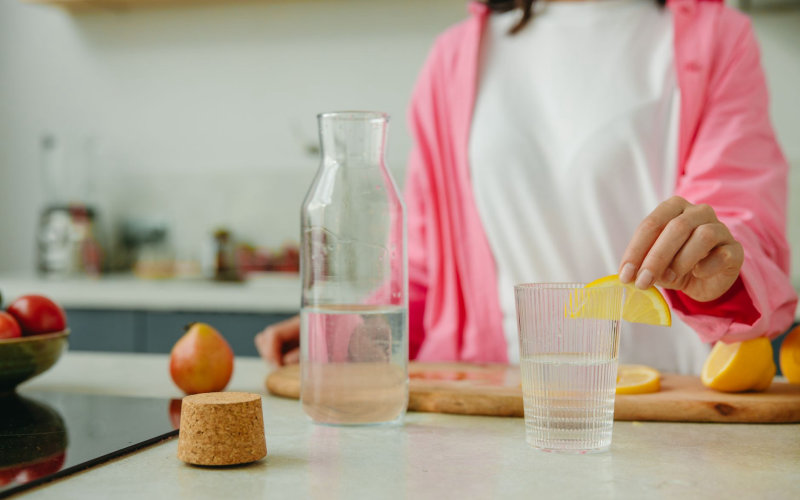
Photo by Yaroslav Shuraev on Pexels