
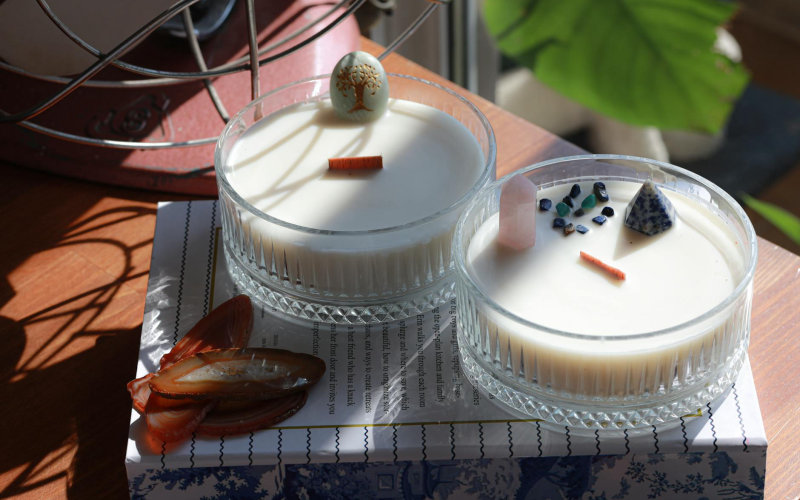

Hey, Posse! It’s Alex. And yes — ELEVEN batches. Not two. Not five. Eleven full, wasteful, slightly-embarrassing batches of soy candles before I finally made one that didn’t look like a crime scene or smell like a candle-scented disappointment.
If you’ve been trying to make soy candles at home and wondering why yours keep sinking, tunneling, cracking, or throwing zero scent — I NEED you to read this. Especially if you’re a woman at home who just wants a cozy, beautiful craft that actually works, or a senior who picked this up as a new hobby and feels like you’re doing everything right but still getting it wrong. You’re not crazy. The process has some genuinely tricky parts that most beginner tutorials just skip over.
So here’s everything I learned the hard way.
The Temperature Thing Is NOT Optional
This was my first big mistake. And honestly? The most common one I see.
Soy wax is ridiculously temperature-sensitive, and when I say that, I mean it down to the degree. I was melting my wax, getting impatient, and pouring whenever it “looked ready.” Huge mistake. Most soy waxes — like Golden Brands 464 or NatureWax C-3. need to be poured between 120°F and 135°F. If you pour too hot, you get sink holes and rough tops. Too cool, and the fragrance oil won’t bind properly.
Invest in a cheap candy thermometer. Mine cost about $8 at Walmart back in March 2025 and it has saved every single batch since. If you have arthritis or find small digital displays hard to read, grab a large-face dial thermometer, way easier to work with and totally worth it.
Your Fragrance Load Is Probably Too High (or Too Low)
Nobody talks about this enough. NOBODY.
I thought more fragrance oil meant a stronger scent throw. So I kept dumping in more and more. What I got instead were candles that sweated fragrance oil, had weird wet pools on top, and barely smelled like anything when burning. Turns out, soy wax can only hold so much fragrance. usually between 6% and 10% by weight, depending on the specific wax you’re using.
The calculation matters. If you’re working with 8 ounces of wax, that’s roughly 0.5 to 0.8 ounces of fragrance oil. No more. I use a simple kitchen postal scale, the OXO Good Grips model works really well and has a big, clear display that’s easy on the eyes. and I weigh EVERYTHING now. This one change alone fixed four of my recurring problems at once.
And here’s the uncomfortable truth most beginner guides skip: not all fragrance oils are created equal for soy wax. Some perform terribly. Brambleberry and CandleScience both have soy-specific fragrance lines that are worth the slightly higher price.
Wicks: The Most Overlooked Variable in Every Beginner Candle
Wicks ruined at least four of my eleven batches. FOUR.
Here’s the deal. Wick sizing depends on your container diameter, your wax type, AND your fragrance load. There’s no universal answer. A wick that works perfectly in a 3-inch jar will drown and tunnel in a 3.5-inch jar, leaving a thick wall of wasted wax on the sides.
So test. You have to test. I know that sounds tedious, but burn your test candles for four hours at a time and check the melt pool, it should reach the edges of the container within about 2 to 3 hours. If it doesn’t, size up. If it’s sooty or producing a huge flame, size down. CD wicks and ECO wicks tend to work better for soy than cotton core wicks in most containers, just so you know where to start.
For women and seniors crafting at home, I actually recommend starting with jelly jars. standard 8 oz Ball jars. They’re consistent, affordable, and the 3-inch diameter makes wick selection much more predictable as you’re learning.
The Cure Time Will Test Your Patience (And It Should)
Oh, you poured your candle and want to burn it tonight? I get it. But don’t.
Soy candles need a cure time of at least 48 hours, and honestly, a full week gets you the best cold and hot throw. The fragrance oil needs time to fully bind with the wax molecules. I burned my early candles at hour three and then wondered why the scent was weak. Now I pour on Sunday, cure all week, and burn the following weekend. The difference is genuinely remarkable.
If you’re making candles as gifts. which is one of the BEST reasons to get into this hobby, especially for holidays or birthdays, build your cure time into your schedule. Pour at least 10 days before you need them.
Your Pour Environment Actually Matters
This one surprised me. A lot.
Cold drafts and big temperature swings in your workspace cause soy wax to cool unevenly, which gives you those rough, mottled tops that look terrible. I was pouring mine in my kitchen in January 2025 with the back door cracked open and couldn’t figure out why my surfaces were so bumpy.
Now I pour in a room that’s at least 70°F, with no fans or air conditioning running. I also tent my candles loosely with a cardboard box right after pouring to slow the cooling process. That trick alone gave me smooth, professional-looking tops without a heat gun. Speaking of which. if you DO want to use a heat gun to fix tops, keep it on the lowest setting and work in slow circles. Easy on the wrists, especially if joint pain is a factor for you.
Using the Wrong Container Will Wreck Your Results
Glass is best. And not all glass is equal.
Thin glass can crack from the heat. Colored glass makes it impossible to watch your melt pool. Containers with narrow necks trap heat and create uneven burns. I learned this after ruining two full pours in some cute decorative jars I bought at HomeGoods. Beautiful to look at. Terrible for candles.
Stick with clear, straight-sided, thick-walled glass containers, especially when you’re still learning. Libbey glass is a solid brand, widely available, and the 9 oz status jar is practically the gold standard for beginner soy candle makers. Grab them in a pack of 12 and you’ll have plenty of room to practice and still have some left over to gift.
What I’d Do If I Were Starting Over Today
Start with just ONE wax, ONE fragrance, ONE wick size, and ONE jar. That’s it. Don’t go buying a starter kit with six different waxes and a tote bag of fragrance oils on day one. Too many variables means you’ll never know what actually fixed your problem. or caused it.
The craft is genuinely fun and so rewarding once it clicks. And it WILL click. But the beginner experience is mostly just managing your own impatience while learning to control a few very specific variables. Temperature, fragrance load, wick size, cure time. Get those four things right consistently, and you’ll be making candles that rival anything you’d spend $28 on at a boutique.
You’ve got this. Now go make something beautiful.
Photo by ezgi yalçın on Pexels