
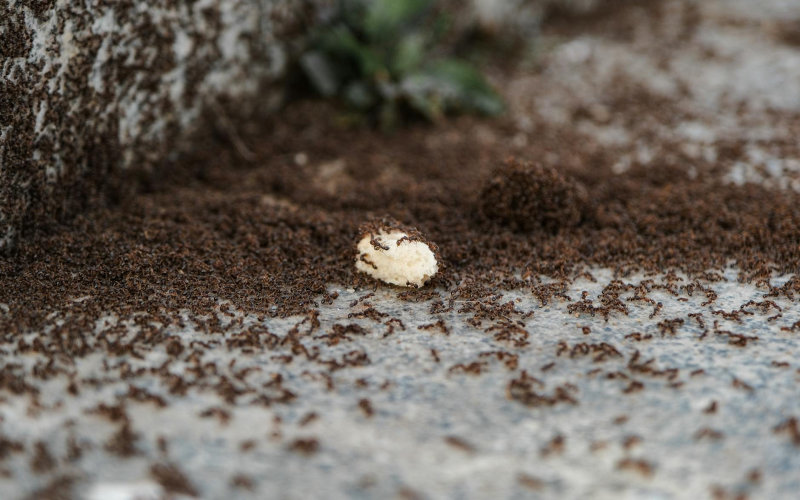

I’ve had ants in my kitchen three separate times over the past decade. The first time, I bought every Raid product on the shelf. Spent probably $40, sprayed everything, felt incredibly productive — and two weeks later the trail was back, marching along my countertop like I’d done absolutely nothing.
Here’s what nobody at the hardware store bothers telling you: most commercial sprays kill the ants you see. The colony — the queen, the eggs, the whole underground operation — sits there completely untouched. You’re essentially mowing the lawn without pulling the weeds. The ants keep coming back because the source never stopped sending them.
That’s exactly why these homemade ant killer recipes hit differently. The best ones act as bait, letting worker ants haul poison straight back to the nest. Others scramble scent trails so ants literally can’t navigate their way into your home anymore. Either way, you’re going after the actual problem instead of just wiping symptoms off your countertop.
1. Borax and Sugar Bait (The Classic That Keeps Winning)
Mix 1/2 teaspoon of borax with 8 teaspoons of sugar and 1 cup of warm water. Soak cotton balls in the solution, drop them near ant trails. That’s genuinely all there is to it.
The ratio matters more than most people think, though. Too much borax and it kills worker ants before they make it back to the colony — which sounds like a win but is actually counterproductive. You need them alive long enough to deliver the goods. That 1:16 borax-to-sugar ratio gives you roughly 48 hours of transport time, which researchers at the University of Florida’s entomology department confirmed is the sweet spot for wiping out a colony.
I’ve used this on Argentine ants (the tiny ones that seem to appear from thin air) and it took about 10 days to fully clear them out. Keep the bait fresh every 2-3 days. And keep pets away — borax isn’t wildly toxic to dogs, but nobody wants them licking cotton balls off the floor.
2. Diatomaceous Earth Barrier
Not technically a “killer” in any chemical sense. More like microscopic razors.
Food-grade diatomaceous earth — runs about $12-15 per pound at most garden centers — is made from fossilized algae shells. When ants walk through it, it slices their exoskeleton and dehydrates them. Brutal? Sure. But it’s completely non-toxic to humans, safe around kids, and doesn’t wear out the way sprays do.
Sprinkle a thin line around your home’s perimeter, along windowsills, or directly on active trails. The one catch is moisture — rain or humidity makes it clump and go useless fast. Reapply after rain. Works best in dry climates or anywhere indoors.
3. White Vinegar Spray (Trail Disruptor)
Ants run on pheromone trails. It’s basically how a scout ant broadcasts “I found food, follow me” to the whole crew. White vinegar obliterates those chemical signals.
Mix equal parts white vinegar and water in a spray bottle, then hit ant trails, entry points, anywhere you’ve spotted activity. It won’t kill them on contact — but it genuinely disorients them and breaks the trail so others can’t follow. Think of this as your daily maintenance spray while a borax bait station quietly handles the deeper colony work.
One thing worth knowing: don’t spray this right next to your bait stations. The sharp smell deters ants from approaching the bait, which completely defeats the point.
4. Dish Soap and Water Spray
So simple it almost feels like a joke. But it works.
Two tablespoons of liquid dish soap in a quart of water makes a spray that suffocates ants on contact by blocking their spiracles — the tiny breathing pores running along their bodies. Dawn seems to perform best in my experience, though I’ll admit I’ve never done a rigorous side-by-side test against Palmolive.
This won’t touch the colony at all. But when you’ve got a full-on visible infestation and need immediate relief while your bait works in the background, this is your tool.
5. Boric Acid and Peanut Butter Bait
Some ant species just aren’t into sugar. Protein-loving ants — fire ants, carpenter ants — want fat or meat. This is where peanut butter actually earns its place in your pantry.
Mix 1 tablespoon of peanut butter with 1/2 teaspoon of boric acid, roll it into small pea-sized balls, and place them near trails. Boric acid works on the same colony-transport principle as borax (they’re chemically close cousins), but the peanut butter delivery targets ants that wouldn’t glance at your sugar bait twice.
So if you’ve been running the sugar-borax setup and nothing’s moving, switch to this. You might simply have the wrong bait for whatever species has moved in.
6. Essential Oil Spray (Peppermint or Clove)
More deterrent than killer — and that distinction actually matters.
Peppermint oil carries menthol compounds that ants find genuinely repellent. And a 2017 study in the Journal of Economic Entomology found that clove oil (eugenol specifically) caused significantly higher ant mortality than peppermint at concentrations as low as 2%. Mix 15-20 drops of clove or peppermint essential oil per cup of water and spray entry points, window frames, and baseboards.
Your house will smell like a candy cane for a few hours. Honestly, could be worse.
7. Cornmeal (Slow-Kill Bait)
This one sounds like a backyard myth until you try it. Ants can’t properly digest cornmeal — they haul it back to the colony, eat it, and it essentially expands in their digestive system.
Sprinkle dry cornmeal near active trails and let them handle the rest. It’s slow, we’re talking 2-3 weeks, but it demands zero effort from you and costs maybe 30 cents worth of product. Best for outdoor ant hills where you’ve got patience and no particular urgency.
Bottom Line
Here’s something I genuinely haven’t seen anyone else point out: the reason most people fail with homemade ant killer recipes isn’t the recipe itself — it’s the timing. They apply bait and spray simultaneously, which triggers a defensive scatter response. When ants detect a chemical threat, they actually split the colony and establish secondary nests, making your problem geometrically worse. Use one method at a time. Start with bait. Give it 10-14 days. Then bring in your spray or barrier if stragglers are still hanging around. Patience is the actual secret ingredient here.
Frequently Asked Questions
How long do homemade ant killer recipes take to work?
Bait-based recipes like borax and sugar typically take 7-14 days to eliminate a colony because worker ants need time to carry the poison back and kill the queen. Contact sprays like dish soap work within seconds but don’t touch the colony at all.
Are these recipes safe around pets and children?
Most of them, yes. Diatomaceous earth, vinegar, dish soap, and essential oils are all pet and child-safe. Borax and boric acid recipes should be placed out of reach — low toxicity, but still not something you want dogs eating off cotton balls.
Why do store-bought sprays stop working after a while?
Because they only kill on contact, and ant colonies adapt fast. Some species detect chemical threats and reroute their trails within hours. Bait-based methods hold up better long-term because the ants don’t recognize the threat — they just think they found food.
What’s the single best recipe if I only try one?
The borax-sugar-water bait. Cheap, effective for most common species, and it actually targets the colony rather than just the workers you happen to see. Start there.
Photo by Yaşar Başkurt on Pexels