
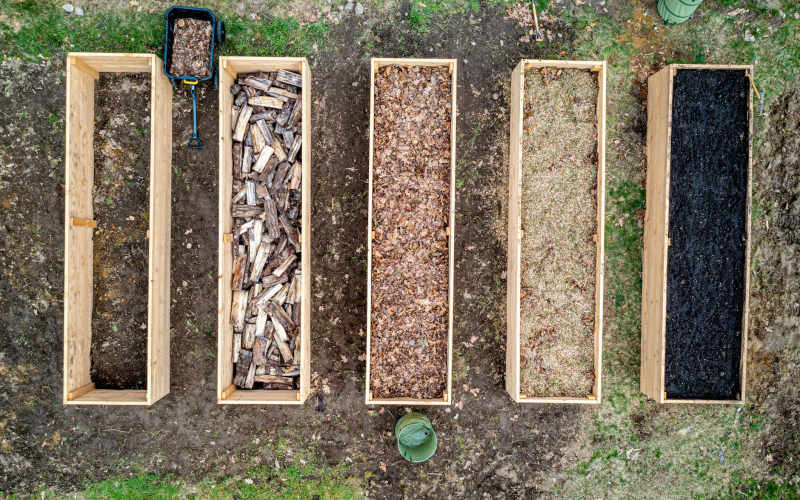

Last spring I spent exactly $22.47 building a raised bed that now grows more tomatoes than my family can possibly eat. No fancy lumber. No eighty-dollar cedar planks from the hardware store. Just some beat-up fence boards I pulled off a neighbor’s demolished fence and a Saturday afternoon I had absolutely nothing useful planned for anyway.
Here’s what most gardening blogs won’t tell you: reclaimed wood raised beds often outperform store-bought kits. Older lumber is denser, drier, and frequently more rot-resistant than the soggy, freshly milled stuff sitting in Home Depot right now. Not always — but often enough that it’s genuinely worth knowing before you spend a dime.
So if you’ve been putting this off because you figured it’d cost a fortune, consider this your wake-up call. You can do this. Even if you’ve never built a single thing in your life.
Where to Actually Find Free or Cheap Reclaimed Wood
This is the step everyone glosses over, and it’s honestly the most critical one.
Facebook Marketplace and Craigslist’s free sections are complete goldmines. Search “lumber,” “fence boards,” “pallets,” or just “wood” in your area. In 2023, a guy three blocks from me gave away 40 linear feet of old redwood fence planks because he was replacing his fence and couldn’t be bothered hauling them away. Forty feet. Free. Just like that.
Construction dumpsters are another option — though check your local ordinances before you grab anything. Demolition sites routinely toss perfectly usable 2x6s and 2x8s. Habitat for Humanity ReStores are worth a visit too; they sell salvaged building materials at a fraction of retail prices. A 6-foot 2×6 might run you $2-3 there versus $9 at a lumber yard.
Avoid anything that looks black or spongy. That’s rot. And skip boards with a sharp chemical smell or a greenish tint — that’s likely old copper chromate arsenate (CCA) treatment, which you absolutely don’t want anywhere near food plants.
What Wood Types Actually Work
Not all reclaimed wood ages the same way once it’s sitting outdoors in contact with soil.
Redwood and cedar are the obvious frontrunners — both naturally rot-resistant, both capable of lasting 10-20 years in a raised bed. Old-growth pine is denser than the modern stuff and holds up better than most people expect. I’ve seen beds built from salvaged pine in 2016 that are still completely solid. Oak works too, though it’s heavy and a little aggravating to cut and drill.
But honestly? Whatever you can get for free is probably fine for a first bed. Even untreated pine will last 5-7 years in most climates if you let it dry between waterings. That’s more than enough time to figure out whether you actually enjoy gardening before you invest in anything nicer.
The two things you genuinely must avoid: anything painted before 1978 (possible lead) and railroad ties. Railroad ties are saturated in creosote, a known carcinogen. Hard pass on those.
Tools and Hardware You’ll Need
Short list. Cheap list.
You need a saw (circular or hand saw, either works fine), a drill, exterior screws, and a measuring tape. That’s it. If you don’t own these, borrow them — most people are more than happy to lend tools for a Saturday afternoon project.
For hardware, I use 3-inch exterior wood screws. A box of 100 runs about $8-10 and you’ll only burn through maybe 20-30 screws per bed. No brackets required if you predrill and angle your screws slightly — that technique is called toe screwing, and it holds surprisingly well once it’s buried in soil pressure from all sides.
One optional addition I’ll always recommend: a staple gun and some hardware cloth stapled to the bottom of the frame before you fill it. Keeps moles and voles out. I learned that particular lesson the hard way after losing an entire carrot crop in 2021.
Building the Frame Step by Step
Standard beginner dimensions: 4 feet wide, 8 feet long, 10-12 inches tall. Four feet wide because you can reach the center from either side without actually stepping into the bed. Eight feet because most salvaged lumber comes in 8-foot lengths anyway.
Cut your boards: two 8-foot pieces for the long sides, two 4-foot pieces for the short ends. If your boards aren’t quite 10 inches tall, just stack two on each side. Screw the corners together using short 2×4 posts cut to match your bed height — these act as corner stakes and give you something solid to drive screws into.
Stand the frame up where you want it. Level it as best you can (it doesn’t need to be perfect, but severe slopes create uneven watering). Hammer stakes into the ground at the corners if the soil is soft enough to allow it.
Fill from the bottom up: a layer of cardboard first (smothers grass underneath, eventually breaks down into organic matter), then compost mixed with topsoil in roughly a 50/50 ratio. A 4×8 bed at 10 inches deep needs about 26 cubic feet of fill. That sounds like a lot. It is a lot. Good garden soil from a local supplier typically runs $30-45 per cubic yard, so buy in bulk if you can swing it.
Treating the Wood to Make It Last
You don’t need to slather anything exotic on your reclaimed boards.
Raw linseed oil — and I mean raw, not boiled (boiled versions contain metallic driers you don’t want near vegetables) — is the traditional treatment for a reason. Brush it onto the outside surfaces and let it soak in. It darkens the wood slightly and buys you a few extra years of life. A quart costs around $10 and covers a couple of beds easily.
Food-grade mineral oil works well too. What I’d skip entirely is any paint or stain on the interior surfaces — anything in direct contact with your soil should be as chemically inert as possible.
Positioning and Orientation
East-west orientation, long side facing south. That’s the answer, full stop. Your plants catch the most direct sun exposure that way, especially anything taller like tomatoes or pole beans that you plant along the back edge.
Keep the bed at least 18 inches from your foundation and well away from large trees. Tree roots are relentless. They will absolutely find that rich, loose, well-watered soil you’ve created.
Bottom Line
Here’s something I haven’t actually seen anyone else mention about reclaimed wood beds: the slight irregularity of salvaged lumber — the warped boards, the small gaps, the imperfect corners — genuinely improves drainage compared to a perfectly square, tight-fitting kit. Water finds its way out. Roots can breathe. The so-called “flaws” are features. Some of the most productive beds I’ve ever grown in had visible daylight between the boards, and they thrived precisely because they drained so aggressively. So stop chasing perfect materials. Character isn’t a flaw in the garden — it’s pretty much the whole point.
Frequently Asked Questions
Is reclaimed wood safe for growing vegetables?
Yes, with a few firm exceptions. Avoid CCA-treated wood (green tint, manufactured pre-2004), railroad ties, and anything painted before 1978. Untreated pine, cedar, redwood, and oak are all safe choices for food gardens.
How long will a reclaimed wood raised bed last?
Cedar and redwood: 15-20 years. Old-growth pine: 7-10 years. Modern untreated pine: 5-7 years. Brushing raw linseed oil on the exterior surfaces adds a few years regardless of which wood you’re working with.
Do I need to line the inside of a raised bed?
Lining the bottom with hardware cloth to block burrowing animals is genuinely smart. But don’t line the interior walls — that traps moisture against the wood and actually accelerates rot rather than slowing it down.
How much does it really cost if I source wood for free?
My last build came to $22.47 total. That broke down as $8 for screws, $10 for linseed oil, and $4.47 for a few boards I couldn’t track down for free. The soil is almost always your biggest expense — budget $40-60 for fill material on a standard 4×8 bed.
Photo by Skyler Ewing on Pexels