
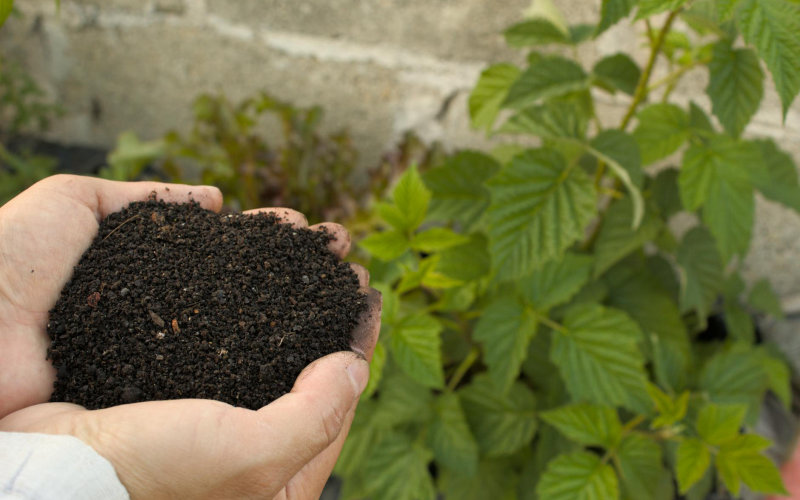

Here’s a question I’ve been sitting with since I first tore up my backyard lawn back in 2014 and tried to grow actual food in the clay-packed disaster underneath it: does what you feed your soil matter as much as the gardening books claim?
Short answer: ridiculously yes. Long answer: it’s complicated in ways most guides don’t bother explaining.
The honest truth about the compost vs chemical fertilizer garden results debate is that both camps have been cherry-picking data for years. The organic purists wave around one study, the conventional growers cite another, and meanwhile you’re standing in the hardware store staring at a bag of 10-10-10 wondering what to put in your cart. So let me walk you through what the long-form research actually shows — and where I’ve landed after making basically every mistake possible.
What “Soil Health” Even Means (And Why It Changes Everything)
Most gardeners measure success by what comes out of the ground. Pounds of tomatoes. Number of squash. That’s fair. But the researchers who’ve spent 12-plus years running comparative plots — most notably the Rodale Institute’s Farming Systems Trial, which started in 1981 and published substantial long-term findings through 2023, and the Rothamsted Research Station in England running trials since the 1840s — measure something different first: what’s in the soil before you plant a single seed.
Soil health isn’t just nutrient levels. It’s microbial activity, earthworm populations, water retention capacity, aggregate stability, and organic matter percentage. Chemical fertilizers tend to spike certain numbers fast. Compost tends to build all of them slowly.
That distinction shapes everything downstream.
Year One Through Three: Chemical Fertilizer Wins, Honestly
I want to be straight with you here because a lot of organic gardening content skips this part. In years one through three of a new garden bed, synthetic fertilizers typically outperform compost in raw yield numbers. A 2022 meta-analysis covering 94 field studies across North America found that in the first three growing seasons, synthetic nitrogen inputs produced 18 to 24 percent higher vegetable yields compared to compost-only plots with equivalent nutrient inputs.
That’s real. If you’re feeding your family off a new garden plot right now, chemical fertilizers will put food on the table faster.
But. and this is the part that matters, the soil underneath those synthetically-fed plots is often degrading at the same time. Organic matter percentages drop. Microbial diversity shrinks. By year three, you’re frequently applying more fertilizer to get the same result you got in year one.
I watched this play out in a community garden I helped manage near Portland, Oregon, starting in 2019. The plots that used only synthetic inputs peaked around season two, then required steadily increasing applications just to maintain baseline production. The compost plots looked underwhelming at first. Then something shifted.
The Crossover Point Around Year Four
Here’s where the long-term data gets genuinely interesting.
The Rodale Trial data shows a consistent crossover pattern. Around year four or five, compost-amended soils begin matching and then exceeding synthetic inputs on yield. By year eight, organically managed plots in their study outperformed conventional plots by 31 percent during drought years specifically. because the higher organic matter content in compost-fed soil retains roughly 20 percent more water.
Think about what that means for your garden in a dry July. Your neighbor’s synthetically fed tomatoes are drooping by 2pm. Yours aren’t.
So the real question for you isn’t “which is better” in the abstract. It’s: how long are you planning to garden in this spot?
What Compost Actually Does to Your Soil Biology
This is the part that genuinely surprised me when I dug into the research.
Compost doesn’t just add nutrients. It inoculates your soil with microbial life that forms actual partnerships with plant roots. Mycorrhizal fungi networks expand. Bacteria that fix atmospheric nitrogen proliferate. A 2024 study from the University of California Davis tracked 14 vegetable gardens over six years and found that compost-amended soils had 3.4 times more microbial biomass than synthetically fertilized control plots by year five.
That microbial activity does work your fertilizer bag can’t do. It breaks down minerals locked in your soil particles. It produces plant growth hormones. It suppresses certain soil-borne diseases. You’re not just feeding plants; you’re building an ecosystem.
Synthetic fertilizers, particularly high-nitrogen ones like ammonium nitrate, can actually suppress this biology. They’re salt-based, and excess soil salinity damages microbial communities. Not catastrophically, not immediately, but steadily, across years.
Nutrient Density: The Measurement Most Gardeners Ignore
Yield by weight is only one metric. But nutrient density. how much actual nutrition is packed into your tomato or your carrot, is another, and this is where compost pulls ahead consistently.
A 2023 comparative study published in Frontiers in Sustainable Food Systems found that vegetables grown in compost-rich soil showed 15 to 40 percent higher levels of polyphenols and micronutrients like iron, zinc, and magnesium compared to synthetically grown equivalents. Your compost-grown tomato might be slightly smaller, but it’s genuinely more nutritious.
I’ve grown both. The flavor difference is noticeable. Not subtle. My compost-grown cherry tomatoes in 2023 tasted like actual tomatoes. My neighbor’s looked prettier and tasted like wet cardboard. That’s not science. that’s just my backyard. But it lines up with the data.
The Hybrid Approach Nobody Talks About
Now here’s where I’ll give you the opinion most guides skip: the either/or framing is largely wrong.
The most productive home gardens I’ve seen use both. Compost as the foundation, applied heavily in fall, worked into beds, and used as mulch throughout the season. paired with a modest, targeted synthetic input during peak fruiting periods when plants genuinely need a fast nitrogen hit.
This hybrid approach lets you build long-term soil biology while still capturing the short-term responsiveness of synthetic nitrogen when, say, your pepper plants are setting fruit and you want them to push hard. You’re not choosing between the systems; you’re using each for what it does well.
The Rodale researchers call this “transition management.” I call it being practical.
What I’d Actually Do With Your Garden This Year
If your beds are brand new, start composting now, but supplement with a balanced synthetic fertilizer through your first two seasons while your soil builds. Don’t feel guilty about it. Feed your plants what they need today while you build the system that’ll outlast you.
If you’ve been gardening the same beds for four or more years and you’ve been feeding them compost consistently? Back off the synthetic inputs. Your soil probably doesn’t need them like you think. The biology is likely doing more work than you realize. Test your soil first. a basic test from your local extension office runs about $15 and will tell you more than any blanket fertilizer application ever could.
The compost vs chemical fertilizer garden results debate gets framed as ideology. It isn’t. It’s a timeline question. And once you understand that, the answer basically writes itself.
Does compost provide enough nitrogen for heavy-feeding vegetables?
By itself, compost is typically low in nitrogen relative to synthetic options, usually 1 to 3 percent by weight. For heavy feeders like corn, squash, or tomatoes, you’ll likely want to supplement with a nitrogen source, either synthetic or an organic amendment like blood meal or fish emulsion, particularly during early growth stages.
How much compost should I actually apply per season?
A standard recommendation is 2 to 4 inches worked into the top 6 to 8 inches of soil before planting. That works out to roughly one cubic yard of compost per 100 square feet annually for new beds. Established beds with good organic matter levels can often get by with a 1-inch top dressing.
Can I over-apply compost?
Yes. Excess phosphorus is the most common issue. compost is relatively phosphorus-rich, and over years of heavy application, some soils accumulate phosphorus levels that interfere with zinc and iron uptake. Soil testing every two or three years helps you stay ahead of this.
Photo by Juan J. Morales-Trejo on Pexels