
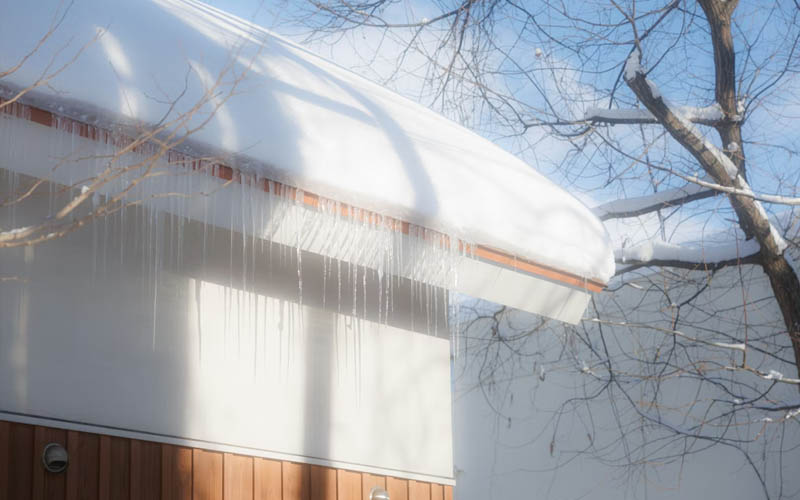

My neighbor Rick — great guy, absolutely hopeless at home maintenance — burned through $340 worth of heating oil in a single January week last year. Not a big house. The problem was cold air sneaking in through roughly a dozen spots he’d never once thought to check. Gaps around his basement rim joists, a dryer vent that flapped open whenever the wind hit it right, attic insulation that had packed down to almost nothing over fifteen years of settling. He wasn’t heating his house. He was heating the neighborhood.
Here’s the thing most people don’t realize: cold-weather home problems rarely announce themselves. No burst pipe, no dramatic moment. They just quietly drain your wallet — month after month — through cracks and gaps you walk past every single day.
Do this right, and studies from the U.S. Department of Energy say you can trim heating costs by 10% to 30%. Real money. And almost everything I’m about to cover costs under $150 in materials, total.
Start With an Honest Walk-Around
Before you spend a dime, just walk your house. Outside first, then inside. You’re looking for anywhere the outdoors and indoors are having a conversation they shouldn’t be.
Outside: check where siding meets foundation. Check around every window frame, every pipe that exits the wall, every spot where wires or cables poke through. Any gap wider than a quarter? That’s a problem. Most people find six to twelve of these on a first pass — sometimes more.
Inside, hold a lit incense stick (or just a damp hand) near electrical outlets, window edges, and exterior door bottoms on a windy day. If it flickers — or you feel a chill — you’ve found one.
Seal the Gaps That Actually Matter
Not all gaps are created equal. Windows and doors get all the attention, but honestly? The sneakiest culprits are almost always the ones nobody checks.
Rim Joists
These are the boards sitting on top of your foundation walls. In most homes built before 1990, they’re either completely uninsulated or might as well be. how to insulate rim joists A roll of foam backer rod plus a can of expanding spray foam — maybe $30 combined — can make a surprisingly immediate difference in basement warmth.
Electrical Outlets on Exterior Walls
Cold air pours straight through these. This shocks people every single time I mention it. Foam outlet gaskets run about $4 for a pack of ten and take thirty seconds to install. Just do every exterior outlet in your house. Do it today.
Door Sweeps and Weatherstripping
If you can see daylight under your front door, you’ve essentially got a small window cracked open all winter. Door sweeps — that rubber strip pressing against the threshold — cost $12 to $25 and take maybe twenty minutes to install. The weatherstripping around door frames compresses over time and quietly stops doing its job. Replace it every five to seven years, sooner if the door gets heavy use.
Don’t Skip the Attic
I can’t stress this enough. Heat rises. Your attic is where a massive chunk of your conditioned air is escaping — especially in older homes.
The recommended insulation level for most of the continental U.S. sits at R-38 to R-60 in the attic, per Energy Star insulation guidelines. Most older homes are hovering around R-11. That gap costs you money every day from November through March.
Blown-in insulation is something you can actually handle yourself. Home Depot and Lowe’s both loan out blower machines free when you buy enough bags — usually around twenty for an average attic floor.
Check Your Windows Without Replacing Them
New windows are brutal on the budget. A full house replacement runs $8,000 to $15,000, easy. But here’s what most articles won’t tell you: you can capture about 70% of the benefit for roughly $40.
Interior Window Film Kits
3M makes shrink-film window insulation kits — you apply them inside your windows with double-sided tape and a hairdryer. They trap a dead-air buffer between layers, and they genuinely work. I used these in a 1960s duplex I rented in Vermont. The difference wasn’t subtle. It was immediate.
Rope Caulk
Temporary, removable, and more effective than it has any right to be. Press it into gaps around window frames, it seals through winter, and it peels off clean come spring. A $4 roll covers about six average windows.
Your Heating System Needs Attention Too
Sealing up your home’s shell is half the job. The other half is making sure whatever’s generating heat inside is actually doing it efficiently.
Change your furnace filter — or at minimum check it — before the first cold snap hits. A clogged filter forces your system to strain harder while heating less effectively. If your furnace is fifteen or more years old, have a technician service it. find HVAC service near you A $100 tune-up can add years to its lifespan and shave a real percentage off your monthly bills.
And if you’ve got a hot water heating system — bleed your radiators. Air gets trapped in the lines over summer and quietly wrecks efficiency. There’s a small valve on each radiator; turn it with a key or flathead screwdriver until water (not air) starts trickling out, then close it back up. Two minutes per radiator. That’s it.
Pipes and Exterior Faucets
Burst pipes are the nightmare scenario. One frozen pipe that gives way inside a wall can cause $10,000 to $50,000 in water damage — and that’s not me being dramatic, that’s what insurers actually report as the average for interior pipe bursts. Insurance Information Institute pipe damage stats
Disconnect your garden hoses. Always — no exceptions. Then cap your exterior spigots with foam faucet covers, about $3 each at any hardware store. Pipes running through an unheated garage or crawl space? Wrap them in foam pipe insulation. It’s cheap. It’s easy. And it might be the thing standing between you and a catastrophic winter.
The Fireplace (If You Have One)
When it’s not in use, a chimney is basically a giant cold-air funnel pointed directly into your house. If you’ve got a fireplace you rarely light, grab a chimney balloon — an inflatable plug that sits in the flue and blocks drafts. About $50. chimney balloon products Some people pocket $200 to $300 per season from this one fix alone.
And if you do use your fireplace regularly, get the flue inspected before the season starts. Creosote buildup is a genuine fire hazard. The Chimney Safety Institute of America recommends annual inspections for active fireplaces — not just for efficiency, but because it matters.
Bottom Line
Here’s where most articles on this subject get it wrong: they frame weatherproofing as a one-time checklist. Do the tasks, move on. But your house moves. Every year it expands and contracts through freeze-thaw cycles — the caulk cracks a little more, the weatherstripping compresses a little further. Gaps that weren’t there two winters ago are there now.
The people who actually keep their heating bills under control are the ones who do a quick walk-around every October. Not a massive overhaul — just 45 minutes with a can of caulk and fresh eyes. That habit, more than any single fix, is what separates the Ricks of the world from the people who aren’t white-knuckling their January utility statements.
—
Frequently Asked Questions
How much does it actually cost to weatherproof a house for winter?
For most average-sized homes, you can do a solid, meaningful job for $100 to $200 in materials if you’re handling the work yourself. New windows and full insulation overhauls are optional upgrades — not requirements.
When’s the best time to start weatherproofing?
September or early October, honestly. You want to get this done before temperatures drop — some products, caulk especially, don’t cure properly in cold weather. And contractors get buried in calls once the first cold snap hits. Don’t wait for frost.
Can I weatherproof a rental apartment?
More than you’d expect. Rope caulk comes off without damage, outlet gaskets leave no trace, window film kits peel away cleanly in spring. Your landlord might even cover some of the cost if you frame it right — protecting the property, not just your comfort bill.
Does weatherproofing actually affect indoor air quality?
Sometimes, yes — and it’s worth knowing going in. Seal a house too tightly without proper ventilation and you can trap moisture and indoor pollutants. If you’re doing serious air sealing work, make sure your home still gets adequate fresh air exchange. An HRV (heat recovery ventilator) is worth looking into if you’re tightening up an older home significantly.