

My washing machine smelled like a wet dog wearing gym socks. Not occasionally — every single time I opened the lid after a cycle, that musty funk just hit me square in the face. I’d been washing clothes in there for months before it finally clicked: the thing responsible for cleaning my clothes was itself disgusting.
Here’s what nobody tells you upfront. Most commercial washing machine cleaners (I’m looking directly at you, Affresh tablets — $14 for a 3-pack) are doing almost exactly what a $2 box of baking soda can do. The marketing’s just better. I tested both on my front-loader after reading a 2022 Consumer Reports breakdown comparing DIY versus commercial cleaners, and honestly? The pantry method won on odor removal. It wasn’t even close.
So if you’ve got white vinegar, baking soda, or citric acid sitting in your kitchen right now, you’re already set. Let’s get into it.
Why Your Washing Machine Gets So Gross in the First Place
Soap scum. Mineral deposits. Dead skin cells. Residual fabric softener that never fully rinses away. All of it quietly piles up inside the drum, beneath the rubber gasket on front-loaders, and inside the detergent drawer — which, let’s be honest, most people have never cleaned once in their lives.
Front-loaders are the worst offenders by a mile. That horizontal drum traps moisture, and the rubber door seal is basically a petri dish for black mold if you’re not leaving the door cracked between washes. A 2019 study in the journal Applied and Environmental Microbiology found that 79% of home washing machines tested harbored biofilm-forming bacteria — and many contained actual fecal bacteria. Yeah. Charming.
Top-loaders aren’t innocent either. They just stash their grime differently, usually in the agitator column and around the water inlet.
What You’ll Need (You Probably Have It All)
White distilled vinegar (at least 2 cups). Baking soda (half a cup). An old toothbrush. Microfiber cloths. Optionally, citric acid powder — about 2 tablespoons — which you’ll find in the canning aisle of most grocery stores for around $4 a bag.
That’s genuinely it. No gloves required unless your skin runs sensitive. No special equipment.
One thing I’d throw in: a small spray bottle filled with straight white vinegar is surprisingly useful for the gasket and exterior work. Makes the whole job noticeably faster.
Step 1 — Tackle the Detergent Drawer First
Pull it all the way out. Most detergent drawers come free completely if you press the small tab inside. Soak it in hot water for 10 minutes, then scrub every compartment with the toothbrush. What comes off will probably horrify you.
Rinse it clean and let it air dry while you work on the drum. And while it’s soaking, wipe down the cavity where the drawer lives — there’s almost always a thick gunk buildup right at the back of that slot that nobody ever thinks to touch.
Step 2 — Clean the Door Gasket (Front-Loaders Only)
This is the single most critical step if you own a front-loader. Fold back the rubber gasket and look inside the fold. Black spots? Mold. Gray slime? Also mold. Musty smell coming directly from that spot? You already know.
Spray straight white vinegar into the fold, wait 5 minutes, then scrub with the toothbrush — all the way around the seal, full 360 degrees. The spots at the bottom collect standing water constantly, so don’t rush past them. Wipe everything out with a microfiber cloth. If the mold is stubborn, repeat the process with a baking soda paste (just enough water mixed in to make it spreadable) and let it sit another 5 minutes. Some heavily molded gaskets genuinely need that second pass.
Step 3 — Run the Drum Cleaning Cycle
For front-loaders: pour 2 cups of white vinegar directly into the drum — not the drawer — and run the hottest cycle your machine offers. On my LG WM3900HWA, that’s the “Tub Clean” setting at 140°F. No clothes, obviously.
For top-loaders: fill the drum with hot water, add 2 cups of vinegar and half a cup of baking soda, agitate briefly, then pause the cycle and let everything soak for 30 to 60 minutes before letting it finish.
But here’s what I’d specifically recommend if you have hard water and haven’t cleaned your machine in more than six months: swap the baking soda for 2 tablespoons of citric acid powder. Citric acid dissolves mineral scale and limescale far more effectively than baking soda, which is really more of a deodorizer. They serve different purposes. Use citric acid for drum cycles, baking soda for scrubbing surfaces.
Step 4 — Wipe Down the Drum Interior
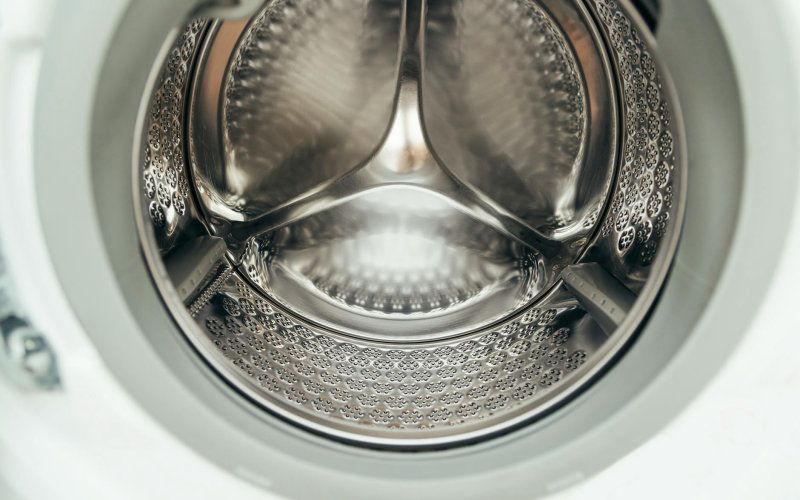
Once the cycle finishes, open it immediately. Dip a microfiber cloth in a bit of straight vinegar and wipe down the entire drum interior — the back wall especially, plus the perforations around the sides. Give the door glass a wipe while you’re at it.
And don’t skip the door itself. The inside face of a front-loader door picks up a greasy film that most people never notice until they hold it up to direct sunlight. It’s always there.
Step 5 — Finish With the Exterior
Quick one. Wipe down the control panel with a barely damp cloth (nothing wet near electronics), clean the top surface, and work the toothbrush into any button crevices. Reinstall your clean detergent drawer.
Then leave the door open for at least 2 hours. Airflow is everything when it comes to keeping mold from staging a comeback.
How Often Should You Actually Do This?
Monthly for front-loaders. Every 2 to 3 months for top-loaders if you’re running average laundry loads (the American Cleaning Institute puts “average” at roughly 8 to 10 loads per week for a family of four).
If you use liquid fabric softener regularly, go monthly regardless of machine type. Fabric softener is genuinely one of the biggest drivers of soap scum buildup — more than most people realize.
Bottom Line
Here’s something I haven’t seen anyone else actually say: the smell coming from your washing machine isn’t just unpleasant — it’s transferring onto your supposedly clean laundry. That faintly musty odor your towels carry after washing? That’s not the towels. That’s your machine depositing its own biofilm back onto fabric during every cycle. When you think about it that way, cleaning the machine stops being about the machine. It’s about whether your clothes are actually getting clean, or just getting redistributed grime at a higher temperature. Monthly maintenance stops feeling like a chore and starts feeling like basic hygiene.
Frequently Asked Questions
Is it safe to use vinegar and baking soda together in a washing machine?
You can use both, but not simultaneously in the same step — they neutralize each other on contact, which cuts down on both their effectiveness. Use vinegar for the drum cycle and baking soda separately, either for scrubbing surfaces or as a follow-up deodorizing cycle.
How do I know if my washing machine has mold?
Start with the rubber door gasket on front-loaders — black or dark gray spots are the dead giveaway. You might also catch a persistent musty smell even after running cycles, or spot dark residue on the drum walls. Top-loaders typically show mold around the agitator or along the waterline inside the drum.
Can I use apple cider vinegar instead of white vinegar?
Technically yes, but don’t. Apple cider vinegar can leave residue and subtle staining on light-colored drum surfaces. White distilled vinegar at 5% acidity is the right call here. It’s also cheaper — usually around $3 for a 32-ounce bottle at any grocery store.
How long does a full machine cleaning actually take?
The hands-on scrubbing runs about 15 to 20 minutes. The drum cycle itself takes 45 to 90 minutes depending on your machine. So the active work is well under an hour — you just need to be home while the cycle runs.
Photo by Vlad Deep on Pexels