

Hey Posse! It’s Alex — and today we need to TALK.
Because I just watched someone wipe down their cutting board with a damp cloth, nod at it like “yep, clean,” and walk away. And I had to physically stop myself from saying something. That moment? That is exactly why I needed to write this.
You guys, we have been LIED TO — or at least, seriously misled. about how to actually disinfect a kitchen. Not by bad people. Just by habit, by outdated advice passed down from our moms and grandmoms, and honestly? By clever product marketing that has nothing to do with actual science. So today we’re blowing up the myths. All of them.
Wiping Isn’t the Same as Disinfecting
This is the BIG one. The one that makes me want to scream into a dish towel.
Wiping a surface removes visible mess. That’s it. You’re moving crumbs, grease, and food residue from one place to another. But bacteria, E. coli, Salmonella, Listeria. those don’t care that your counter LOOKS clean. They’re microscopic. They’re still there. Thriving.
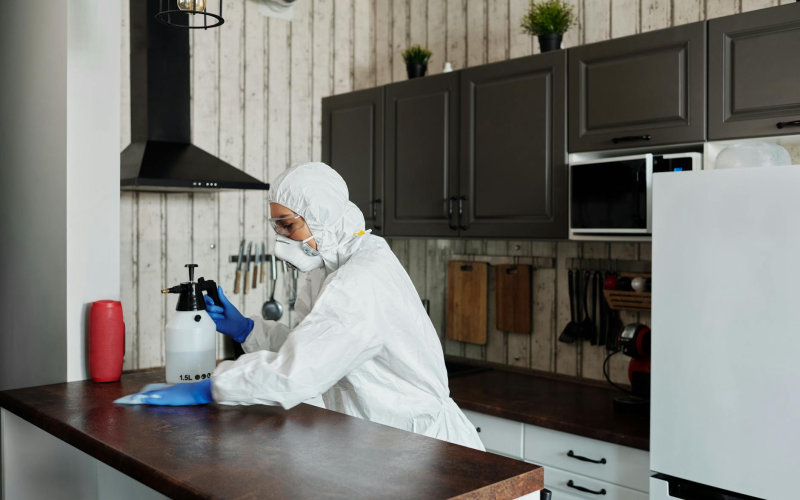
To actually disinfect, a product needs to sit on the surface wet for a specific amount of time, called the “dwell time.” Most people spray, wipe immediately, done. But your typical disinfectant spray? It needs 30 seconds to 4 minutes of contact time to actually kill pathogens. I tested this myself after reading through CDC surface disinfection guidance in early 2026. Spray, walk away, THEN wipe. That’s the move.
Hot Water Kills Bacteria.
Right?
Wrong. So wrong.
The temperature needed to kill most kitchen bacteria, around 160°F (71°C). is scalding. Way hotter than your tap runs. Hot water from a standard faucet sits somewhere between 110-120°F, which is warm enough to feel impressive but not nearly hot enough to actually sanitize your sponge or your sink.
What does this mean for you practically? Your dishwasher running a hot cycle? Useful. Rinsing your cutting board under the hot tap? Not doing what you think it’s doing. Not even close.
Your Kitchen Sponge Is the Real Problem
Nobody wants to hear this. But it’s true, and most cleaning guides completely skip over it.
A 2017 study published in Scientific Reports, researchers analyzed 14 used kitchen sponges under microscopy. found up to 54 billion bacterial cells per cubic centimeter. PER CUBIC CENTIMETER. That sponge you’re using to “clean” your dishes? It might be one of the most bacteria-dense objects in your entire home.
Microwaving a damp sponge does help kill some bacteria, but it doesn’t come close to eliminating all of them, especially the heat-resistant ones. The honest answer, the one I’ve actually stuck to since I read that study. is replace your sponge every 1 to 2 weeks, minimum. Or switch to silicone scrubbers you can actually run through a proper dishwasher cycle.
Bleach Is Always the Best Disinfectant
I get it. Bleach feels POWERFUL. It smells like clean. It feels extreme enough to actually work.
But bleach loses effectiveness fast. A diluted bleach solution, which is what you should be using, not straight bleach, please. has a shelf life of roughly 24 hours once mixed. Most people make a batch, store it in a spray bottle under the sink for weeks, and wonder why their kitchen still isn’t actually sanitized.
And bleach doesn’t work well on greasy surfaces at ALL. Grease acts as a barrier. So if your countertop has any residual cooking oil on it and you spray bleach directly, you’ve basically just created a very smelly and ineffective situation. Clean the surface first with dish soap and water. Then disinfect. Order matters.
Natural Cleaners Like Vinegar and Lemon Do the Job
Oh, I LOVE this myth because people are so passionately committed to it.
Vinegar is great for a lot of things. Removing mineral deposits, cutting through grease, making windows streak-free, solid. But disinfecting? Vinegar has not been EPA-registered as a disinfectant. It reduces some bacterial counts, sure. But it doesn’t reliably kill Salmonella or E. coli at the concentrations most of us use it. Same story with lemon juice.
Now look, I’m not anti-natural cleaning. I use vinegar regularly for certain things. But if your kid spilled raw chicken juice on your counter, you need an actual EPA-registered disinfectant. not a bottle of Bragg’s apple cider vinegar.
Cross-Contamination Lives in Your “Clean” Kitchen
Here’s where it gets really uncomfortable.
You disinfect your counter. Great. Then you put down your cutting board, handle raw chicken, and set the knife on the same clean counter while you grab a bowl. Contaminated. You’ve just re-contaminated a surface you spent time cleaning.
The National Sanitation Foundation’s 2026 Home Hygiene Report identified kitchen faucet handles, refrigerator door handles, and reusable grocery bags as consistently among the most contaminated surfaces in a home, more than toilets. TOILETS. And most people never disinfect any of those things.
Your reusable bags, specifically. Wash them. Regularly. Most of us toss vegetables and sometimes raw proteins straight into those bags every week and never think about it.
The Honest Truth
Here’s my actual take after years of reading about this and, honestly, embarrassing myself when I realized my “clean” kitchen was anything but: the gap between feeling like you’ve cleaned and actually having disinfected is HUGE, and most of us are living in that gap without knowing it.
The fix isn’t complicated. Use an EPA-registered disinfectant. Let it sit. Replace your sponge more than you think you need to. Clean grease before you disinfect. Handle your faucet and fridge handle with the same attention you give your cutting board. That’s genuinely it.
You don’t need expensive products. You don’t need a whole new routine. You just need to do the right things in the right order and stop trusting the habits you inherited without questioning them.
Now go check that sponge. Seriously.
FAQ
How long should disinfectant spray sit on a kitchen surface?
Most EPA-registered disinfectant sprays require between 30 seconds and 4 minutes of wet contact time to effectively kill pathogens. Check the label on your specific product. that dwell time information is listed there and most people skip right past it.
Is vinegar safe to use in the kitchen at all?
Absolutely, just not as a disinfectant for high-risk surfaces. Vinegar is excellent for cutting mineral deposits and general grime but hasn’t been proven to reliably eliminate Salmonella or E. coli. Use it for general cleaning, and bring in an actual disinfectant when raw proteins are involved.
How often should I actually replace my kitchen sponge?
Every 1 to 2 weeks at most if you’re using it daily. If you use it for raw meat cleanup, replace it immediately. Silicone scrubbers that can survive a full dishwasher cycle are a solid alternative worth considering.
Photo by Matilda Wormwood on Pexels