
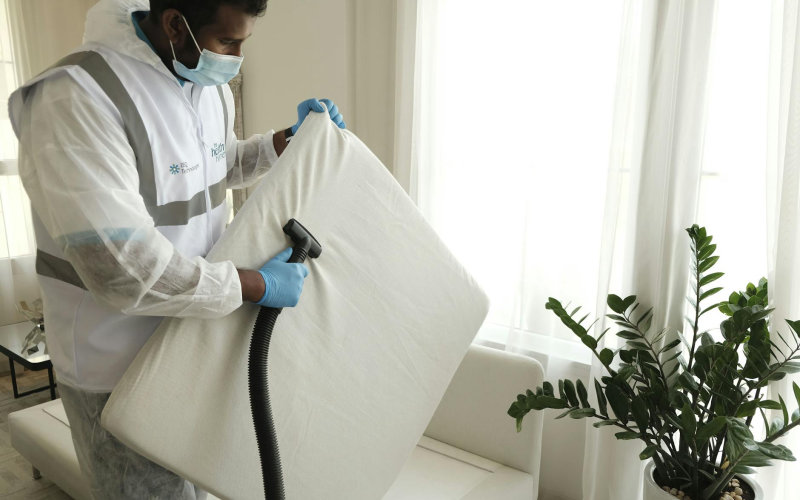

Here’s something nobody warns you about when you become an adult: mattresses are basically stain magnets. And most of the cleaning advice you’ll find online will have you dumping half a bottle of liquid onto something that absolutely cannot get waterlogged. I learned this the hard way in 2019, when I soaked a $900 Saatva mattress trying to remove a coffee stain and ended up with a mildew smell that stuck around for six weeks. Six. Weeks.
The problem with foam—memory foam, latex, hybrid cores, take your pick—is that it absorbs moisture like a sponge and then has nowhere to send it. Trapped water inside foam turns to mold and mildew within 24 to 48 hours, sometimes faster depending on your climate. So when you’re trying to deep clean mattress stains at home, the goal isn’t to flood the surface. It’s to use as little liquid as possible while still actually breaking down the stain.
Trickier than it sounds. But absolutely doable. I’ve been troubleshooting this for years, and the methods below work on real stains—the ones you’re actually embarrassed about.
Gather the Right Supplies First
Don’t skip this step. Seriously.
Having everything ready before you start means you won’t be scrambling mid-process and making panicked decisions (like grabbing the bleach because it’s right there). You need white cloths or paper towels, baking soda, white vinegar in a spray bottle, a small bowl, hydrogen peroxide (3%, the drugstore kind), dish soap, a soft-bristle brush, and optionally an enzyme cleaner like Biokleen Bac-Out or Nature’s Miracle.
Cold water only. Never hot. Hot water permanently sets protein-based stains—blood, urine, sweat—into the fabric, which is a fact that took me embarrassingly long to learn.
Strip and Assess Before You Touch Anything
Pull off all the bedding. Remove the mattress protector if you have one (and if you don’t, that’s a whole separate conversation we need to have). Then look at the stain in decent light.
Is it fresh or dried? How big is it? Does it smell? The answers change your entire approach. A fresh urine stain needs immediate blotting before any cleaning agent touches it. A dried blood stain from three months ago needs completely different treatment than a week-old sweat ring along the edge.
Take a photo too. I know that sounds odd, but it genuinely helps you track whether your cleaning is working or whether you’re just spreading the stain around in a convincing-looking circle.
Tackling Urine Stains (The Most Common One, Let’s Be Honest)
Kids, pets, illness—urine stains happen. No judgment here.
Blot up as much as possible with a dry cloth first. Then mix one tablespoon of dish soap with two cups of cold water and one tablespoon of white vinegar. Apply this with a cloth using a dabbing motion—never scrub, because scrubbing pushes the stain deeper into the fabric fibers. Use barely enough moisture to dampen the surface. Not soak it.
After that, sprinkle a generous layer of baking soda over the whole area and leave it for at least 8 hours. Overnight is better. The baking soda pulls remaining moisture and odor up out of the surface, then you vacuum it off in the morning. For stubborn or older urine stains, an enzyme cleaner is genuinely the smarter call—enzymes break down the uric acid crystals responsible for the smell, which no amount of vinegar will fully handle on its own.
Getting Out Blood Stains Without Wrecking the Fabric
Cold water. Always cold.
Mix half a cup of hydrogen peroxide with one tablespoon of dish soap and one tablespoon of salt. Apply it very sparingly to the stain using a cloth. You’ll see it fizz—that’s the peroxide reacting with the proteins in the blood, which is exactly what you want. Blot. Don’t rub.
Here’s the part most guides skip entirely: hydrogen peroxide can bleach darker fabrics if you leave it on too long. Test a hidden corner of your mattress first, especially if the ticking fabric has any color to it. Leave it on no more than 5 minutes before blotting it off with a cold, damp cloth.
Sweat and Yellow Stains Along the Edges
That yellowish discoloration around where you sleep? It’s a combination of sweat, body oils, and oxidation that builds up over time. Basically unavoidable if you’ve owned a mattress for more than a couple of years.
Make a paste using three tablespoons of baking soda, one tablespoon of hydrogen peroxide, and a few drops of dish soap. Apply it directly to the stained area with a soft brush, working it gently into the surface rather than scrubbing aggressively. Let it sit for 30 minutes. Then remove it with a barely-damp cloth, blotting rather than wiping.
For really stubborn yellowing, a commercial upholstery cleaner like Woolite Heavy Traffic or Bissell Pet Stain Eraser foam can work well. Apply it according to the label—but honestly, use less than directed. Companies always tell you to use more product than you actually need.
Drying the Mattress Properly After Cleaning
This is where most people sabotage themselves.
If you don’t dry the mattress completely before putting sheets back on, you’ve just created a perfect dark, warm, slightly damp environment for mold spores. Give it real airflow. Point a box fan directly at the cleaned area for at least 2 to 3 hours. Open a window. A dehumidifier in the room speeds things up significantly.
And don’t put your mattress protector back on until the surface is 100% dry to the touch. Not damp-but-probably-fine. Actually dry.
Prevention: The Boring But Important Part
Once you’ve spent three hours cleaning a mattress stain at midnight, you get very motivated about prevention.
A waterproof mattress protector is the single most useful thing you can buy. The SafeRest Premium (around $35 on Amazon as of 2024) is breathable, doesn’t make that awful crinkly plastic noise, and has saved my current mattress from roughly four separate incidents in two years. Wash it every month or two along with your sheets.
Also—rotating your mattress every 3 to 6 months distributes wear and keeps any one section from getting beaten down and stain-saturated faster than the rest.
Bottom Line
Here’s something I haven’t seen anyone else say: the biggest mistake people make isn’t using the wrong cleaner. It’s waiting. A stain that’s 20 minutes old takes maybe 10 minutes to treat. That same stain at 48 hours? Could take two hours and still leave a ghost mark behind. Your mattress fabric is basically a slow-motion record of every time you hesitated.
The real skill isn’t knowing the perfect cleaning solution. It’s building the reflex to act immediately—keep a spray bottle of diluted white vinegar on your nightstand, treat stains before your brain talks you into dealing with it tomorrow. Because tomorrow always makes it worse.
Frequently Asked Questions
Can I use a steam cleaner on my mattress?
Yes, but carefully. Steam is excellent at sanitizing, but it introduces heat and moisture at the same time—both of which can damage foam over time. If you use a steam cleaner, keep it moving and never hold it in one spot. Let the mattress dry completely afterward, ideally with a fan running for several hours.
How do you get old, set-in stains out of a mattress?
Old stains need more dwell time. Apply your cleaning paste or enzyme cleaner and let it sit for 30 to 60 minutes instead of the usual 5 to 10. You may need two or three rounds of treatment. Some truly ancient stains won’t come out completely—but you can usually reduce them significantly.
Is baking soda safe for all mattress types?
Yes. Baking soda is one of the safest things you can put on any mattress—memory foam, innerspring, latex, hybrid. It’s dry, non-toxic, and pulls odors and light moisture without any risk to the materials. Just vacuum it thoroughly afterward so it doesn’t build up in the fabric over time.
How often should you deep clean your mattress?
Every 6 months is a reasonable baseline for most people. If you have allergies, pets in the bed, or young kids, every 3 to 4 months makes more sense. Spot clean stains immediately as they happen, and do a full baking soda treatment—spread it over the entire surface, leave it 8 or more hours, vacuum it up—twice a year.
Photo by شركة تعقيم بالرياض thehealthyhome.me/ar/sa on Pexels