
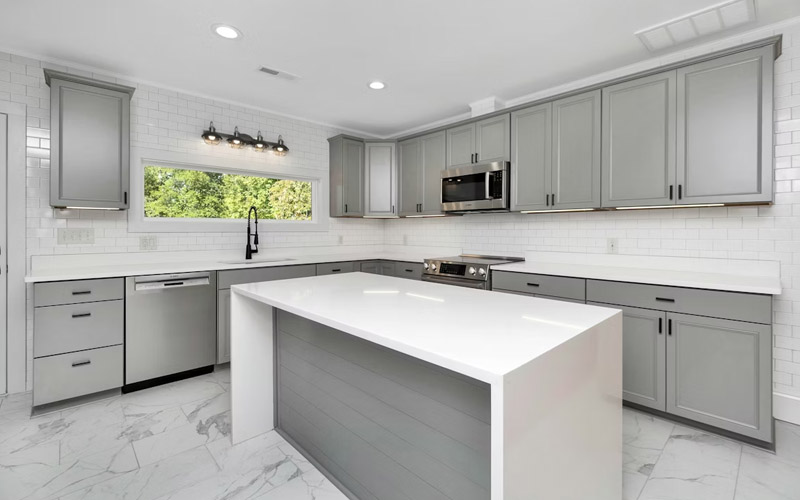

There’s a specific kind of frustration reserved for kitchen grease. You don’t notice it building up — not really. Then one Tuesday afternoon you reach for the cabinet above the stove and your hand just… sticks. That slightly tacky, yellowish film coating your cabinet doors isn’t just gross. It’s stubborn in a way that makes you want to reach for the strongest degreaser at the hardware store.
But here’s the thing — you probably don’t need it. The same pantry you’re cooking from every night holds ingredients that genuinely outperform many commercial cleaners on grease. We’re talking baking soda, dish soap, white vinegar, and a few others that work with your cabinet surfaces rather than stripping them down. I’ve tested these on painted wood, laminate, and even older varnished cabinets that hadn’t been properly cleaned in years. The results are consistently impressive.
Before you grab the rubber gloves and start scrubbing, though, there’s a right way to do this — and a wrong way that leaves streaks, swollen wood grain, or finishes that look worse than before. Let’s break it all down properly.
—
Why Grease Builds Up on Cabinets So Fast
Cooking releases airborne grease particles — every time you sauté onions or fry anything, those tiny droplets float upward and land on the nearest surface. Cabinets directly above and beside the stove take the heaviest hit, but the film spreads further than most people realize. Open cabinet doors? They catch grease on their inside faces too.
The layer starts thin and invisible. Over weeks, dust sticks to it. Over months, it polymerizes — essentially baking into a harder, stickier substance that plain water won’t touch. That’s why a quick wipe-down feels pointless when you’re dealing with built-up grease. You need something that actually breaks the molecular bond between grease and your cabinet surface.
—
What You’ll Need (All Natural, All Cheap)
No need for a shopping run. Here’s your toolkit:
- Dish soap (standard blue Dawn works particularly well — it’s a surfactant)
- Baking soda
- White vinegar
- Warm water
- Microfiber cloths (2-3 minimum)
- An old toothbrush for grooves and hardware
- Coconut oil or olive oil (for finishing wood cabinets)
Total cost if you’re starting from scratch: maybe $8-10. Compare that to a commercial degreaser like Krud Kutter at $12-15 per bottle, and you’re already winning.
—
Method 1: Dish Soap and Warm Water for Light Grease
This is your starting point — and honestly, it handles about 60% of kitchen cabinet grease situations on its own.
Mix a few drops of dish soap into a bowl of warm (not hot) water. Dampen a microfiber cloth — don’t soak it — and wipe the cabinet surface in small circular motions. The key word is dampen. Wood cabinets and excess moisture are enemies. Too much water can warp the wood or cause the finish to peel over time.
The Two-Cloth Rule
Always follow up with a second dry or barely-damp cloth to remove any soapy residue. Soap left on cabinet surfaces becomes its own kind of tacky film, which defeats the whole purpose. Wipe, then wipe again. It takes an extra 30 seconds and makes a noticeable difference.
—
Method 2: Baking Soda Paste for Stubborn, Caked-On Grease
This is where things get serious. If your cabinets have that dark, sticky buildup that soap barely touches, baking soda paste is your best friend.
Mix 3 parts baking soda with 1 part water to form a thick paste — roughly the consistency of toothpaste. Apply it directly to the greasy area with a cloth or your fingertips. Let it sit for 5 minutes. Then scrub gently with a damp microfiber cloth or the soft side of a sponge.
The mild abrasive action of baking soda physically lifts the grease while the alkaline chemistry helps break it down. On a badly neglected cabinet door, you might need to do two rounds. Wipe clean with a damp cloth, then dry immediately.
Don’t Use This on Glossy Lacquer Finishes
Baking soda is safe on painted wood, matte finishes, and laminate. On high-gloss lacquer or certain factory finishes, even mild abrasives can dull the sheen. When in doubt, test a tiny inconspicuous spot first — inside the cabinet frame, for example. how to identify your cabinet finish type
—
Method 3: White Vinegar Spray for Cutting Through Film
White vinegar’s acidity makes it excellent at dissolving the thin, greasy film that coats cabinet surfaces — especially on laminate and painted wood where baking soda feels like overkill.
Mix equal parts white vinegar and warm water in a spray bottle. Spritz lightly onto the surface, wait 2-3 minutes, then wipe clean. The smell dissipates within 10-15 minutes, so don’t let that put you off.
One caveat: vinegar is mildly acidic and shouldn’t be used repeatedly on natural wood with an oil or wax finish. It can slowly strip the protective layer over time. For natural wood cabinets, best natural wood cabinet cleaners stick to dish soap or the oil method described below — save the vinegar for laminate and painted surfaces.
—
Method 4: Oil-Based Cleaning for Wood Cabinets
This sounds counterintuitive. Adding oil to clean off grease? But it works, and there’s real science behind it — like dissolves like. Oil-based cleaners cut through grease because they share similar chemical properties.
Mix 1 part coconut oil (melted) with 1 part baking soda. Apply with a cloth, rub gently in the direction of the wood grain, and wipe away. The grease lifts off, and the coconut oil leaves a light conditioning layer on the wood. For older, drier-looking wood cabinets, this method is genuinely transformative. Follow up with a quick buff using a clean dry cloth.
—
Method 5: The Cabinet Hardware You’re Forgetting
Knobs, pulls, and hinges accumulate just as much grease as the cabinet faces — sometimes more, since hands touch them constantly. Drop metal hardware into a small bowl of warm water mixed with a tablespoon of dish soap and a tablespoon of baking soda. Let them soak for 10 minutes, then scrub with an old toothbrush. Rinse and dry completely before reattaching.
This takes 15 minutes max and makes the whole cabinet look noticeably cleaner. It’s the kind of small detail that has a disproportionate impact on how “done” the job feels.
—
Bottom Line
Here’s something worth thinking about that you won’t find in most cleaning guides: the best time to clean greasy cabinets is immediately after you’ve cooked something — while the kitchen is still warm. Heat keeps grease in a softer, more pliable state. A warm cabinet surface responds to a damp cloth the way a cold, hardened one simply doesn’t.
Most people wait until grease has fully cooled and hardened before cleaning — which is exactly when it’s most resistant. A 60-second wipe-down while the stovetop is still warm will prevent the kind of stubborn buildup that demands a full afternoon of scrubbing. If you build this into your post-cooking routine rather than treating it as a periodic deep-clean project, you may never face truly caked-on grease again. The natural methods above work best as maintenance tools, not crisis interventions. Prevention, it turns out, is the most powerful natural cleaner of all.
—
FAQ
How often should I clean my kitchen cabinets?
For cabinets near the stove, a light wipe-down weekly (or after heavy cooking sessions) keeps grease from building up. A deeper clean every 1-2 months is reasonable for most households.
Can I use these methods on all cabinet materials?
Most natural cleaning methods work safely on painted wood, laminate, and MDF. Natural wood with oil or wax finishes needs gentler treatment — skip the vinegar and baking soda abrasion, and stick with dish soap or the coconut oil method. Always spot-test first. cabinet material guide for cleaning
Will vinegar damage my cabinet finish?
Occasional use is generally fine on most surfaces. The risk comes from repeated, frequent use on natural wood or wax-finished cabinets. On laminate and painted surfaces, diluted vinegar is safe and effective.
What’s the fastest method for a quick clean?
A damp microfiber cloth with a drop of dish soap handles most light grease in under two minutes. For anything tougher, the baking soda paste is the fastest path to real results without reaching for commercial products.