

My golden retriever, Biscuit, sheds enough fur every week to knit a small sweater. I’ve owned four vacuums over the past six years trying to keep up with it—two robotic, two upright—and I’ve got some pretty strong opinions now about what actually works versus what just looks impressive in a YouTube review.
Here’s what nobody tells you upfront: both types have genuinely useful roles in a pet-and-carpet household. But they’re not equals. Depending on your floors, your pet’s breed, and your schedule, one of them might be nearly useless to you specifically. I’m going to be straight about that.
So let’s skip the marketing spin entirely.
How Each Type Actually Picks Up Pet Hair on Carpet
Traditional uprights—something like the Shark Navigator Lift-Away NV352 or a Dyson Ball Animal 3—combine high-powered suction with a rotating brush roll that physically beats the carpet fibers and drags embedded hair up to the surface. That mechanical agitation matters more than most people realize. Hair doesn’t just sit on top of carpet. It works its way down into the pile, sometimes several millimeters deep, and your vacuum has to fight to pull it back out.
Robot vacuums use much smaller motors. The iRobot Roomba j7+ (one of the better pet-focused models, around $599 in 2024) pulls maybe 2,000–2,500 Pa of suction on a good day. A full-size upright can hit 20,000 Pa or more. That gap is enormous.
On low-pile carpet? Robots do okay. On medium or high-pile? They struggle badly.
What Robots Are Actually Good At (And It’s Not Deep Cleaning)
Consistency. That’s their whole value proposition.
If your robot runs every morning at 8 AM while you’re at work, it catches fresh hair before it sinks into your carpet fibers. Think of it less like a cleaning tool and more like a lint trap—intercepting surface-level shedding before it compounds into a real problem. Over a week, that genuinely adds up.
I set my Roomba to run five mornings a week. On days I don’t vacuum myself, I can walk barefoot across my living room without collecting fur between my toes. That’s not nothing. But when I run my Dyson Animal on a Saturday? The dustbin still fills up with stuff the robot missed. Every single time.
Robots are maintenance tools. Not deep-clean tools. Once you accept that framing, they start making a lot more sense.
Where Traditional Vacuums Still Win, Completely
Stairs. Edges. Corners. Furniture legs.
Robots bump into baseboards and make several hopeful passes. A traditional vacuum with an edge brush or crevice tool nails those spots on the first try. And if you have a golden, a husky, a German shepherd—any serious shedder—those corners are where the fur tumbleweeds pile up into what I can only describe as small gray ecosystems.
But it’s more than just corners. Traditional vacuums let you apply focused pressure to one specific spot, which matters when your cat has claimed a particular section of couch arm as their personal grooming throne and there’s a year’s worth of fur felted into the carpet underneath it.
You can’t replicate that targeted attention with a robot. It’ll roll over that spot at a gentle 1.5 mph and move on.
The Real Cost Comparison Over Three Years
Purchase price is the obvious number everyone compares. But here’s what I actually spent.
My Dyson Ball Animal 3 cost $499 in 2022. I’ve replaced the filter once ($19.99) and the brush roll once ($34.99). That’s roughly $554 over three years. The Roomba j7+ I also bought in 2022 ran $599 at launch, and I’ve since replaced two rubber brush rolls at $29.99 each and bought a three-pack of filter replacements for $22. So around $680 total.
The robot costs more to own. Not dramatically, but it does. And if you’ve got thick carpet and heavy shedding, there’s a real chance your robot’s brush rolls are clogging every four or five days and you’re spending 10 minutes cutting hair out of them each time. That’s 100-plus hours over three years. Not free.
What Carpet Type Changes Everything
This point doesn’t get nearly enough attention. Your carpet pile height might be the single biggest factor in this whole debate.
On Berber or short-loop carpet (pile height under 6mm), a quality robot like the Shark Matrix RV2310WD handles pet hair surprisingly well—Consumer Reports’ 2023 review cycle backs this up with independent testing. But on plush or frieze carpet with pile heights of 15–20mm? The robot’s brush rolls can barely spin. Some models error out and stop entirely.
So before you drop $600 on a robot vacuum, measure your carpet pile with a ruler. Seriously—that’s a free step that could save you a lot of money.
The Allergy Factor
Pet dander is smaller than hair. Way smaller. And it binds to carpet fibers at a level that neither robot vacuums nor most mid-range uprights fully address.
If allergies are a real concern in your household, you want a vacuum with a sealed HEPA filtration system—one where the exhaust air actually passes through the filter rather than around it. The Miele C3 Cat & Dog (around $800) does this exceptionally well. Most robot vacuums have HEPA-style filters that aren’t truly sealed, meaning they capture some dander but redistribute some too.
You’ll also want to vacuum at least twice weekly for meaningful allergen reduction—that comes from a 2021 study published in the Journal of Allergy and Clinical Immunology tracking 200 pet-owning households.
The Honest Verdict on Combining Both
Here’s where most comparison articles stop short, so I’ll just say it: the best setup for a pet-and-carpet home isn’t robot OR traditional. It’s both, used strategically.
Run your robot daily for surface maintenance. Do a proper upright deep-clean once or twice a week. If that sounds like overkill, think about how much time you currently spend on reactive cleaning—the frantic pre-guest vacuuming, the embarrassing fur-couch situation—and compare. The combination genuinely costs less effort than either approach alone.
Bottom Line
Here’s what nobody else seems willing to say: the robot vacuum industry markets to renters and light-shed dog owners, but the people who actually need vacuum power most—heavy-shedding breeds on medium-to-thick carpet—are the least well served by robots alone. The smarter move is buying a slightly less expensive robot (the Eufy RoboVac G30 at $199 handles light maintenance fine) and putting the savings toward a genuinely powerful traditional vacuum instead of spending $700 on a premium robot that still can’t deep-clean your carpet.
Spend money where the work actually happens. The robot is your maintenance worker; the upright is your actual cleaner. Get both, but budget accordingly.
Frequently Asked Questions
Can a robot vacuum replace my regular vacuum if I have pets?
No. Not on medium or thick carpet. It can dramatically reduce how often you need to deep-clean, but it won’t pull embedded pet hair out the way a full-size upright will. Use it as a supplement.
How often should I vacuum carpet if I have a heavy-shedding dog?
Realistically? Every day for surface pickup (let the robot handle that) and a proper deep-clean two or three times per week. Heavy shedders like huskies or German shepherds can deposit surprising amounts of hair in just 24 hours.
Are expensive robot vacuums worth it for pet hair carpet?
It depends on your carpet pile height. Short-pile Berber or hardwood mixed with area rugs? A premium robot like the Roomba j7+ earns its price. Plush carpet? Save the money and put it toward the upright.
What’s the best robot vacuum for pet hair on carpet specifically?
The iRobot Roomba s9+ still performs best on carpet in most independent tests as of 2024, though it’s pricey at around $899. The Roborock S8 ($649) is a strong runner-up with better mopping capability if you’ve got mixed floor types.
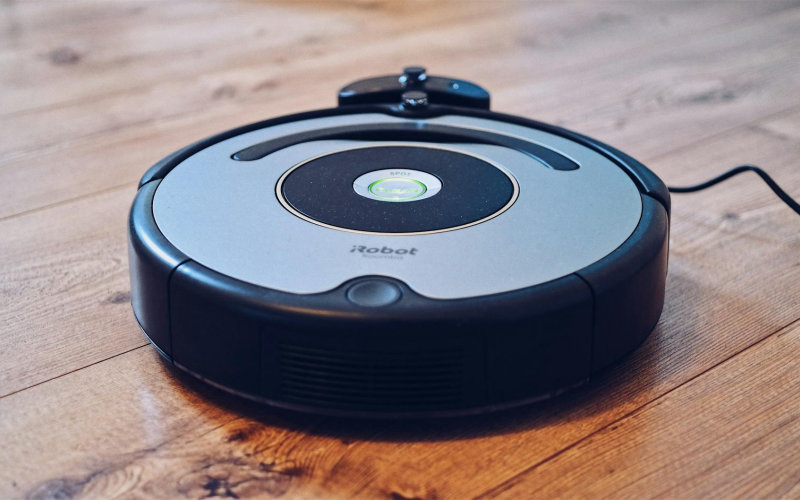
Photo by Jens Mahnke on Pexels