

I watched my neighbor drop $340 on Home Depot sprays, traps, and powders across three months — only to call an exterminator anyway. The ants were still there. Worse, the infestation had crept from the kitchen into two bathrooms by the time he finally threw in the towel. That’s not some rare cautionary tale. It’s basically what happens to most homeowners who go the DIY route without really understanding where they’re going wrong.
Here’s the honest truth: the products aren’t always the problem. You can buy the same active ingredients professionals use. Permethrin. Bifenthrin. Boric acid. None of that is secret knowledge. What separates someone who actually gets results from someone who doesn’t is technique, timing, and an accurate read on what pest you’re dealing with. And most people get all three wrong.
So before you spend another $50 on something that’ll collect dust under your sink, let me walk you through the five mistakes I see people make constantly.
You’re Treating the Symptom, Not the Source
This is the big one. Dead serious. When you spot ants marching across your counter, that line of ants isn’t your problem — it’s a symptom. The colony, which could hold anywhere from 20,000 to 100,000 workers depending on the species, is somewhere else entirely. Spraying the ones you can see kills maybe 1% of the population and signals to the colony that something’s wrong.
Roaches are even nastier in this regard. A 2019 Purdue University study found that German cockroach populations can bounce back from a 95% reduction within just a few weeks if harborage sites aren’t addressed. Harborage sites — the warm, dark, humid cracks and crevices where they actually live and breed. You can fog your entire apartment and miss every single one of them.
Before you touch a single product, spend 20 minutes doing actual investigation. Pull out your appliances. Look behind the stove, under the dishwasher, inside the electrical outlets (carefully, obviously). Know what you’re dealing with and where it’s coming from. That’s step one. Always.
You’re Using the Wrong Product for the Species
Not all pests respond to the same treatments. Sounds obvious, right? But you’d be shocked how many people just grab whatever has the most intimidating label. There are roughly 700 ant species in North America, and what works on odorous house ants is completely different from what you’d use on carpenter ants.
Fire ants, for example, need a two-step approach — a broadcast bait treatment first, then individual mound treatment about a week later. Skip the bait step and you’ll wipe out the surface workers while the queen and brood simply relocate 3 feet underground. I learned this the hard way back in 2018, living in Georgia, when I annihilated four fire ant mounds only to watch them reappear 10 days later, 8 inches from where they started.
Termites are the nightmare scenario. Subterranean termites require soil-applied termiticides or baiting systems. Surface sprays do absolutely nothing to a colony living 18 inches below your yard. Using the wrong product doesn’t just waste your money — it hands you a false sense of security while the damage keeps going.
Your Timing Is Off
Pest control has a rhythm. Ignore it and you’re just spreading chemicals around your house for no good reason.
Cockroach gel baits, for instance, work best when applied at night because that’s when roaches are actually out foraging. Put them down during daylight and the bait sits untouched for 12-plus hours, drying out and losing punch before the pest even finds it. Same logic applies to rodent traps — you can set them during the day, sure, but if they’re not placed flush against a wall with the trigger end pointing toward the wall, you’re going to rack up a lot of empty snaps.
Seasonal timing matters just as much. Spraying for mosquitoes in summer heat above 90°F causes most pyrethroid-based products to break down within hours instead of delivering the 30-day residual on the label. The EPA’s Pesticide Registration data actually flags this — heat degrades many common active ingredients significantly faster than lab conditions suggest.
You’re Not Sealing Entry Points
This one drives me absolutely insane, because it’s free. It costs nothing except time. And almost nobody does it.
Mice can squeeze through a gap the size of a dime. That’s not hyperbole — a young mouse needs roughly 6-7mm of clearance, and a dime runs about 17mm in diameter. House mice have flexible skeletons. They compress. So if you’re trapping inside without sealing the exterior, you’re essentially running a revolving door for rodents.
Ants are worse. They’re exploiting gaps so small you’d need a magnifying glass to spot them. Caulk around your window frames, pipe penetrations, and door sweeps. Stuff steel wool into larger gaps before caulking over them. This one mechanical step, done properly, does more to cut pest pressure than any spray you’ll ever buy.
You’re Not Being Consistent or Patient
Real talk: pest control takes time. Most people treat once, spot some dead bugs, assume the problem’s handled, and stop. Then three weeks later they’re right back at square one.
Ant bait treatments typically need 2-3 weeks of consistent placement before you’ll see meaningful colony reduction. Bed bug protocols — even professional ones using heat sustained at 120°F for 90 minutes — often require follow-up visits two weeks later because eggs can survive the initial treatment. The pests you’re fighting have life cycles that are completely indifferent to your impatience.
Set a calendar reminder. Check your bait stations, traps, and exclusion points weekly for at least 30 days. Document what you’re seeing. A sudden spike in trap catches might mean a new entry point opened up, not that your treatment is working — and you won’t know the difference unless you’re paying attention.
Bottom Line
Here’s something nobody in the pest control world says plainly: most DIY failure isn’t about skill level. It’s about information asymmetry. Pest control companies understand species behavior, product rotation (to prevent resistance), and harborage identification in ways that simply never make it onto a product label or a YouTube tutorial. The real reason DIY pest control doesn’t work for most homeowners isn’t the chemicals — it’s that the industry has zero incentive to teach you what professionals actually know, and the internet mostly just tells you which products to buy. Your best DIY outcome comes from thinking like an entomologist first and a consumer second.
Frequently Asked Questions
How long does it take DIY pest control to work?
Depends entirely on the pest. Ant bait takes 2-3 weeks. Roach gel bait shows results in 1-2 weeks with consistent application. Rodent trapping can turn around in 48-72 hours if you place the traps correctly. Nothing is overnight.
Is professional pest control always better than DIY?
Not always. For minor infestations caught early — a small ant trail, the occasional silverfish, a single mouse — a well-executed DIY approach absolutely works. But the gap widens fast once an infestation is established, or when structural pests like termites are involved.
Can I use professional-grade products as a homeowner?
Yes, many are legally available without a license. Products like Temprid SC, Suspend SC, and Advion cockroach gel are sold online and at pest supply stores. But having access to the product isn’t the same thing as knowing how to use it correctly.
Why do pests come back after treatment?
Usually because the source wasn’t addressed, entry points weren’t sealed, or the treatment cycle got cut short. Surviving queens and egg cases can repopulate an area surprisingly fast — German cockroach eggs hatch in 28 days, and a single female can produce 300-400 offspring in her lifetime.
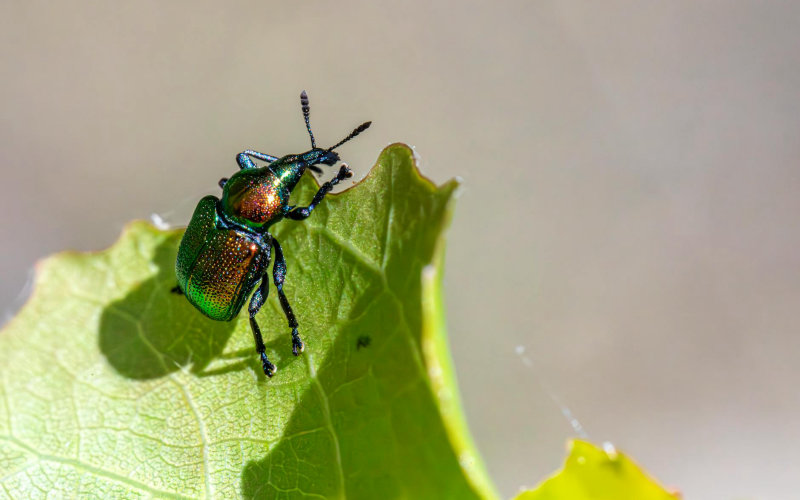
Photo by Erik Karits on Pexels