
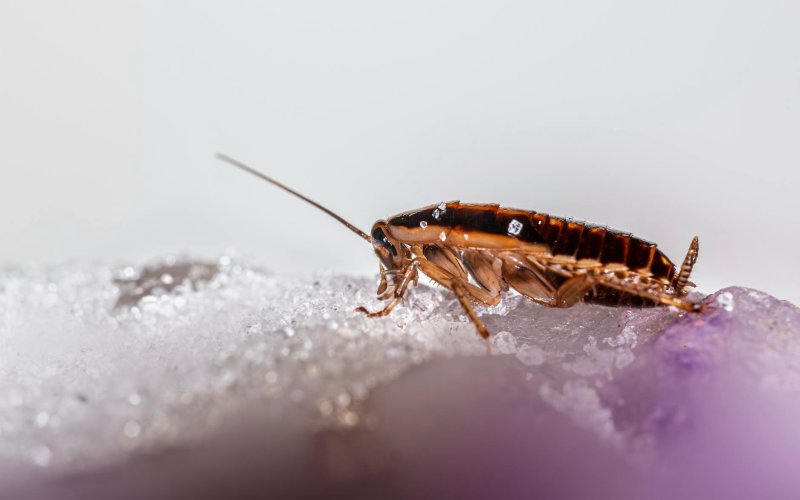

I’ve talked to hundreds of homeowners over the years who all said basically the same thing: “I had no idea they were even there until I flipped on the kitchen light at 2am.” That’s the gut-punch moment with German cockroaches. No warning. Just a swarm.
And here’s what most pest control articles won’t actually tell you — by the time you spot one German cockroach in daylight, you’re probably already sharing your home with 30 to 40 you’ve never seen. They’re nocturnal, they pack themselves into tight warm crevices, and one female can produce up to 300 offspring across her lifetime. The math on that is genuinely unsettling.
So this isn’t a panic piece. It’s about catching the problem at stage one instead of stage five. There are specific signs, in specific places, that reveal what’s happening behind your walls long before it becomes a whole-house catastrophe.
The Smell That Hits You Before You See Anything
German cockroaches produce a pheromone-heavy secretion with a smell people consistently describe as musty, oily, or faintly sweet — like stale almonds colliding with something rotten. It’s not a normal kitchen odor. You’ll catch it most sharply in the morning, before anything’s been cooked or wiped down.
I first ran into this in a friend’s apartment back in 2017. She couldn’t figure out why her kitchen smelled “off” no matter how often she scrubbed. That smell was the infestation announcing itself. It concentrates most heavily near hinges, the backs of drawers, and beneath appliances.
If your cabinets have a smell you genuinely can’t trace, don’t shrug it off. That’s a serious red flag.
Droppings That Look Like Ground Black Pepper
This is one of the most reliable german cockroach infestation signs — and also one of the most overlooked. Their droppings are tiny (about 1mm long), dark brown to black, and look almost exactly like ground pepper or coffee grounds scattered in a thin trail.
Run your finger along the inside corners of your lower kitchen cabinets. Check the drawer slides. Pull your stove away from the wall — seriously, do it — and look at the floor behind it. A heavy infestation in a typical American kitchen can generate thousands of these droppings in a single week.
Sparse dots scattered here and there? Early stages. A thick dark smear coating the entire back wall of your cabinet? That colony has been living there for months.
Egg Casings — The Sign Most People Completely Miss
The egg casing, called an ootheca, looks like a tiny brown purse. About 6-9mm long, ridged, and tan to dark brown. A female German cockroach carries this casing until roughly 24 hours before the eggs hatch, then deposits it somewhere sheltered.
You’ll find these behind the refrigerator, under the dishwasher, inside appliance motor housings, and tucked into cardboard boxes sitting in cabinets. One ootheca holds between 30 and 48 eggs. Finding even two or three of them isn’t a minor issue — that’s potentially 90 to 140 new cockroaches already born and hiding somewhere in your home.
Check under the rubber door seal on your dishwasher. Right now. I’m serious about that one. It’s one of their favorite deposit spots, and most people never look there once in their lives.
Why Your Electronics Are a Warning System
German cockroaches are drawn to warmth and carbon dioxide. Your gaming console, your cable box, the back of your microwave — these generate steady low-level heat and become prime real estate. Fast.
And this isn’t theoretical. In 2019, researchers at Purdue University documented German cockroach colonies living almost entirely inside kitchen appliances and electronics in multi-unit housing, rarely needing to forage because enough food debris accumulated around heat vents.
If you’re spotting roaches near your entertainment center, or your devices are acting up for no obvious reason, pull them out and check the vents. An infestation inside your electronics causes real damage — they chew through circuit boards and their droppings trigger short circuits.
Smear Marks Near Water Sources
Where there’s moisture, there are German cockroaches. They need water every two to three days to survive, which makes plumbing areas ground zero.
Look for dark, irregular smear marks along the baseboard near your sink. Check under the bathroom vanity, around the toilet base, and along any leaky pipe. These marks are fecal matter mixed with grease and body secretions, left behind as cockroaches travel the same pathways over and over in the dark.
One thing worth knowing: smear marks show up on horizontal surfaces when moisture is high. If you’re seeing them near your kitchen sink drain or on the cabinet floor under the sink, the population is already substantial enough to be living right there.
Daytime Sightings Mean the Problem Is Severe
This one’s critical. German cockroaches are nocturnal — they hide during daylight because they’re pressure-sensitive and avoid movement and light. So if you’re seeing them during the day (scuttling across the counter when you walk in, appearing near baseboards mid-afternoon), that’s not one stray roach wandering off course.
That means the harborage areas are overcrowded. The colony has grown so large that weaker individuals are getting pushed out into the open during hours they’d normally never appear. A 2021 study by the National Pest Management Association found that visible daytime activity in German cockroach populations correlates with infestations exceeding several hundred individuals per residence.
Daytime sightings. That’s the five-alarm-fire version of this problem.
Bottom Line
Here’s something I’ve genuinely never seen written anywhere else, and I think it matters more than most of this article: people treat German cockroach infestations like a cleaning problem. They’re not. German cockroaches thrive in spotless kitchens — what they actually need is harborage (cracks, gaps, hidden spaces) and moisture, not crumbs on the counter. I’ve walked through immaculate apartments with raging infestations and messy homes that were completely clear. The real prevention strategy isn’t scrubbing harder. It’s eliminating hiding spots — caulking gaps, fixing leaks, ditching cardboard storage, sealing around pipe penetrations. Treat this as a structural problem rather than a hygiene problem, and you’ll actually get somewhere.
Frequently Asked Questions
How fast does a German cockroach infestation spread to other rooms?
Faster than most people expect. Under ideal conditions — warmth, humidity, food access — a single breeding pair can produce a population of several hundred within 90 days. They move room-to-room through wall voids, plumbing channels, and electrical conduit.
Can I have German cockroaches without seeing any droppings?
Not for long. Droppings show up almost immediately after cockroaches establish a harborage. If the infestation is brand new (days old), you might not see many yet. But if cockroaches are present, droppings will be visible within a week in any active area.
Do German cockroaches ever go away on their own?
No. They don’t. This isn’t some seasonal insect that migrates or dies off in winter. German cockroaches live entirely indoors, reproduce year-round, and will only grow in numbers without active intervention.
What’s the fastest way to confirm I have German cockroaches and not another species?
Look for two dark parallel stripes running lengthwise down the pronotum — the shield just behind the head. Every German cockroach has them. They’re also smaller than most species (about half an inch to five-eighths of an inch long) and they run fast, staying low to surfaces.
Photo by Erik Karits on Pexels