

You’ve poured bleach down the drain. Tried that foaming cleaner. Maybe even picked up one of those gel treatments from the hardware store. And three days later, those tiny fuzzy moths are back — hovering around your sink like you personally sent them an invitation.
Here’s what nobody tells you upfront: bleach doesn’t kill drain fly larvae. Not reliably. It flushes right past the gelatinous biofilm coating your pipe walls — the stuff drain flies actually live and breed in — without touching it. So you’re treating the symptom while the cause just sits there, wet and perfectly comfortable, waiting for you to give up.
I’ve dealt with drain fly infestations in two different apartments, and I wasted roughly three weeks on bleach and store-bought cleaners before figuring out what actually works. Let me save you that time.
Understand What You’re Actually Fighting
Drain flies — also called moth flies or Psychoda species — don’t just fly out of your drain randomly. They breed inside the organic sludge coating the interior walls of your pipes. That sludge is soap residue, grease, hair, dead skin cells, bacteria. Warm, moist, nutrient-rich. Basically paradise for larvae.
A single female lays 30 to 100 eggs at a time. Those eggs hatch in about 48 hours. The whole life cycle from egg to adult takes roughly 8 to 24 days depending on temperature. So if you don’t disrupt that cycle at the source, you’re just endlessly swatting adults while the next generation quietly matures below your feet.
Confirm the Source Before You Do Anything Else
Don’t assume it’s the kitchen sink just because that’s where you see them. Drain flies will breed in any standing water or organic buildup — bathroom drains, shower drains, toilet tank overflow tubes, AC condensate lines, even a damp mop sitting forgotten in a corner bucket.
The simplest test: tape a piece of clear plastic wrap over the suspected drain, leave it 24 hours, and check for adults stuck to the underside. Do this for every drain in the room. I once spent a full week treating my kitchen drain before realizing the actual source was a floor drain in my utility closet. Don’t skip this step. It’ll save you an embarrassing amount of wasted effort.
Clean Out the Biofilm — This Is the Whole Game
This is where most people fail. You need to physically remove the organic matter from inside the pipe, not just run chemicals over it and hope for the best.
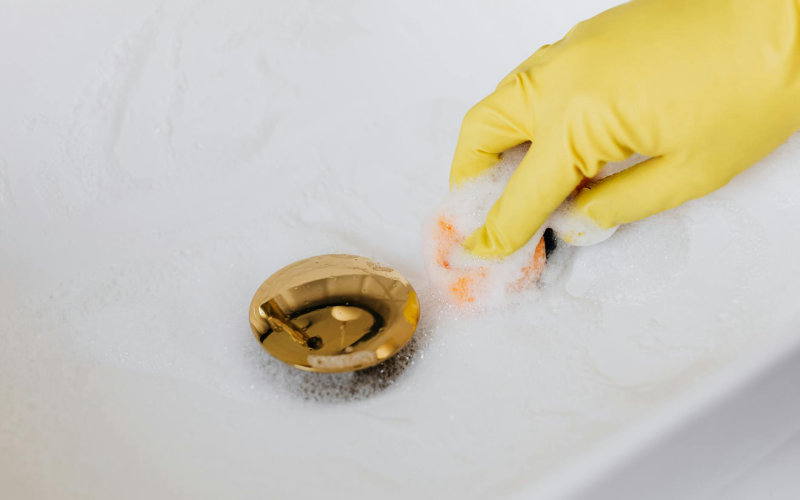
Start by pulling out the drain stopper or cover and scrubbing it by hand with a stiff brush and hot soapy water. Then get a drain cleaning brush — the long flexible kind, available at any hardware store for about $6 to $10 — and scrub the interior pipe walls as far down as you can reach. You’ll pull out stuff that looks genuinely horrifying. Good. That’s the breeding site coming out.
After scrubbing, pour boiling water down slowly. Not hot tap water — actual boiling water from a kettle, added in stages so it penetrates rather than just rushing through. Do it twice. Then follow up with a gel-based enzyme drain treatment like InVade Bio Drain Gel or American Bio-Sciences DF 5000, both of which are formulated specifically to digest the organic film drain fly larvae depend on. These aren’t drain cleaners in any traditional sense. They use live bacterial cultures to literally eat the biofilm over several days.
Apply the enzyme gel every night for at least two weeks straight. Not once. Every single night.
Kill the Adults You’re Seeing Now
Cleaning the drain won’t make the current adult population vanish overnight. They’ll keep flying around for several days even after you’ve eliminated their breeding site, which is annoying but normal.
Apple cider vinegar traps work surprisingly well here. Fill a small glass halfway, add two drops of dish soap to break the surface tension, and loosely cover it with plastic wrap poked with small holes. Adults are drawn to the fermentation smell and get trapped. Not glamorous, but you’ll see results within 24 hours.
Yellow sticky traps hung near the drain area also help. For a bigger infestation, some pest control people recommend a pyrethrin-based spray applied directly into the drain opening — but only as a temporary knockdown. The biofilm removal is still the only thing that actually ends it.
Maintain the Drain Long-Term
Here’s something people don’t think about until the flies come back: drain maintenance isn’t a one-time project. Once every week or two, pour boiling water down your problem drains. Keep using the enzyme treatment once or twice a week for the first month after the infestation clears, then weekly after that indefinitely.
And fix whatever plumbing leaks you’ve been quietly ignoring. Standing water anywhere in your home is an open invitation. That slow drip under the sink pooling in the cabinet? Five-star accommodation for drain flies.
When to Call a Professional
If you’ve confirmed the source, scrubbed out the biofilm, used enzyme treatments consistently for three weeks, and you’re still seeing flies — the problem might not be where you think it is. Broken sewer pipes, drains with standing water deep inside walls, cracked underground drainpipes. These create breeding sites no consumer-grade product will ever reach.
A licensed pest control tech can use a borescope camera to look inside pipes. Companies like Orkin and Terminix offer this, but honestly, a local licensed plumber who does camera inspections might get you there faster and cheaper. Expect to pay $150 to $350 depending on your area. Worth every cent if the alternative is another six months of this.
Bottom Line
Drain flies are a plumbing problem wearing a pest control costume. Every product marketed as a drain fly killer is treating the creature, not the condition that produces it. The flies are just a symptom that your pipes have a food source problem — which means the permanent fix isn’t really about pest control at all. It’s about pipe hygiene. Shift your thinking from “how do I kill these bugs” to “how do I make this pipe inhospitable,” and you’ll solve it faster, keep it solved longer, and probably never deal with it again. Bleach feels satisfying. Enzyme gel and a scrub brush actually work.
Frequently Asked Questions
How long does it take to get rid of drain flies permanently?
With consistent biofilm removal and nightly enzyme gel treatments, most infestations clear up within 2 to 3 weeks. Adults typically disappear within a week of eliminating the breeding site.
Can drain flies come from outside my home?
Rarely. They can technically get in through windows or doors, but if you’re seeing them regularly indoors, there’s almost certainly an indoor breeding site. Investigate every drain and any standing water source you can find.
Is bleach totally useless against drain flies?
Not totally — it’ll kill adults on direct contact and does some surface sanitizing. But it can’t penetrate the thick biofilm where larvae actually live, so it won’t solve the underlying problem. Enzyme treatments are far more effective for that.
Do drain flies carry disease?
They don’t transmit diseases to humans the way mosquitoes or houseflies do. But they can carry bacteria from sewage into food prep areas — which is more than enough reason to get rid of them quickly.
Photo by www.kaboompics.com on Pexels