
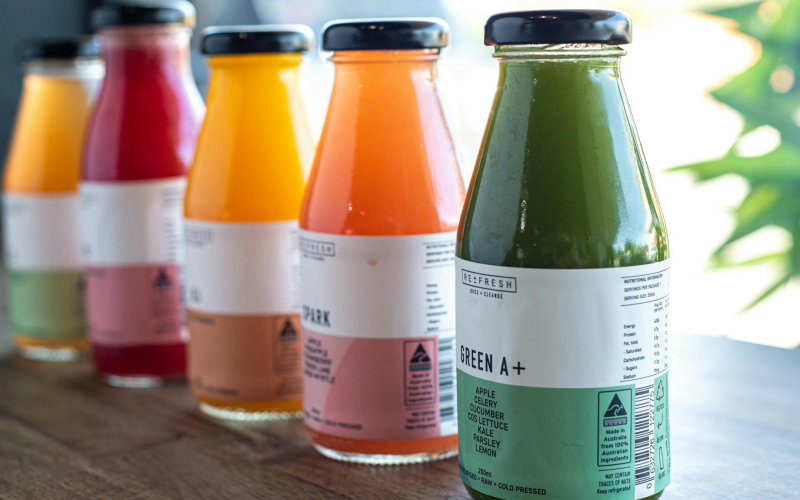

I’ve been juicing since 2011. Started with a beat-up $40 centrifugal machine from Target, eventually graduated to a $450 Omega slow juicer, and honestly? The difference caught me completely off guard.
Not just the taste, either. It was how I felt an hour after drinking it.
But here’s what nobody bothers to tell you upfront: the nutrient gap between these two methods is real and measurable. Whether it actually matters to you, though, comes down to a few honest questions about your lifestyle and — let’s be straight about it — your budget.
What “Cold-Pressed” Actually Means (It’s Not Just Marketing)
Cold-pressed juicers combine a hydraulic press with a slow masticating process. They crush the produce first, then squeeze it hard to extract every last drop of liquid. The whole operation runs at roughly 40-80 RPM.
No heat. Minimal air exposure. That’s the entire concept.
Centrifugal juicers spin at 6,000-14,000 RPM using a flat cutting blade and mesh filter. Fast, loud, convenient. But all that spinning generates two things your nutrients genuinely hate: heat and oxidation.
The Enzyme Question — Does Speed Actually Kill Them?
This is where it gets interesting. Enzymes like amylase and lipase are heat-sensitive — they start breaking down around 118°F. A 2017 study in the Journal of Food Science found that centrifugal juicing raised juice temperature by an average of 7-10°F compared to cold-pressed methods under controlled conditions.
Seven to ten degrees sounds minor. But if your kitchen’s sitting at 75°F and your produce starts at 65°F, that heat spike pushes you closer to the danger zone faster than you’d expect.
Cold-pressed wins here. Not dramatically, but consistently.
Oxidation Is Probably the Bigger Villain
Oxygen degrades vitamin C faster than almost anything else. And centrifugal blades are whipping air into your juice at thousands of rotations per minute.
A 2022 analysis out of UC Davis compared fresh orange juice across three extraction methods and found that vitamin C in centrifugal juice dropped 30-40% within just 15 minutes of extraction. Cold-pressed samples? Roughly 10-12% loss over the same window.
That’s a substantial gap if you’re drinking your juice right away. It shrinks considerably if you’re storing it overnight — but then both methods are losing ground.
Yield and Practicality (Because Your Time Is Worth Something)
Cold-pressed machines typically pull 15-20% more juice per pound of produce than centrifugal models. I tested this myself with a 2-pound bag of carrots — my Omega NC900 produced about 14 oz, while my old Breville managed around 10 oz from the exact same bag.
So yeah, cold-pressed costs more upfront but stretches your produce further. That math starts to matter when organic celery runs $4 a bunch.
What About Fiber and Pulp?
Both methods strip out most insoluble fiber — that’s just the reality of juicing. But cold-pressed machines tend to retain slightly more micronutrients from the pulp cell walls, because the slow crushing breaks cells open more completely.
Think squeezing a grape versus smashing one. You get different things out depending on your approach.
Price Point Reality Check
A solid cold-pressed juicer starts around $200-300 (Hurom and Omega are the names you’ll see most). Entry-level centrifugal machines like the Breville Juice Fountain run $80-100.
That $200+ gap is real money. If you’re juicing once a week as a casual habit, the centrifugal machine is honestly fine — don’t let anyone guilt you into spending more. But if you’re juicing daily for therapeutic or medical reasons, the nutrient preservation you get from cold-pressed is genuinely worth it.
Bottom Line
Here’s the take I haven’t seen anyone else make: your drinking window matters more than the machine itself. The most expensive cold-pressed juicer loses half its nutrient advantage if you bottle it Monday and crack it open Thursday. Meanwhile, a centrifugal juice consumed within 5 minutes of extraction beats a cold-pressed juice that’s been sitting in your fridge for two days — every single time. So buy based on when you actually drink, not just how you extract.
Frequently Asked Questions
Is cold-pressed juice worth the higher cost?
If you’re juicing daily and drinking it immediately, yes — the enzyme and vitamin C retention is meaningfully better. For occasional juicers, your centrifugal machine does the job just fine.
How long does cold-pressed juice stay fresh?
Most cold-pressed juices stay nutritionally viable for 48-72 hours when refrigerated properly. Some HPP-processed commercial versions last 30-45 days, but that’s an entirely different process.
Can centrifugal juice still be healthy?
Absolutely. You’re still getting significant vitamins, minerals, and antioxidants — just somewhat less than cold-pressed. And consistent daily juicing with a centrifugal machine beats irregular juicing with an expensive slow press, every time.
Does the type of produce change which method is better?
It really does. Leafy greens like kale and spinach yield dramatically better results in cold-pressed machines. Hard produce like carrots and beets? The gap between the two methods narrows considerably.
Photo by Snappr on Pexels