
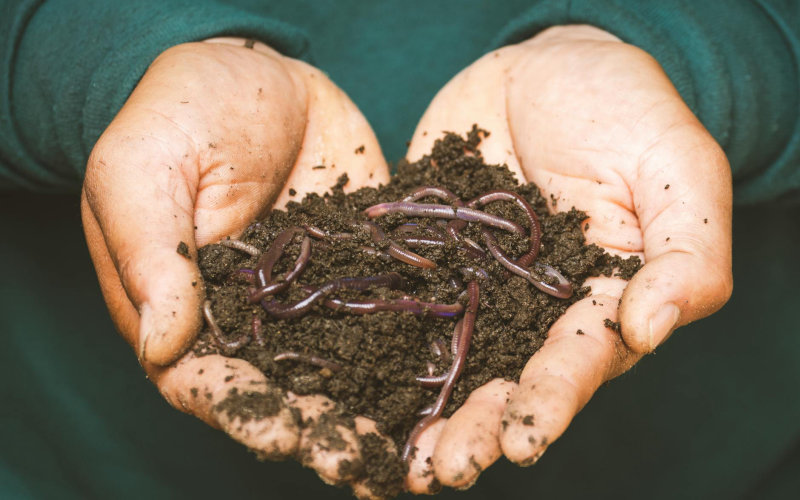

I killed my first compost pile. Twice.
The first time, it turned into a wet, slimy heap that smelled like a gas station bathroom in August. My neighbor two houses down mentioned something about it. That was motivation enough to actually figure out what I was doing wrong.
Here’s what nobody tells you upfront: smelly, messy compost isn’t just annoying. It means something in your system is biologically broken. Fix the biology and you fix everything else. That’s what this is really about — not the cheerful “just throw your banana peels in a bin!” stuff, but the actual mechanics of making decomposition work quietly and cleanly in your backyard.
Why Most Backyard Compost Piles Stink (And It’s Not What You Think)
Smell comes from anaerobic bacteria. These are the microbes that take over when there’s no oxygen in your pile, and they produce hydrogen sulfide and ammonia as byproducts. That rotten egg smell? Hydrogen sulfide. The sharp, burning one? Ammonia.
Both happen when your carbon-to-nitrogen ratio is off. Too much nitrogen — kitchen scraps, fresh grass clippings — and not enough carbon — dry leaves, cardboard, straw — and you’ve basically built a slow-motion swamp.
The fix sounds almost stupidly simple. For every bucket of fresh green material you add, you need roughly two to three buckets of dry brown material. Most beginners get this exactly backwards. They toss in scraps and never add browns. That single habit change probably eliminates 80% of compost smell problems on its own.
Choosing the Right Bin Before You Add Anything
Your container matters more than most people admit. I’ve used everything from a basic wire cage to a $90 dual-tumbler unit from Costco, so here’s my honest breakdown.
Wire cages (about $15 in hardware cloth) work great if you can commit to turning the pile every 5-7 days. Airflow is never your problem with these. But they look rough, and if you’ve got raccoons or rats nearby, you’ll have visitors.
Enclosed plastic bins — the kind many municipalities actually give away free through composting programs — are tidier and pest-resistant. The trade-off is that you have to be more deliberate about turning and moisture management, since airflow is restricted.
Tumblers are genuinely good in suburban settings where aesthetics matter and pests are a real concern. The Joraform JK-270, for example, has been a workhorse in Scandinavian composting programs since the early 2000s. Pricier upfront (somewhere in the $200-350 range), but the batch-style design means you’re always working with one finished pile at a time.
The Carbon-Nitrogen Ratio Explained Without the Chemistry Class
Here’s the practical version. Carbon materials are anything dry and brown — cardboard, newspaper, straw, wood chips, dried leaves. Nitrogen materials are anything fresh, green, or wet — vegetable scraps, coffee grounds, fresh grass, fruit peels.
The ideal ratio is roughly 25-30 parts carbon to 1 part nitrogen by weight. Nobody actually weighs their compost. But volume-wise, “two browns to one green” works reliably for backyard bins.
One thing I learned the hard way: coffee grounds are technically a green material even though they look brown. I assumed for two embarrassing years that they were a carbon source. They’re not. They’re high-nitrogen and they’ll sour your pile fast if you add too many without compensating with cardboard or leaves.
And newspaper? Totally valid carbon source. But shred it first. Full sheets mat together and block airflow, which defeats the whole point.
Moisture — The Factor Everyone Ignores Until It’s Too Late
Your pile should feel like a wrung-out sponge. Damp but not dripping. That one sensory test tells you almost everything you need to know about whether decomposition is actually happening.
Too dry and microbial activity slows down or stops entirely. I had a pile in the summer of 2019 that just sat there for four months, looking identical to the day I started it. Completely dry inside despite normal rainfall, because a dense layer of leaves on top was acting like a thatch roof.
Too wet and you’re back in anaerobic territory — meaning smell. If you squeeze a handful of your compost and water streams out, it’s too wet. Add dry browns immediately and turn the pile to get air back in.
During wet seasons, a simple tarp or lid keeps excess rain out without blocking all airflow. During dry summers, a light watering once a week keeps things moving.
What to Compost (And the Short List of What Not To)
The safe list for beginners: vegetable and fruit scraps, coffee grounds and filters, tea bags (pull the staples out), eggshells, grass clippings, dry leaves, shredded paper, cardboard, plant trimmings.
Skip these until you actually know what you’re doing: meat, fish, dairy, oily foods, cooked food scraps, pet waste, diseased plants. Not because composting them is impossible — it’s not — but because they need either a hot pile (sustained internal temperatures of 130-160°F) or a bokashi system to handle safely without attracting pests and creating serious odor.
Citrus peels are fine in moderation. The “citrus kills your worm bin” warning applies specifically to vermicomposting, not regular hot composting. I wasted a whole year avoiding perfectly good material because I misread advice meant for a completely different system.
Turning, Timing, and Knowing When It’s Actually Done
Turn your pile every 5-10 days if you want finished compost in 6-8 weeks. Turn it never, and it’ll still break down — just in 6-12 months. Both approaches are valid. They just serve different goals.
Finished compost looks and smells like dark, crumbly forest soil. Nothing funky about the smell — maybe a forest floor after rain, at most. If you can still identify individual food scraps in the material, it’s not ready. Give it more time, more turning, or both.
A quick test: seal a small sample in a bag for 3 days. Open it. No smell? Finished compost. Ammonia or rot? Needs more time.
Bottom Line
Here’s something I’ve genuinely never seen written anywhere else: the real reason backyard composting fails for most people isn’t technique. It’s expectation mismatch. We expect compost to be passive — just pile stuff up and let nature handle it, right? But the fastest, cleanest, smell-free systems are slightly high-maintenance relationships, not set-it-and-forget-it ones. Treat your compost pile the way you’d treat a sourdough starter. Check it a couple times a week, feed it properly, keep it in the right conditions. Do that and it will genuinely never smell. Ignore it like a junk drawer and you’ll end up with exactly that.
Frequently Asked Questions
How long before a new compost pile starts to smell?
Usually within 48-72 hours if your nitrogen-to-carbon balance is off. But if you build the pile correctly from day one — 2:1 brown-to-green ratio, proper moisture — you may never notice a smell at all.
Can I start composting in winter?
Yes, though decomposition slows significantly below 50°F. Your pile won’t stop entirely — it goes more or less dormant until spring and picks back up when things warm. Insulating the bin with straw bales helps in colder climates.
What’s the fastest way to fix a smelly compost pile?
Add a thick layer of dry cardboard or wood chips, turn the pile thoroughly to reintroduce oxygen, and check your moisture levels. Most smell problems resolve within 24-48 hours of that treatment.
Do I need worms in my compost bin?
Not for a hot compost system. Worms are the foundation of a separate method called vermicomposting. In a standard backyard bin, microbes handle decomposition. Worms might show up on their own from surrounding soil, which is totally fine — but you don’t need to add them.
Photo by Sippakorn Yamkasikorn on Pexels