
I bought the wrong hooks first. Twice.
The first time I walked into a craft store looking for crochet supplies, I grabbed the prettiest little kit I could find—pastel handles, twenty hooks, a tiny scissors, some stitch markers, all tucked inside a zippered pouch that felt very official. Spent about $34 on it. Used exactly three of those hooks in the entire first year. The others sat in that cute little pouch collecting dust like tiny, colorful regrets.
So if you’re standing in that same aisle right now (or scrolling Amazon at 11pm trying to figure out what you actually need), think of this as a letter to myself from three years ago. The honest stuff nobody bothers to tell you before you blow money on a set you’ll barely touch.
You Don’t Need a Full Set Right Away
Seriously. Stop. Most beginner guides push you toward a complete 9-piece or 12-piece set on day one, and I get it—it feels responsible, prepared, like you’re taking this seriously. But reality check: your first three to six months will probably involve two, maybe three hook sizes. Total.
Here’s why. Beginners almost always gravitate toward worsted weight yarn because it’s forgiving and you can actually see your stitches. Worsted weight calls for a 5.0mm or 5.5mm hook. That’s your whole starter situation right there.
Buy one good hook. A Clover Amour 5.0mm runs $7-9 at most craft stores and has a grip that won’t wreck your hand during long practice sessions. Just start there.
What “Hook Material” Actually Means for Your Hands
Nobody explains this part well, and they really should. Hook material matters more than whatever brand name is stamped on the package.
Aluminum hooks are cheap and fast—yarn slides off them quickly, which sounds great until you’re still figuring out tension and everything’s slipping away from you. Plastic hooks feel light but tend to flex in odd ways, especially if you have bigger hands. Steel hooks are built for thread crochet, which is tiny, delicate work you almost certainly aren’t doing yet.
Ergonomic hooks—the ones with soft rubber or silicone grips—cost more per hook (usually $8-12 versus $2-4 for plain aluminum), but they make a real difference if you’re crocheting longer than 20-30 minutes at a stretch. I developed a dull ache in my right thumb after six weeks on plain aluminum. Switched to an ergonomic grip and it mostly faded within days. Not a coincidence.
If you have any history of carpal tunnel, tendinitis, or just generally unhappy wrists, go ergonomic from the start. Don’t wait until something hurts to make the switch.
The Actual Hook Sizes You’ll Use as a Beginner
Here’s a more useful breakdown than what most guides bother giving you.
Sizes 4.0mm to 6.0mm cover roughly 80% of beginner-friendly projects—scarves, dishcloths, simple hats, stuffed animals (amigurumi runs a bit smaller, usually 3.5mm-4.0mm). Anything below 3.5mm is genuinely hard on new hands. Anything above 8.0mm is specialty bulky territory.
So if you do want a small starter set—and there’s nothing wrong with wanting one—look for something covering 4.0mm through 6.5mm. The Susan Bates Silvalume 6-piece set (around $8-10) hits that range and works fine for practice. Not glamorous. Totally functional.
And please ignore any “beginner set” that includes a 2.0mm steel hook. That’s not for you right now.
How to Read Hook Labels Without Getting Confused
US hook sizing is a genuinely strange system. The letter labels—B, C, D, all the way up to P and beyond—don’t always match across brands, which is maddening. A “J” hook from Boye might measure 6.0mm while another brand’s “J” comes in at 6.5mm.
Always go by the millimeter measurement. That number is standardized. The letter is not. When a pattern says “use a size J hook,” immediately find the mm equivalent the pattern actually specifies—and if it doesn’t list one, check your yarn label’s recommended hook size and match that instead.
This one small habit will save you from knitting a scarf that comes out four inches wider than it should be.
Budget Breakdown: What to Spend and What to Skip
Real talk on price. You do not need to spend $50+ on your first hook setup.
Here’s what I’d actually recommend for a beginner budget under $25:
One ergonomic 5.0mm hook (Clover Amour, or Furls Streamline if you want to splurge slightly): $8-15. Two plain aluminum backup hooks in 4.0mm and 5.5mm: roughly $4-6 total. A small pack of locking stitch markers (the plastic Clover ones, around $3-4): more useful than they look. That’s your whole functional starter kit.
But if you want a set, the Knit Picks Tunisian and Standard hook set gets solid reviews in the craft community and lands around $20-25 for a good size range. Just be honest with yourself about whether you’ll actually use more than two sizes before you justify the cost.
Signs a Hook Set Is a Waste of Money for Beginners
Watch for a few red flags. Sets marketed as “100-piece” or “complete kits” are almost always junk aluminum hooks crammed into a gimmicky case. Quality varies wildly between hook sizes within the same set, and the flimsy plastic ring stitch markers tangle constantly and aren’t worth the drawer space.
Also skip any hook with a “soft grip” that’s just a thin foam sleeve shoved onto a regular aluminum hook. It slides, it tears, it does nothing useful. Real ergonomic handles are molded onto the hook itself—not an afterthought glued on later.
And any set priced under $6 for 10+ hooks? Those hooks are probably rough at the tip, which means your yarn will catch and split every few stitches. Absolutely infuriating when you’re still learning.
Bottom Line
Here’s something I haven’t seen other guides come out and say: the hook you start on shapes how you hold your crochet forever. Your grip, your tension habits, your working speed—all of it gets built around that first tool. A scratchy, poorly tapered aluminum hook from a bargain bin set teaches your hands to compensate for bad equipment in ways you’ll spend months unlearning later.
Buy one decent hook. Build your muscle memory on something that actually works. Then expand your collection only when a specific project demands a size you don’t already have. That approach costs maybe $10 upfront and zero regrets.
Frequently Asked Questions
What hook size should a beginner start with?
Start with a 5.0mm or 5.5mm hook. These pair well with worsted weight yarn, which is the most beginner-friendly yarn weight out there.
Is an ergonomic hook worth the extra cost?
Yes, especially if you plan to practice often. The price difference—maybe $5-7 per hook—is worth it to protect your hands and build better habits from the start.
Can I just buy a cheap complete set instead of individual hooks?
You can, but most cheap sets include a pile of sizes you won’t touch for months or years. If you go that route, stick to a 6-8 piece set in the 4.0mm-6.5mm range rather than anything larger.
Do hook brands matter that much?
Clover, Susan Bates, Boye, and Tulip are all solid and easy to find. Brand matters less than material and tip quality. Run your fingernail along the tip—if it snags, it’ll snag your yarn too.
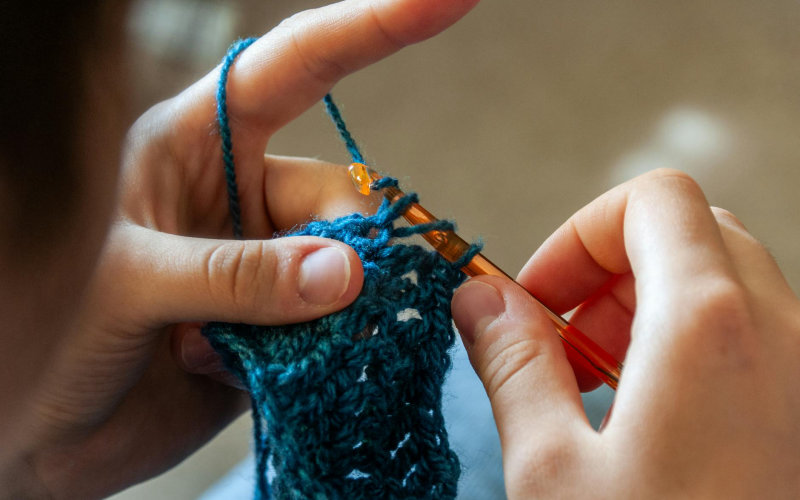
Photo by wal_ 172619 on Pexels