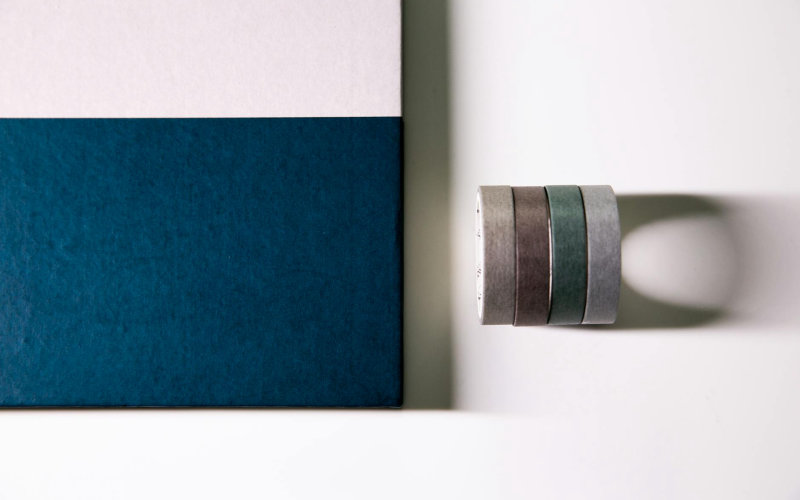

I bought my first roll of washi tape in 2014 at a Japanese stationery shop in Toronto for $2.50. It sat in a drawer for six months. I genuinely had no clue what to do with it. Then one night, bored and vaguely annoyed at my apartment walls, I started taping geometric triangles above my bed. By midnight, the wall looked like I’d hired a muralist.
That’s the thing nobody tells you about washi tape. It costs almost nothing. It peels off cleanly from most surfaces. And when you’re thoughtful about pattern and color, it genuinely fools people into thinking you paid someone. I’ve had guests ask which designer I used. The honest answer was “me, around 11pm, slightly overcaffeinated.”
So here are eight ways to use it that actually work. Not Pinterest-board fantasies. Real applications, tested in real apartments, with specific costs and details you can actually use.
1. Fake a Painted Accent Wall with Geometric Tape Art
This is where most people start, and honestly, for good reason. A roll of washi tape runs between $1.50 and $4.00 at most craft stores, and a single geometric wall design typically eats through 3-5 rolls depending on your pattern.
The trick is planning it on paper first. I sketch a rough grid, decide on a repeating triangle or diamond motif, then use a level and painter’s tape as a straight-edge guide before the washi goes anywhere near the wall. Without the level, it looks sloppy. With it, it looks like a decision.
Stick to two or three tape colors maximum. More than that and things get cluttered fast. Gold and white on a dark-painted wall? Honestly stunning.
2. Upgrade Cheap Picture Frames into Statement Pieces
You know those $3 black frames from IKEA? The RIBBA ones? Cover the entire frame face with overlapping strips of patterned washi tape and they suddenly look like something from a boutique home goods store. Seriously.
Use a craft knife to trim the corners cleanly at 45-degree angles. That one detail—the mitered corner—is what separates “cute craft project” from “wait, where did you get that?” It takes maybe four extra minutes per frame. Worth every second.
And the best part? Hate the pattern in six months? Peel it off, start over. No commitment, no damage, no wasted frames.
3. Create a DIY Washi Tape “Rug” on a Plain Tile Floor
Okay, hear me out. Certain washi tapes—especially the wider 30mm varieties—are thick enough to adhere temporarily to smooth tile floors and pull off a convincing patterned rug or tile inlay illusion. Interior designer Sarah Dorsey posted about this technique back in 2019 and it got absolutely enormous traction, particularly in bathroom and laundry spaces where it worked best.
Use wider tape (15mm-30mm minimum) and create a bordered rectangle in a contrasting pattern. Fill the interior with a chevron or herringbone layout using a thinner tape. The whole project runs under $20 and takes about two hours.
Fair warning though: this works on smooth tile, not textured surfaces, and it’s not permanent. Plan on touching it up every few months in high-traffic spots.
4. Line the Inside of Shelves and Bookcases
This one gets overlooked constantly, which is a shame. Pull everything off a shelf, line the back wall and shelf base with wide solid-color washi tape strips placed edge-to-edge, then put your stuff back. The effect is a wallpapered interior that costs roughly $8-12 total for a standard five-shelf bookcase.
In 2022, home decor blogger Erin Kern documented this on a thrifted white bookcase she’d paid $15 for, lining it with deep forest green tape. The finished result looked like something pulled from a $600 West Elm unit. I tried the same concept with a navy herringbone pattern on a plain KALLAX cube. Took 45 minutes.
The key is getting the seams flush. Butted, not overlapping. Overlapping creates a ridge you can spot from across the room.
5. Make Faux Window Pane Trim or Door Panel Details
Older apartments sometimes have completely flat interior doors. No panels, no molding, nothing. But you can tape a false raised-panel illusion onto them using a single solid color of washi tape—something in white, cream, or muted gold works best.
Measure out where real door panels would typically sit (usually two rectangular sections on a standard door), mark lightly with pencil, then apply tape along those lines in a clean rectangle. Step back. At normal viewing distance, it genuinely reads as molding detail.
The whole door costs about $6 in tape. A real molding retrofit? Closer to $80-150 in materials, plus the labor of nailing, sanding, and painting. So.
6. DIY Washi Tape Lampshade Stripes
Plain white drum lampshades are boring. But they’re also the perfect canvas. Vertical stripes of washi tape on a fabric or paper shade take maybe 20 minutes and completely shift the mood of a lamp.
Go tonal—three shades of blue, or cream and gold—rather than rainbow. Tonal reads as intentional. Random bright colors just look chaotic (no offense to anyone who likes chaotic, but we’re going for high-end here).
One actual safety note worth mentioning: stick to LED bulbs, which run cooler, and don’t let the tape extend to the very inside rim of the shade. That’s it. That’s the whole caveat.
7. Build a Washi Tape Gallery Wall Border
Instead of hanging a grid of frames, tape a large rectangular border directly onto the wall—something like 3 feet by 4 feet—and hang one or two larger pieces inside it. The tape frame acts as a visual anchor, making the whole arrangement feel curated rather than just… stuff on a wall.
I came across a version of this in an Apartment Therapy feature from March 2021 that used a double-line border in black and brass washi tape. It looked like custom museum framing. The tape cost under $10.
Use a level. I genuinely cannot stress this enough. A tilted border undoes everything.
8. Refresh Stair Risers Without Paint or Wallpaper
If you have stairs—wood, painted, whatever—the riser faces are prime washi tape territory. Give each riser a different pattern, or run a single repeating motif across all of them. Either way, you end up with something that looks like the tiled Portuguese staircases that rack up 40,000 saves on Pinterest, for about $25-35 total in tape.
Clean the risers thoroughly first. Washi tape does not stick well to dusty or waxy surfaces. And use a credit card to press the tape firmly as you apply it—this kills air bubbles and stops the edges from peeling up later.
Bottom Line
Here’s what I’ve figured out after years of these projects: the gap between cheap crafts that look cheap and cheap crafts that look expensive isn’t the material. It’s precision. Straight lines, clean cuts, deliberate color choices. Our brains read precision as value. So buy yourself a cheap metal ruler, an actual craft knife (not scissors), and a small level. Those three tools combined run maybe $15, and they’ll do more for your results than buying the fanciest tape in the store. The tape is almost beside the point. The execution is everything.
Frequently Asked Questions
Does washi tape actually remove cleanly from painted walls?
Generally yes, especially on flat or eggshell finishes. But test a small hidden area first. Glossy paint holds up better than matte, and older or cheaper paint can sometimes pull. Leave it up no longer than 6-12 months for the cleanest removal.
What’s the best brand of washi tape for home decor projects?
MT Masking Tape (the original Japanese brand) is consistently the most reliable for adhesion and clean removal. It runs about $3-5 per roll. Plenty of cheaper off-brand versions work fine for low-stakes projects, though.
Can washi tape be used outdoors?
Short answer: not really. It’s paper-based and not weatherproof, so humidity and direct sun degrade it quickly. Stick to interior use unless you’re happy replacing it every few weeks.
How do I cut washi tape in perfectly straight lines?
Use a metal ruler and a sharp craft knife on a cutting mat. Scissors pull and shift the tape as you cut, which almost always produces a jagged edge. The craft knife method takes a little practice, but the difference is immediately obvious.
Photo by PNW Production on Pexels