
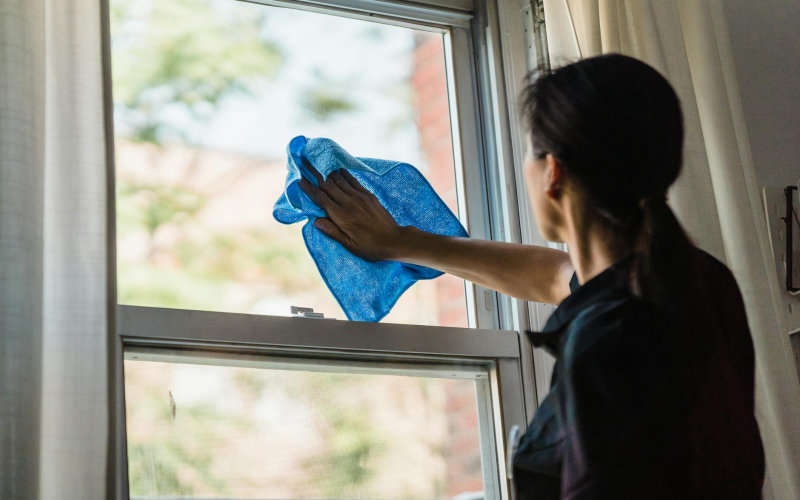

I’ve cleaned a lot of windows in my life. Like, embarrassingly many. And for years I was doing it completely wrong — spraying Windex, wiping with paper towels, standing back and wondering why my glass looked worse than before I started. Streaks everywhere. Lint jammed into the corners. The whole miserable thing.
Here’s what nobody tells you: window cleaning isn’t hard, but it’s weirdly technique-dependent. Get the method right and you’ll nail it in 20 minutes. Get it wrong and you’ll spend an hour making things worse. These 7 tips cut through the noise and give you what actually works.
Fair warning — a couple of these will feel counterintuitive. Stick with me anyway.
1. Stop Cleaning Windows in Direct Sunlight
This one caught me off guard the first time I heard it. Sunny day, bright light, perfect visibility — seems ideal, right? But sunlight is actually working against you the entire time.
When the sun hits your glass, your cleaning solution evaporates before you can wipe it away properly. What’s left are soap minerals and residue, baked into streaks you can’t buff out without starting completely over. Overcast days are genuinely better. Cloudy skies kill the glare too, which makes it easier to catch any spots you missed.
So if you’ve been saving window cleaning for bright weekend mornings, flip that habit entirely. Pick a grey Tuesday. You’ll thank me.
2. Clean the Frame Before the Glass — Always
Most people spray the glass first. Big mistake. Your window frame, tracks, and sills are loaded with grit, dead bugs, pollen dust, and general grossness that’s been accumulating there since last spring.
The second you spray cleaner on the glass and start wiping, all that loosened junk migrates down onto your freshly cleaned pane and turns into a muddy smear. Instead, hit the tracks first with an old toothbrush and a little baking soda paste. Wipe everything out. Then — and only then — move to the glass.
It takes maybe five extra minutes. And it makes a massive difference in your final result.
3. Ditch the Paper Towels (Seriously, Just Ditch Them)
Paper towels feel logical. They’re absorbent. They’re everywhere. But they disintegrate the instant they get wet and leave tiny lint particles pressed into your glass.
Newspapers used to be the old-school workaround, but modern newspaper ink smears differently than it used to, and honestly it’s just messy. What you actually want is a good microfiber cloth. A decent pack of 12 from Amazon runs about $12-15, and they last for years if you wash them correctly (cold water, no fabric softener — softener clogs the fibers and kills their effectiveness).
Microfiber grabs particles instead of just shoving them around. That distinction matters more than any cleaning solution you’ll ever buy.
4. Make Your Own Cleaning Solution
You don’t need specialty glass cleaner. I know the commercials make it look essential, but here’s what I’ve personally been using for about six years: a few drops of dish soap in a bucket of warm water. That’s genuinely it.
For stubborn grease — especially on kitchen windows near the stove — a 50/50 mix of white vinegar and water cuts through it faster than most commercial products. A 32-ounce bottle of white vinegar costs under $2 at any grocery store. The fancy streak-free sprays run $6-8 and honestly perform about the same.
The one exception? If you live somewhere with genuinely hard water, add a small splash of rubbing alcohol to your mix. Hard water deposits are the real culprit behind a lot of streaking, and alcohol helps stop them from bonding to the glass in the first place.
5. Get a Squeegee and Learn to Actually Use It
A squeegee is the single biggest upgrade you can make to your whole setup. And I mean a real one — not the $3 plastic thing at the dollar store, but something with a rubber blade that holds even contact across the glass.
The Ettore brand has been making professional-grade squeegees since 1936 and their basic 10-inch model costs around $8-10. Here’s what professionals know that most homeowners don’t: always pull the squeegee in one continuous stroke, overlapping slightly with each pass. Wipe the blade dry on a cloth between strokes.
And work top to bottom. Always. Gravity is your ally when the whole point is moving water off the glass, not just around it.
6. Tackle Your Window Screens Separately
Your screens are probably filthy. They trap everything — pollen, exhaust particles, dust, the occasional flattened moth. And if you clean your glass without dealing with the screens first, air moving through those grimy screens immediately re-deposits debris on your freshly cleaned windows.
Pop them out if you can. Lay them flat on a towel outside and scrub gently with warm soapy water and a soft brush. Rinse with a garden hose on low pressure, then let them dry completely before reinstalling. Wet screens re-installed on dry glass leave water marks. Ask me how I know.
If deep-cleaning every screen sounds like too much right now, a sticky lint roller does a surprisingly decent job of quick maintenance cleaning without removing the screen at all.
7. Apply a Rain Repellent Treatment Twice a Year
This tip is borrowed straight from the car world and it’s criminally underused on home windows. Rain-X and similar hydrophobic treatments cause water to bead up and roll off glass rather than sitting on the surface and drying into spots.
Apply it twice a year — once in spring, once before fall rains arrive — and you’ll notice your windows staying cleaner between washings. Water spots are much harder to deal with once they’ve etched into the glass surface. Prevention here is genuinely easier than the cure.
Takes about 10 minutes per window. The bottle lasts multiple seasons.
Bottom Line
Here’s what I think gets missed in basically every window cleaning guide out there: the sequence matters more than the products. You can have the best microfiber cloth and perfect squeegee technique, but if you’re cleaning glass before frames, or working in August sunshine, you’re fighting yourself before you even start.
Windows are one of those tasks where doing it “okay” three times a year beats doing it “perfectly” once and dreading it. Build a simple routine — frames first, cloudy day, squeegee finish, rain repellent twice yearly — and your windows will stay genuinely cleaner between sessions. That’s the real secret. Not the tools. The sequence.
Frequently Asked Questions
How often should you clean your windows?
For most homes, twice a year is the minimum — once in spring after pollen season and once in fall before winter closes everything up. If you live near a busy road or in a humid coastal area, quarterly cleaning makes a visible difference.
Why do my windows always streak no matter what I do?
Nine times out of ten, streaking comes from either direct sunlight evaporating your cleaner too fast, or from paper towels leaving lint behind. Switch to microfiber cloths and clean on overcast days. That combination fixes most streaking problems without changing anything else.
Can I use dish soap on windows without leaving residue?
Yes — but use very little of it. A few drops in a full bucket of warm water is plenty. Too much soap is actually what causes residue. If you’re seeing a soapy film after cleaning, dilute your solution more and follow up with a clean water wipe.
Is it worth hiring a professional window cleaner?
For ground-floor windows, probably not — with the right technique you’ll get comparable results yourself. But for second-story or hard-to-reach windows, professional cleaners have the extension equipment and training to do it safely. The average professional window cleaning for a standard two-story home runs $150-$300 depending on your region.
Photo by Liliana Drew on Pexels