
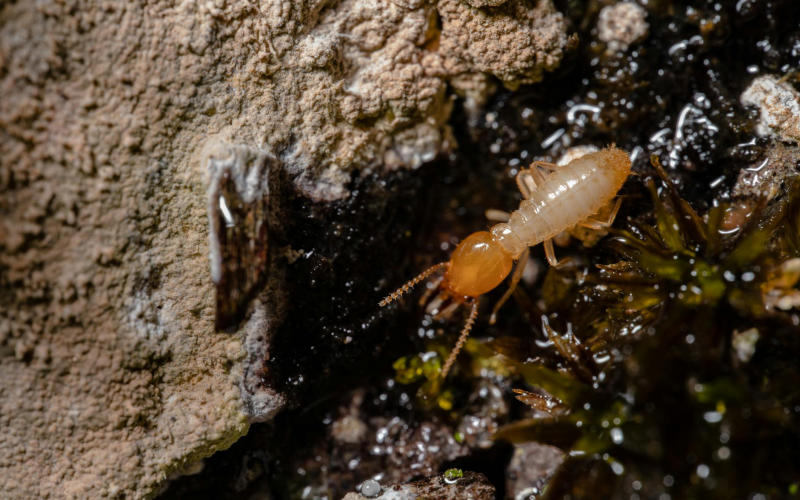

I want to be upfront with you: I am not an exterminator. I am a homeowner who spent the better part of six months in 2025 losing a slow, frustrating war against silverfish in my basement and bathroom. I tried sprays. I tried traps. I even tried cedar blocks, which a very confident YouTube commenter swore would “clear them out in a week.”
Nothing worked until I finally understood the actual problem. And the actual problem was not the silverfish. It was my humidity.
Why Silverfish Are Not the Problem You Think They Are
Most people treat a silverfish infestation like a bug problem. It’s not. It’s a moisture problem with bug symptoms.
Silverfish cannot survive when indoor relative humidity drops below 50 percent. Their eggs won’t hatch. Their bodies dry out. They move on. A 2023 review from entomologists at North Carolina State University confirmed that silverfish thrive specifically in environments sitting between 72 and 90 percent relative humidity — which, frankly, describes most unventilated American basements in summer.
So here’s the real question: are you treating the bugs, or are you treating the conditions that make your home a five-star silverfish resort?
Most people do the former. That’s why they keep losing.
The Specific Humidity Mistake Almost Every Homeowner Makes
Here’s the mistake: homeowners buy one dehumidifier, stick it in the basement, and assume that’s enough. They never actually check the number.
I did this. I owned a dehumidifier for two full years before my infestation started. It was running. I felt good about it. But I had never once looked at the humidity readout and compared it to anything meaningful. Turns out, my basement was sitting at 68 percent relative humidity — consistently — because the dehumidifier’s built-in sensor was old and reading about 12 points low.
The fix cost me about $12. I bought a standalone digital hygrometer from Amazon. Real reading: 68 percent. I cranked the dehumidifier’s target down and added a second unit near the bathroom. Within three weeks, I was at 47 percent, and the silverfish population visibly dropped.
You probably have the same blind spot. Check your actual humidity before you buy another can of spray.
What Tools Actually Work at Home (No Exterminator Required)
You don’t need professional help for most silverfish infestations. You need the right cheap tools used in the right order.
Start with a digital hygrometer. The ThermoPro TP49 runs about $10 and is accurate to within 2 to 3 percent. Put one in your basement, one in each bathroom, and one in any closet where you’ve spotted activity. Now you have real data. That’s step one.
Step two is a quality dehumidifier. For a space under 500 square feet, the hOmeLabs 30-pint unit (currently around $150 in 2026) does the job reliably. Set your target to 45 percent. Not 50. Not 55. Forty-five percent gives you a buffer for humid days when outdoor moisture seeps in.
Step three is fixing the small leaks you’re ignoring. A dripping pipe under your bathroom sink. Condensation on cold water lines. A window frame that sweats in July. Each one is a micro-humid zone where silverfish congregate. Wrap sweating pipes with foam insulation sleeves. a $6 fix at any hardware store. Seal window frames with weatherstripping. These ten-minute jobs matter more than any pesticide.
The DIY Trap That Actually Catches Silverfish
While you work on long-term humidity control, you want to reduce the population you already have. Here’s the trap I used, and it works surprisingly well.
Take a glass jar. Wrap the outside completely in masking tape so the surface is rough. Drop a small piece of bread or a cracker inside. Silverfish climb the rough tape, fall into the glass, and can’t get back out. I caught dozens over two nights with four jars placed along my basement walls. It sounds too simple. It isn’t.
You can also buy sticky glue traps (the kind sold for cockroaches works fine) and place them in corners, behind the toilet, and inside cabinet bases. But honestly, the jar trap outperformed every store-bought option I tested. And it costs basically nothing.
Sealing Entry Points: The Step Everyone Skips
Even perfect humidity control won’t fully protect you if silverfish can walk in from outside. They enter through wall gaps, pipe penetrations, and foundation cracks. All of which are easy to seal yourself.
Pick up a tube of DAP silicone caulk, roughly $5. and spend 30 minutes walking your basement perimeter. Seal every gap you can see around pipes, along the base of walls, and around window frames. Steel wool stuffed into larger gaps before caulking is even better; silverfish (and mice, for that matter) won’t chew through it.
This one afternoon of work compounds everything else you’re doing. You’re lowering humidity AND closing the front door. That combination is what finally ended my infestation.
How Long Before You See Real Results
Realistic expectations matter here. If you implement everything above, hygrometer, dehumidifier dialed to 45 percent, pipe insulation, caulking, and traps. expect to see a noticeable drop in activity within two to three weeks.
Full resolution took me about six weeks from the moment I actually fixed my humidity readings. The last silverfish I spotted was in early November 2025. Since then, nothing.
But results slow down if you’re inconsistent. Empty your dehumidifier’s water tank daily or buy one with a continuous drain hose. Check your hygrometer readings twice a week for the first month. And resist the urge to declare victory at week two. Silverfish eggs can survive for weeks before hatching, so keep conditions dry even after the adults disappear.
Final Thoughts
Here is what I’d tell every homeowner dealing with this: stop buying pesticide spray as your first move. Spray kills the silverfish in front of you. It does nothing about the 65 percent humidity behind your walls.
Spend $10 on a hygrometer first. That single purchase changed everything for me, and it’ll change things for you too. Get your home below 50 percent relative humidity, ideally 45. seal your gaps, set your traps, and let the environment do the heavy lifting. Silverfish infestation humidity control is not complicated. It just requires you to measure the right thing before you try to fix it.
FAQ
How do I know if my humidity is causing my silverfish problem?
Buy a digital hygrometer and check the rooms where you’re seeing activity. If your reading is consistently above 55 percent, humidity is almost certainly your core issue. Silverfish rarely stick around in genuinely dry homes.
Can I use boric acid alongside humidity control?
Yes, and it works well as a backup measure. Dust a thin layer of boric acid behind baseboards, under sinks, and along basement walls. It dehydrates silverfish on contact. Just keep it away from pets and children, and don’t over-apply, a light dusting is all you need.
Do silverfish cause structural damage?
Not directly to wood or drywall. But they feed on paper, book bindings, wallpaper glue, and starchy fabrics. Given enough time and enough bugs, you will lose books, documents, and clothing. Don’t wait.
Photo by Jimmy Chan on Pexels