
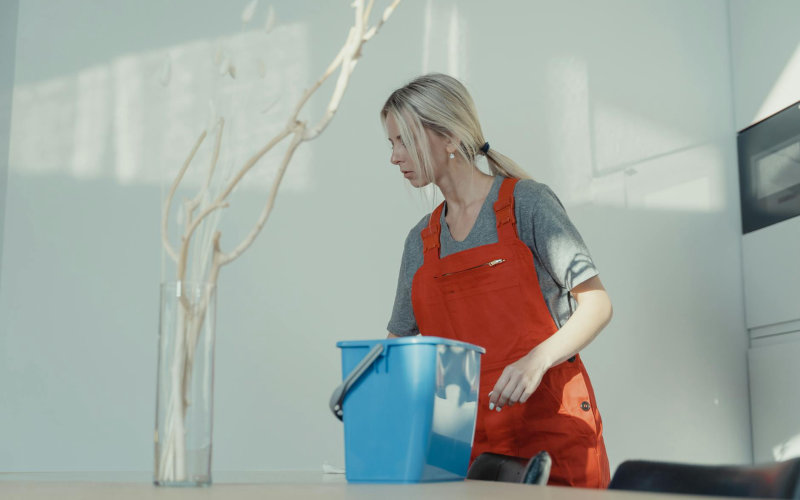

I watched a professional cleaner walk into a wrecked kitchen once and just… stand there. Two full minutes. No sponge, no spray bottle, nothing. I genuinely thought something was wrong. Turns out she was doing the one thing almost none of us bother with—she was thinking before cleaning. That little pause probably saved her 45 minutes of backtracking.
Here’s the uncomfortable truth: most of us just grab whatever’s closest and start scrubbing. We’re reactive. We clean what we see, in whatever order we happen to notice it, then wonder why the bathroom still feels grimy after an hour of effort. Professionals operate on completely different logic. They’ve built systems from thousands of hours of real experience, and those systems kick in before a single surface gets touched.
So if you’ve ever finished cleaning and felt like something was still… off, this list is probably going to explain exactly why.
1. They Do a Full Walk-Through First
Every professional cleaner I’ve talked to does this without exception. A complete lap around the home before anything else happens. They’re clocking where the worst buildup is, figuring out what needs to soak, identifying what’ll eat extra time—basically sketching a mental map of the whole job.
This matters more than it sounds. Clean out of order and you waste effort. Scrub the bathroom sink first, then realize the toilet needs a heavy treatment that splashes everywhere, and suddenly you’re cleaning the sink twice. A 3-minute walk-through kills that problem entirely.
Your version doesn’t need to be elaborate. Just walk each room slowly, look at it critically, and then start.
2. They Apply Cleaning Products Before Cleaning Anything
This one genuinely changed how I approach the whole process. Professionals spray the shower, the toilet bowl, the stovetop—all of it—before doing anything else in that room. Then they walk away and let the chemistry do the heavy lifting.
Most cleaning products need 5 to 10 minutes of actual dwell time to break down soap scum, grease, or bacteria. Spray and immediately wipe? You’re capturing maybe 30% of what that product can do. The Cleaning Industry Research Institute published data back in 2019 showing proper dwell time cuts scrubbing effort by up to 50%.
Spray first. Go do something else. Come back and the grime practically slides off.
3. They Declutter Before They Clean
Cleaning around stuff is a trap—and most of us fall into it constantly. You move the shampoo bottles, wipe under them, put them back, and you’ve done that same awkward motion four times when once would’ve done it.
Professionals clear surfaces completely before wiping them down. Everything off the counter, wipe the whole thing, then replace items. It sounds slower. It isn’t.
And honestly, there’s something about a clear surface that makes you clean better. You stop missing corners, stop leaving rings, stop half-finishing things.
4. They Work Top to Bottom, Always
Dust falls. Crumbs fall. Cleaning spray drips. Everything moves downward—that’s just physics, not preference.
But plenty of homeowners vacuum the floor and then dust the ceiling fan, which immediately rains debris right back onto what they just cleaned. Professionals would never do that. They start high (ceiling corners, fan blades, tops of cabinets) and work methodically down, so the floor is always last and actually stays clean.
This one habit alone could cut your re-cleaning time significantly.
5. They Use a Caddy and Never Leave the Room to Grab Supplies
Time is the enemy of a productive clean. Every trip out of the room to grab a different spray or a fresh rag costs you momentum, costs you your place, and often costs 3 to 5 minutes you won’t recover.
Professional cleaners carry everything in a single caddy or bucket—typically 6 to 8 specific products, not 15, chosen deliberately for that home’s surfaces. According to a 2022 survey by Cleaning Business Today, the average professional spends less than 4 minutes total walking between rooms during a full clean. Most homeowners? Closer to 20.
Build a caddy. Keep it stocked. Refill it after every session without fail.
6. They Put on Gloves Before Touching Anything
Not just for germ reasons (though, yes, obviously that too). Bare hands leave oils and fingerprints on every surface you’re trying to clean. Wipe a mirror with your bare hand and you’ve already made new smudges before you even really started.
Nitrile gloves are what most professionals use—not the thick rubber kind. They’re thin enough that you can feel what you’re doing, but durable enough to handle bleach-based products without wrecking your skin. A box of 100 runs about $12 and lasts for months.
7. They Pre-Treat Stains Immediately When They Spot Them
During that walk-through (back to #1), professionals aren’t just observing—they’re treating. Carpet stain? Spray goes on it right then. Soap scum on the glass door? Product applied immediately. By the time they loop back around to that spot, the pre-treatment has been sitting for 10 or more minutes.
Most homeowners treat stains reactively—right at the moment they’re cleaning that specific area. That means zero dwell time, way more scrubbing, and genuinely worse results. Work ahead of yourself. Your future self, about 20 minutes into the session, will be grateful.
8. They Use Microfiber—and They Know Which Cloth Goes Where
Not all microfiber cloths are created equal. And more importantly, not all of them should touch all surfaces. Professionals typically color-code: one color for bathrooms, one for kitchens, one for general dusting. This isn’t fussiness—cross-contamination is real, and you really don’t want the cloth that wiped your toilet anywhere near your kitchen counter.
The Norwex 2-pack that got popular around 2020-2021 proved in independent testing that their microfiber removes up to 99% of bacteria with just water when properly maintained. Buy that brand or don’t—but the point stands either way. Microfiber dramatically outperforms paper towels or regular cloth for streak-free results.
9. They Set a Timer for Each Room
This sounds weirdly corporate for something as domestic as cleaning your house. But it works. Professionals know roughly how long each area should take—standard bathroom, 15 minutes; kitchen, 20 to 25; bedroom, around 10. Sticking to that budget prevents the classic homeowner trap of spending 45 minutes perfecting one shower while the rest of the house sits untouched.
Set your phone timer. Give each room a limit. Done beats perfect, and a whole house cleaned adequately wins over one room cleaned obsessively every single time.
Bottom Line
Here’s what I think nobody really tells you about professional cleaning: the actual skill isn’t in scrubbing harder—it’s in sequencing smarter. The people who do this for a living have essentially turned housework into choreography, where every move sets up the next one. What you’re building when you adopt these habits isn’t just a clean house. It’s a shorter cleaning session every time after, because you stop fighting the process and start working with it.
The house that takes you three hours today? With these habits locked in, it’ll likely take 90 minutes within a month. That’s not motivational fluff. That’s just what compounding efficiency looks like in practice.
Frequently Asked Questions
How long does a professional house cleaner typically spend on an average home?
Most professionals spend 2 to 4 hours on a 2,000 square foot home for a standard clean. Deep cleans run longer—sometimes 6-plus hours on a first visit.
What cleaning products do professionals actually use?
Surprisingly simple ones. Diluted all-purpose cleaner, a solid degreaser for kitchens, a bathroom disinfectant, and glass cleaner. Nothing exotic. They’re just using ordinary products correctly.
Is it worth hiring a professional cleaner even if you clean regularly yourself?
Yes—but maybe not for the reason you’d expect. Watch what they do on that first visit and reverse-engineer their process. You’ll learn more in one session than you would from reading cleaning content for a year (no offense to cleaning content).
Can these habits actually make a noticeable difference for small apartments?
Absolutely—maybe even more so in a small space. When things are done out of order in 600 square feet, you’re constantly working against yourself. Good sequencing in a compact apartment can cut your cleaning time from 90 minutes to under 45 with a bit of practice.
Photo by Tima Miroshnichenko on Pexels